What to Do If DMV Has No Record of Your Vehicle
A DMV 'No Record Found' message usually means one of four things—and most of them are easier to fix than people expect.
It almost always has a straightforward explanation, and none of them are dead ends.
The four most common reasons this happens:
- your car was titled in California but hasn't been registered for four or more years and dropped out of the digital database;
- you just bought the vehicle and the transfer hasn't been processed yet;
- your car was registered in another state and has never been entered into California's system;
- or there's a data mismatch—a transposed digit in the VIN, an old license plate number, something small that's preventing the system from finding a record that actually exists.
Each situation has a different resolution path, and we walk you through all of them.
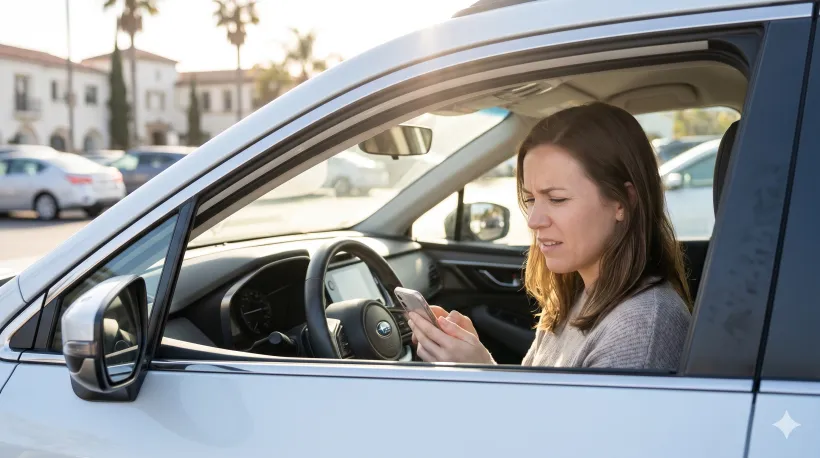
Why Would the DMV Have No Record of Your Vehicle?
Before doing anything else, it helps to understand which situation you're actually in—because the paperwork you need, the offices you'll visit, and the timeline you're looking at all depend on the specific reason the record is missing. "No record" is a single error message that covers several very different scenarios.
Your car hasn't been registered in California for 4 or more years
This is the most common reason for a missing vehicle record, and it catches a lot of people off guard—especially those who've had a car sitting in storage, filed for Planned Non-Operation and left it there, or simply let registration lapse and stopped thinking about it.
According to the California DMV, if a vehicle is titled in California but has not been registered for four years or more, the DMV may no longer have a digital record of it. Even if you still have DMV-issued paper documentation for the vehicle, you must re-establish a digital record before you can register or renew.
Is it always exactly four years?
No. That’s the standard timeframe: the DMV retains old records, but how long they are kept depends on the specific type of record.
The key phrase there is "digital record." The paper title you have is still a valid ownership document—it just doesn't automatically exist in the DMV's computer system anymore. You're not starting from zero on ownership; you're starting from zero on the database entry.
You just bought the car and it hasn't been processed yet
After a vehicle changes hands, the DMV's records don't update instantly. If you bought from a licensed California dealer, the dealership typically handles the registration transfer on your behalf—but it takes a few business days for the paperwork to move through the system. During that window, a search by VIN might return the previous owner's name or nothing at all. If you bought from a private seller, the transfer doesn't happen automatically at all—you'll need to initiate the title transfer yourself.
Your vehicle is from another state and was never registered in California
An out-of-state vehicle simply doesn't exist in California's DMV database until you register it here.
If you moved to California and brought your car with you, or bought a car that was previously registered in Nevada, Arizona, or anywhere else, the California DMV has no record of it because it was never entered into the California system.
That's expected—but it comes with a deadline. California requires out-of-state vehicles to be registered within 20 days of the owner establishing residency or getting a job in the state. After that window, late penalties begin to accrue.
There's a data mismatch or a technical error
Sometimes the record exists but the system can't find it because the search terms don't match what's on file.
A single transposed character in a 17-digit VIN—the letter O instead of the number zero, for instance, or the number 1 instead of the letter I—is enough to return no results. A license plate that was changed but not updated in your search, a vehicle registered to a family member or business entity instead of your name, or a record tied to an old address can all produce the same "no record found" result.
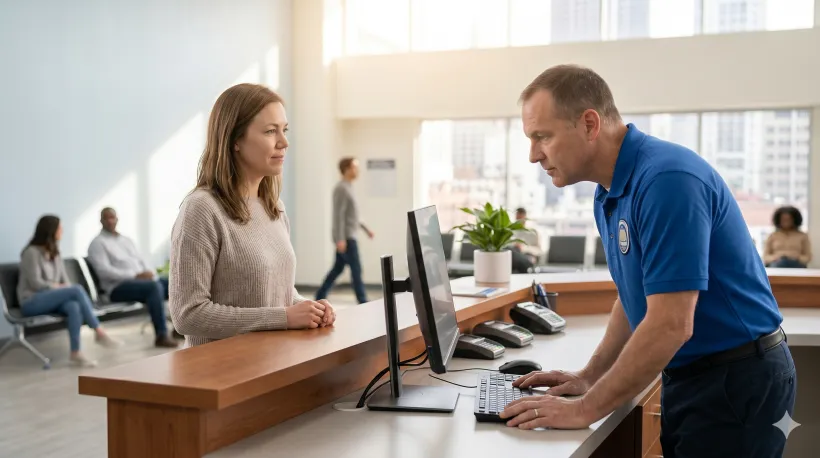
Scenario 1: Your California Vehicle Dropped Out of the System
If your car was previously registered in California and the last registration was more than four years ago, you're not dealing with a renewal—you're dealing with a re-registration. The process involves more paperwork than a standard renewal, but it follows a clear sequence depending on what documents you have available.
If you have the California Certificate of Title or the original expired registration card
This is the easier path. The California DMV specifies the following documents are required to re-establish a vehicle record and register the vehicle:
| Document | Notes |
| REG 343—Application for Title or Registration | Standard form, available at dmv.ca.gov |
| REG 31—Verification of Vehicle | Must be completed by an authorized DMV employee or a peace officer—not self-certifiable |
| California Certificate of Title or original expired registration card | Photocopies are not accepted |
| REG 102—Certificate of Non-Operation, or REG 256 certifying non-operation | Confirms the vehicle was not operated during the lapsed period |
| REG 262—Odometer Disclosure Statement | Required for motor vehicles less than 10 model years old; not available online—must be requested by phone at 1-800-777-0133, as it is printed on security paper |
| Weight certificate | Required for commercial vehicles weighing less than 10,001 pounds unladen |
One detail worth flagging before you start gathering documents: the REG 262 is printed on security paper and cannot be downloaded from the DMV's website. Call 1-800-777-0133 to have one mailed to you before you begin the process; otherwise, it becomes the bottleneck that holds everything else up.
If you don't have the title or only have a photocopy
If the original title or registration card is lost, damaged, or you only have a copy, the process adds a few steps.
You'll need to submit an Application for Replacement or Transfer of Title (REG 227) in addition to the REG 343. If you're submitting the REG 227 and the registration card shows a legal owner or lienholder, a notarized Legal Owner/Title Holder Release (REG 166) is also required.
You'll also need a Statement of Facts (REG 256) that documents how, when, and from whom the vehicle was acquired; what efforts were made to contact the previous owner to obtain evidence of ownership; why that evidence was unobtainable; and the current value of the vehicle.
The Cost Information section of the REG 343 must also be completed with the purchase price to establish a vehicle license fee classification.
None of this is insurmountable—it's just more paperwork, and it's the DMV's way of confirming that the chain of ownership is legitimate when the standard title documentation isn't available.

Scenario 2: You Just Bought the Car and It's Not in the System Yet
This is the most straightforward of the four scenarios, and in most cases it resolves itself without any action on your part—just time. That said, there are a few things worth knowing depending on how you bought the vehicle.
Bought from a licensed dealer
California dealers are required to submit registration paperwork to the DMV on behalf of the buyer. The processing lag between when the dealer submits the documents and when the record appears in the DMV's system can typically take anywhere from several business days to several weeks. During this window, searching by your name or the new license plate may return nothing or may still show the dealership or the previous registered owner. This is normal and not a signal that anything went wrong.
Dealers issue a Temporary Operating Permit at the time of sale that allows you to drive the vehicle legally while the permanent plates and registration are being processed. If the TOP expires before the registration paperwork comes through—which occasionally happens with specialty or personalized plates that require additional processing time—contact the dealership first, as they're responsible for the transfer and can track the status.
Bought from a private seller
A private-party purchase doesn't come with the same automatic processing. When you buy a vehicle from an individual, the title transfer is your responsibility—and until you submit the paperwork and the DMV processes it, the vehicle is still legally registered to the previous owner. The seller should sign the back of the California Certificate of Title and hand it to you at the time of sale. The seller should also submit a Notice of Transfer and Release of Liability through the DMV, which protects them from liability for anything that happens with the vehicle after the sale.
As the buyer, you'll need to submit a completed title transfer application to the DMV—which includes the signed title, proof of insurance, a smog certificate if required, and the applicable transfer fees. Xtreet's title transfer service handles this process online, without requiring a DMV office visit.
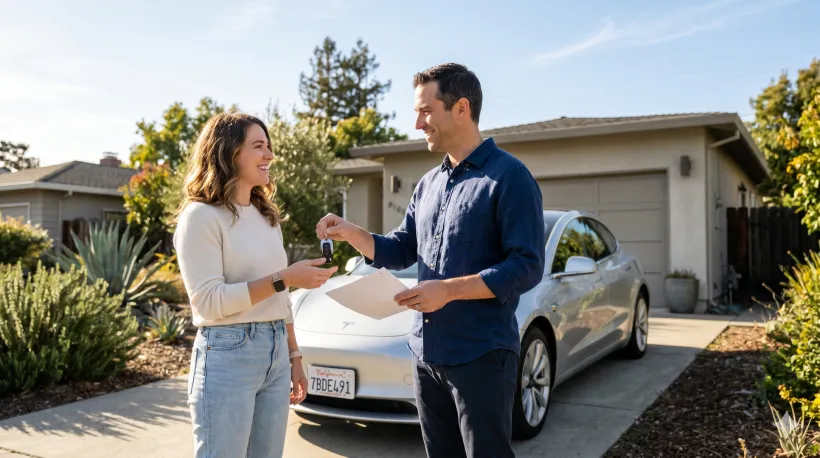
Scenario 3: Your Out-of-State Vehicle Has Never Been in California's System
Bringing a car from another state into California is a more involved process than renewing an existing California registration—not because it's designed to be difficult, but because California has its own title format, its own emissions standards, and its own fee structure that doesn't map directly onto other states' systems.
The result is that the vehicle essentially needs to be introduced to California's DMV from scratch.
The 20-day deadline
California requires out-of-state vehicles to be registered within 20 days of the owner establishing residency or beginning employment in the state. This is not a soft guideline—late registration penalties apply after the deadline, and they follow the same compounding penalty schedule as any other lapsed registration.
Note for driver: "Establishing residency" under California law involves factors like obtaining a California driver's license, registering to vote, or renting or purchasing a home in the state. If your situation is ambiguous—for instance, you travel frequently between states—confirm your specific residency status with the DMV before the 20-day clock starts.
What do you need to register an out-of-state vehicle?
| Requirement | Details |
| REG 343—Application for Title or Registration | Standard form; available at the DMV |
| Out-of-state Certificate of Title | Or a bill of sale if the title is held by a lienholder and not yet in your possession |
| VIN verification—REG 31 | Must be completed by an authorized DMV employee, a peace officer, or a licensed verifier |
| California smog inspection | Out-of-state smog test results are not accepted—California certification only |
| Proof of insurance | Must meet California's minimum liability coverage requirements |
| Odometer disclosure | Required for vehicles less than 10 model years old |
| Use tax and registration fees | Calculated based on vehicle value, weight, and county; use the DMV fee calculator at the DMV |
VIN verification—what it is and where to get it done
VIN verification is a physical inspection that confirms the Vehicle Identification Number on your documents matches the actual number on the vehicle. California requires it for all out-of-state registrations to prevent fraud, title errors, and registration issues from crossing state lines.
The verification can be performed by an authorized DMV employee (no appointment needed—most DMV offices have a dedicated VIN verification lane for this, but not everyone), by any peace officer, or by a licensed mobile VIN verification service. If you want to get VIN verification done before bringing the vehicle into California, a peace officer in the other state can complete the REG 31 form—but the form must be the California REG 31 specifically.
One practical note: if all you need is VIN verification and nothing else requires processing at the same visit, you can walk into a DMV office without an appointment and use the VIN verification lane. If you're also submitting other documents at the same visit, an appointment is strongly recommended to avoid a long wait.
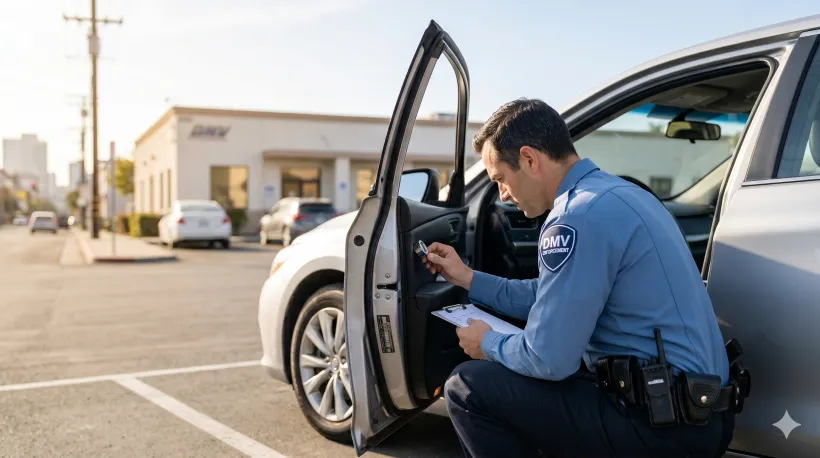
Scenario 4: It Might Be a Data Error, Not a Missing Record
Before going through any of the re-registration processes above, it's worth spending five minutes ruling out the simplest explanation: the record exists, but the system can't find it because of a mismatch between what you entered and what's on file.
The car VIN is exactly 17 characters long and includes both letters and numbers in a sequence that's deliberately designed to avoid visual ambiguity—but that design doesn't always survive manual entry.
The letter O and the number zero look nearly identical in certain fonts. The letter I and the number one (1) are just as easy to mix up. One wrong character out of 17 is enough to produce a "no record" result from a record that's sitting perfectly intact in the database.
Before concluding that your record is actually missing, run through this checklist:
- Try searching by VIN instead of license plate number, or vice versa—sometimes the plate has changed but the VIN hasn't, and one search returns results while the other doesn't.
- Double-check every character of the VIN against the physical plate on the vehicle or the sticker inside the driver's side door jamb—don't rely on what's printed on a document that may have its own transcription error.
- Check whether the vehicle might be registered under a different name—a spouse, a parent, or a business entity—and whether that could explain why a search under your name returns nothing.
- Try the DMV's automated phone line at 1-800-777-0133, which searches the database differently than the online portal and can sometimes surface records that the web interface misses.
- If none of the above resolves it, visit a DMV office in person with your original documents—a staff member can search the database directly and identify whether the record exists and where the discrepancy is.
One Step Almost All Scenarios Have in Common: VIN Verification
Whether you're re-establishing a lapsed California record, registering an out-of-state vehicle, or completing a private-party title transfer, there's one requirement that appears across nearly all of these paths: a physical VIN verification. It's the California DMV's way of anchoring the paperwork to the actual vehicle—confirming that the car you're trying to register is, in fact, the car described in your documents.
The REG 31 form used for VIN verification must be completed by an authorized DMV employee, a peace officer, or—in many cases—a licensed private verifier. California does not allow self-certification. The verification covers the VIN number itself, the federal certification label (typically on the driver's side door jamb), and whether the vehicle's emissions equipment meets California standards.
For most people, the fastest option is the DMV's dedicated VIN verification lane, which operates without an appointment at most DMV field offices. If your schedule makes a DMV visit difficult, licensed mobile VIN verification services can come to your location—this is a common option for out-of-state vehicles that need verification before the full registration process begins.

FAQ
- How do I check if the DMV has a record of my vehicle in California?
Go to dmv.ca.gov and use the registration renewal or registration status tool—enter your license plate number and the last five characters of your VIN. If the system returns no results, try the search in reverse: VIN instead of plate or plate instead of VIN. You can also call the DMV automated line at 1-800-777-0133, which searches the database independently from the web portal and sometimes surfaces records that online searches miss.
- My car hasn't been registered in California for over five years—do I need to start from scratch?
Not from scratch on ownership, but you do need to re-establish a digital record with the DMV. According to the California DMV, if a vehicle has not been registered for four or more years, its digital record may no longer exist—even if you have original paper documents. You'll need to submit a new registration application with a REG 343, a REG 31 (VIN verification by an authorized person), your original title or expired registration card, and additional forms depending on your situation. The original ownership documents are still valid—they just need to be reintroduced to the system.
- I bought a car from a private seller, and the DMV still shows the previous owner—is that normal?
Yes, completely normal. Title transfers from private-party sales don't update the DMV database automatically. The record reflects whoever most recently registered the vehicle. Once you submit the title transfer paperwork and the DMV processes it—which typically takes a few business days—the record will update to show you as the registered owner. Until then, carry your signed bill of sale and the signed title as proof of purchase.
- Can I drive my car while waiting for the DMV to create or restore its record?
If you bought from a dealer, the Temporary Operating Permit issued at the time of sale covers you legally while registration is processed. If you're re-establishing a lapsed record on a vehicle you already own, you generally cannot drive it until the record is restored and registration is current—driving an unregistered vehicle is a violation of California Vehicle Code § 4000(a). If there's a legitimate need to drive during the process, ask the DMV about whether a TOP is applicable to your specific situation.
- Do I need to go to the DMV in person to fix a missing vehicle record?
In most cases involving a missing or lapsed record, yes—at minimum for the VIN verification step, which requires a physical inspection by an authorized person. Some of the paperwork can be submitted by mail, and some title transfer processes can be initiated online or through a licensed DMV partner. But the VIN verification itself cannot be completed remotely or self-certified. Check the DMV's dedicated VIN verification lane, which typically doesn't require an appointment.
- I moved to California—how long do I have to register my out-of-state car?
California requires out-of-state vehicles to be registered within 20 days of establishing residency or beginning employment in the state. After that deadline, late registration penalties apply on the same compounding schedule as any other lapsed registration. The 20-day clock typically starts when you take steps that indicate California residency—getting a California driver's license, signing a lease, registering to vote. If your residency situation is ambiguous, confirm with the DMV before assuming the clock hasn't started.
- Who can perform a VIN verification in California?
An authorized DMV employee, any peace officer (including officers from other states, if the REG 31 California form is used), or a licensed private VIN verification service. DMV offices have a dedicated lane for VIN verifications that doesn't require an appointment. Licensed mobile services can come to your location if an in-person DMV visit is difficult to schedule.
- Can Xtreet help me register a vehicle that's not in the DMV system?
Xtreet, as a licensed California DMV partner, can assist with title transfers for vehicle purchases and standard registration renewals. For situations involving re-establishing a lapsed vehicle record or out-of-state first-time registration—both of which require in-person VIN verification as a mandatory step.
Conclusion
A "no record found" message from the California DMV is almost never the catastrophe it sounds like. In the majority of cases, it points to one of four well-defined situations—a vehicle that dropped out of the database after years of inactivity, a recent purchase that's still in processing, an out-of-state car that's never been entered into California's system, or a simple data mismatch that a double-check of the VIN can resolve in two minutes.
The practical starting point is always the same: identify which scenario you're actually in, then work through the corresponding checklist. Gather the right forms before you show up anywhere—the REG 262 in particular needs to be requested by phone and mailed to you in advance, which trips up a lot of people who show up to the DMV ready to resolve everything in one visit. Get the VIN verification scheduled, since it's the one step that appears across almost every re-registration path and has to be done by an authorized person in person.
For the parts of the process that can be handled online—title transfers from private sales, standard renewals once the record is restored—Xtreet handles the paperwork and DMV submission without requiring an office visit.