What to Do If You Get Pulled Over for Expired Registration in California
If you are stopped in California for expired registration, it is not the end of the world. The most important thing is to remain calm, interact politely with the officer, understand the type of violation (fix-it ticket or fine), and then renew your registration as soon as possible through the California DMV. In many cases, you can reduce the fine or avoid serious consequences if you act correctly and in a timely manner.
There are over 30 million vehicles registered in California, and every year thousands of drivers face a situation where their registration renewal is overdue — sometimes by a few days, sometimes by months.
The reasons are typical:
- delay in sticker delivery;
- missed notification from the DMV;
- smog check problems;
- insurance error.
A police stop due to expired registration is one of the most common in California traffic practice.

What does expired registration mean in California?
Expired registration means that your vehicle registration has expired. In the California DMV database, your car is considered unregistered, even if it is physically on the road, and this has serious consequences for the owner.
Key points to know:
- Legal status of the car
If your registration is expired, driving your vehicle is technically a violation of the California Vehicle Code. This can result in fines, impoundment of your car, or other penalties.
- Common situations
- The driver forgot to renew the registration on time.
- The renewal payment was made, but the new registration sticker has not yet been received by mail. In this case, the car may still appear as unregistered to law enforcement or DMV systems.
- There were delays due to a smog check, invalid insurance policy, or other technical reasons.
- Practical consequences
- Fines for expired registration can start at $200+, and the amount increases over time.
- Insurance companies may refuse to pay if an accident occurs during expired registration.
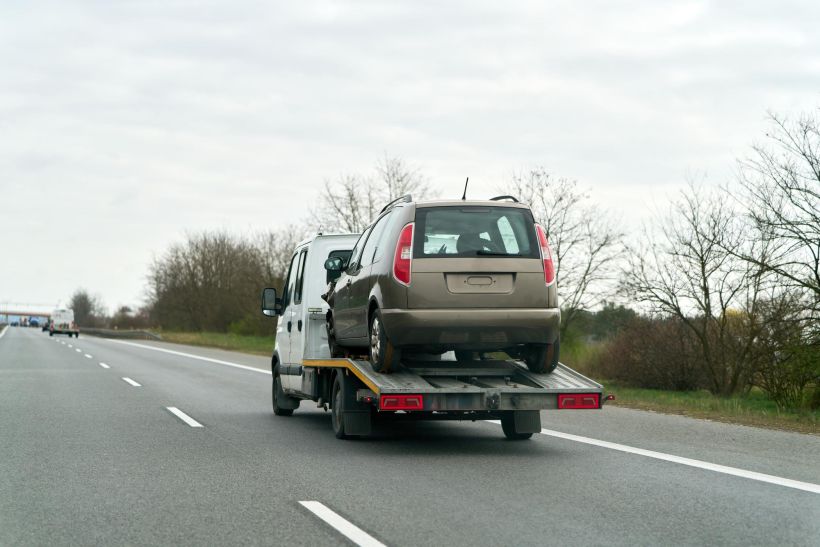
- The car may be towed away by the police during a roadside check.
- What to do if your registration is expired
- Check your status through the California DMV online or through the service you used to submit your renewal.
- If the renewal has already been paid for, find out the tracking number or contact the service to find out when the sticker will be delivered.
- Resolve any delays with the smog check or insurance so that the registration renewal can be completed.
Key tip: even if you have applied for renewal and are waiting for a new sticker, your car is formally considered unregistered until you receive official confirmation. Therefore, while waiting, it is recommended to avoid risky trips so as not to get a fine or insurance problems.
What to do when you are stopped: step by step
Step 1. Stop safely and calmly
- Turn on your turn signal so the officer can see your intention to stop.
- Choose a safe spot on the side of the road, away from traffic and intersections.
- Keep your hands on the steering wheel so the officer can see that you are not a threat.
- Do not get out of the car unless the officer asks you to; stay inside and calmly wait for instructions.
Step 2. Hand over your documents
The officer will usually ask for:
- Driver License — your driver's license.
- Proof of Insurance — proof of valid car insurance.
- Vehicle Registration — even if your registration is expired, it is worth showing the document.
Tip: Hand over your documents slowly and carefully, avoiding sudden movements so as not to provoke misunderstandings.
Step 3. Do not argue on the spot
- If your registration has expired, acknowledge the fact and save any arguments for court or after the violation has been resolved.
- Calm and polite behavior usually reduces the risk of additional fines.
- You can briefly explain the situation, for example, that the renewal has already been paid for and you are waiting for the sticker, but do not try to convince the officer that you are right on the spot.
Additional tips
- Do not admit to other violations that the officer did not mention.
- Write down the officer's name and badge number in case you need to make further inquiries or appeal the fine.
- Keep your voice calm and avoid sudden movements.
Key idea: When stopped, it is important to remain calm, cooperative, and polite. This does not negate the fact that your registration has expired, but it can have a positive impact on the outcome and help you avoid additional problems.

What type of violation you may receive
1. Fix-It Ticket (Correctable Violation)
The most common option when you have an expired registration or other minor violations that can be corrected.
What this means:
- You are given time to correct the violation (for example, to renew your car registration).
- Once it is confirmed that the violation has been corrected, the fine may be reduced to $25–$50.
Advantages:
- You can avoid a high fine.
- The violation does not create a significant negative mark on your driving record.
What to do:
- Renew your registration or other document within the specified period.
- Get confirmation from the DMV or through the service if you used services such as Xtreet.
- Submit proof to an officer or online to close the violation.
2. Full fine
Possible in the case of:
- Significant delay in registration.
- Repeated violations (for example, repeatedly ignoring renewal).
- Lack of a valid insurance policy.
Fine amount: may exceed $200-$500 or more, depending on the county and circumstances.
Consequences:
- A late registration fine can affect your insurance premium and driving record.
- In extreme cases, your car may be towed or prohibited from use until the violation is corrected.
How to avoid it:
- Renew your registration and insurance in a timely manner.
- Use services that track renewal status to avoid “freezes.”
Can your car be towed?
In most cases, your car will not be towed simply for expired registration, but there are a number of situations where this is possible:
When towing is likely:
- Registration is overdue by 6 months or more
The longer a car remains unregistered, the greater the risk that it will be considered abandoned or in violation of the Vehicle Code.
- No insurance
If a car does not have a valid liability or comprehensive insurance policy, officers may consider it a risk to traffic safety.
- The vehicle poses a hazard
If parked in a prohibited area, in the way of traffic, or if the vehicle is obstructing others, law enforcement may tow the vehicle regardless of its registration status.
Consequences of towing:
- Additional costs: $300-$600+ for towing and impound storage.
- A fine for expired registration and the cost of returning the car may be combined.
- Towing significantly complicates the process of correcting the violation, so prevention is much cheaper and easier.
Tip:
- Check your registration status regularly online or through services such as Xtreet.
- Keep a copy of your renewal payment confirmation with you to avoid misunderstandings with the officer if you are stopped.
What to do after being stopped
If an officer stops you for expired registration, it is important to act quickly and correctly to minimize fines and the risk of impoundment.
Step 1. Renew your registration immediately
- Use the official California DMV website to renew your registration online.
- If you use a service such as Xtreet, the submission and payment will be faster, and the service can automatically monitor the status with the DMV.
- Important: even after being stopped, the renewed registration serves as proof that you have corrected the violation.
Step 2. Collect all confirmations
After paying or renewing your registration, keep:
- Payment receipt – confirms that you have fulfilled the financial part.
- New registration card – an official document confirming the current status of the car.
- Temporary confirmation – if the DMV has issued a temporary document or sticker for the license plate, keep it in the car until you receive a permanent one.
Step 3. Close the Fix-It Ticket (Correctable Violation)
If you have received a Fix-It Ticket, you need to take several steps:
- Contact the court or authorized office in your county listed on the violation ticket.
- Present proof of registration renewal – this proves that you have corrected the violation.
- Pay the minimum administrative fee, which is usually $25–$50, depending on the county.
Tip from Xtreet: Don't delay these steps. Even one day of delay after receiving the ticket can complicate the process and increase the fine.
Additional recommendations
- If your car is more than 6 months overdue, make sure you have proof of payment and insurance confirmation with you to avoid towing or a full fine.
- Keep electronic copies of your documents on your phone—in many cases, this is sufficient to show to an officer or court.
- After closing the Fix-It Ticket, check your registration status online to make sure all records are up to date.

How to avoid being stopped again
To minimize the risk of being stopped again and receiving fines, follow a few simple rules:
1. Always keep proof of payment
- Keep confirmation of payment in your car or on your phone in electronic form.
- If an officer sees that you have already paid for your renewal, it may prevent a Fix-It Ticket or other fines.
2. Check your registration status online regularly
- Use the California DMV website or services such as Xtreet to track your registration status.
- Checking online helps you anticipate problems: unconfirmed insurance, lack of smog check, or delays in payment processing.
3. Keep track of smog check deadlines.
- If your car is subject to a mandatory smog test, check that the certificate is valid at the time of renewal.
- Having a current smog check prevents registration from being suspended and repeated stops.
4. Update your insurance information on time
- Ensure that your insurance company submits up-to-date information to the DMV.
- Errors or outdated information may result in your registration being suspended, even if you have paid for renewal.
Additional tips
- Keep electronic copies of all documents—this is convenient in case of a traffic stop or inspection.
- Set reminders for your next renewal or smog check so you don't miss the deadline.
- If you change your car or insurance policy, update your information with the DMV before your registration expires to avoid problems.
FAQ — frequently asked questions
1. Is it legal to drive if the renewal has been paid but the sticker has not yet arrived?
Formally, no, but proof of payment often helps.
2. How many days are you given to fix the violation?
Usually 20–30 days, depending on the county.
3. Does expired registration affect insurance?
It can complicate payments in the event of an accident.
4. Is it necessary to go to court?
Yes, to close a fix-it ticket.
5. Can a fine be imposed retroactively?
Yes, if the delay is significant.
6. What happens if you ignore the fine?
Fines increase, and legal sanctions are possible.
7. Can you renew your registration on the day of the stop?
Yes, in most cases.
8. Can your driver's license be revoked?
Usually not, but there are exceptions.
Conclusion
Being pulled over for expired registration in California is an unpleasant but manageable situation. Quick response, correct actions, and timely document renewal can minimize fines and avoid serious consequences.
Xtreet's experience shows that drivers who take immediate action after being pulled over and monitor their registration status almost always resolve the issue with minimal losses.