Why Your California Registration Renewal Is So Expensive — and How to Reduce the Cost
Drivers are often surprised to find that renewing a car registration in California through the DMV sometimes costs significantly more than expected. The reason is that car registration in California consists not of a single payment, but of several different fees that fund various state and local programs. As a result, vehicle registration renewal in California can cost anywhere from $100 to $500 or more, depending on the type of vehicle, its value, and the county where it is registered.
We’ll explain:
- why vehicle registration renewal in California can be so expensive;
- what fees make up the total renewal cost;
- why new cars often have higher registration fees;
- how drivers can reduce the cost of renewal;
- what discount or exemption programs exist in California.
Understanding the structure of these fees helps you better plan your car expenses and avoid situations where the registration renewal fee turns out to be unexpectedly high.

What are you actually paying for when you renew your registration?
When drivers receive a registration renewal notice, the total amount may appear as a single payment. In reality, it consists of several different fees, each of which funds a separate government or transportation program.
These fees are set by the California DMV and state law and apply to most vehicles. Some are fixed amounts, while others depend on the vehicle’s value or place of registration.
Here’s a breakdown of the main components typically included in a California vehicle registration renewal.
| Fee Type | What It Covers | Typical Amount |
| Base registration | Basic vehicle registration fee | ~$60 |
| Vehicle License Fee | Tax calculated based on the vehicle’s value | Depends on value |
| CHP fee | Funding for the California Highway Patrol | ~$28 |
| Transportation improvement fees | Transportation infrastructure development programs | Depends on the vehicle’s age |
| Local transportation fees | Local transportation and road programs | $10-40 |
The combination of all these fees makes up the final amount that drivers see on their California registration renewal notice. Therefore, it can vary significantly depending on the vehicle and the place of registration.
Why are vehicle registration fees in California higher than in many other states?
Vehicle registration in California often costs more than in other U.S. states. This is due to a combination of factors—ranging from the large number of vehicles to the system for funding road infrastructure.
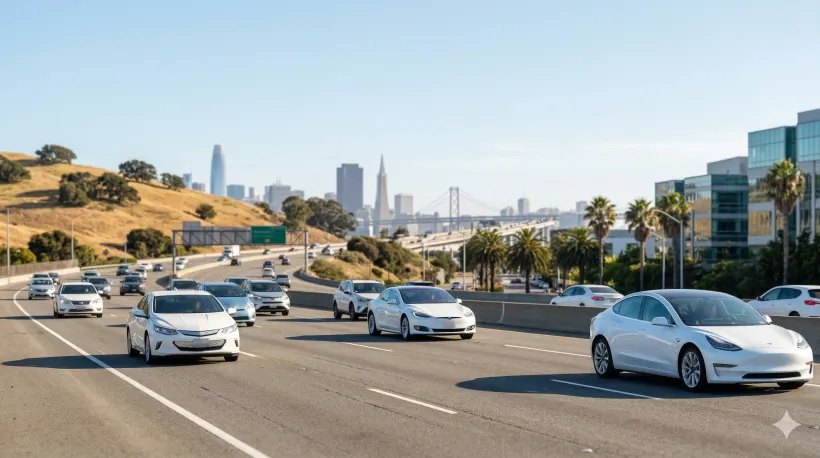
First, California has one of the largest vehicle fleets in the U.S.
According to the California Department of Motor Vehicles, there are over 35 million vehicles registered in the state. This means that the system of roads, highways, and transportation infrastructure must serve a huge number of vehicles every day.
Second, a portion of registration fees is used to fund transportation infrastructure.
These funds are spent on the construction and repair of roads, bridges, and transportation programs. Since California has one of the largest road networks in the country, the costs of maintaining it are also significant.
A third factor is local transportation taxes.
In many counties and cities, especially in metropolitan areas, local fees are added to fund regional transportation projects or public transit.
Another important element is the state’s environmental and transportation programs. A portion of the fees goes toward funding programs related to road safety, controlling harmful emissions, and improving the transportation system.
Why do newer cars usually have higher registration fees?
One of the main reasons why registration renewal for new cars in California is more expensive is the so-called vehicle license fee (VLF). This fee essentially functions as a vehicle property tax and is calculated based on the vehicle’s value. Therefore, newer or more expensive vehicles typically have a higher renewal fee.
According to data from the California Department of Motor Vehicles, the vehicle license fee is approximately 0.65% of the vehicle’s current value.
For example:
- if a new car costs $40,000, the VLF may be approximately $260 per year;
- if a car is 3-5 years old, its market value is usually significantly lower, so the VLF may be approximately $120-$200;
- for a car that is 10+ years old and costs significantly less, the VLF is often only $40-$80.
It is important to understand that a car’s value decreases each year due to depreciation, so the vehicle license fee gradually decreases as well. This is why many drivers notice that registration renewal becomes cheaper over time.
What are California local fees?
Another reason why vehicle registration renewal costs in California can vary significantly is local fees. In addition to the base fees, California has regional transportation surcharges set at the county level or by special transportation agencies.
These fees are used to fund:
- road construction and repair;
- public transportation development;
- environmental transportation programs;
- regional transportation infrastructure projects.
For example, many California counties have transportation improvement programs that fund highway expansion, bridge upgrades, and public transit development. Regional agencies may implement vehicle registration fee programs, which add an additional fee to fund local transportation projects.
A portion of the funding for these programs comes specifically from registration fees.
In large metropolitan areas, such as the San Francisco Bay Area, local transportation surcharges are often higher. This is due to several factors:
- very high traffic density;
- complex transportation infrastructure;
- large-scale road and public transportation modernization projects.
In rural counties, such fees are usually lower or nonexistent, so the total renewal cost may be lower.
What hidden factors can increase your renewal cost?
Even if you know the approximate amount of the registration renewal and have taken all the above factors into account, the final cost at the time of renewal may still turn out to be higher.
Some hidden additional factors can increase the total payment amount. And many drivers only learn about them when they try to complete their car registration renewal.
Here are the most common reasons for unexpected increases in renewal costs:
Late renewal penalties
If the renewal is processed after the registration expiration date, the DMV may charge late penalties, which gradually increase depending on how long the registration has been overdue.
Unpaid parking tickets
In many California cities, unpaid parking tickets can block the renewal process. In such cases, the driver must pay the fines before the system allows the registration to be completed.
Toll violations
Unresolved violations on toll roads can also affect the renewal process. Some toll road systems report violation information to the DMV.
Address issues
If the address in the DMV system is out of date, delays or additional verifications may occur, affecting the renewal process and resulting in late payments.
Incorrect vehicle classification
Sometimes a vehicle may be classified incorrectly—for example, as commercial instead of personal. In such cases, registration fees may be significantly higher than they should be.
That is why, before renewal, you should check all vehicle information in the DMV system or entrust this to the professionals at Xtreet.

How to reduce your California registration renewal cost?
Although many components of the California registration renewal fee are strictly set by law, drivers can still reduce their costs by approaching the renewal process the right way.
Here are a few practical ways to avoid unnecessary expenses.
Renew on time
The easiest way to save money is to meet the deadline. Late renewal can result in significant fines that quickly add to the total amount.
Check eligibility for fee programs
Some drivers may qualify for fee reduction or special programs that lower registration fees. For example, certain categories of vehicles or owners may receive discounts or exemptions from some fees.
Avoid fines and violations
Unpaid fines, toll road violations, or other issues can significantly increase the renewal amount. Regularly checking for and promptly paying fines helps avoid these costs.
Verify vehicle classification
If a vehicle is classified incorrectly, registration fees may be significantly higher. It’s important to ensure that the vehicle has the correct registration type in the DMV system.
Use online renewal
Online renewal typically allows you to verify information more quickly and complete the process without unnecessary delays. This helps avoid situations where drivers miss the deadline due to long lines or document issues that only come to light after hours of waiting at the DMV office.
Are there discounts or fee reduction programs in California?
Although vehicle registration renewal follows a standard fee structure for most drivers, California offers programs that allow certain groups to reduce or completely waive some registration fees.
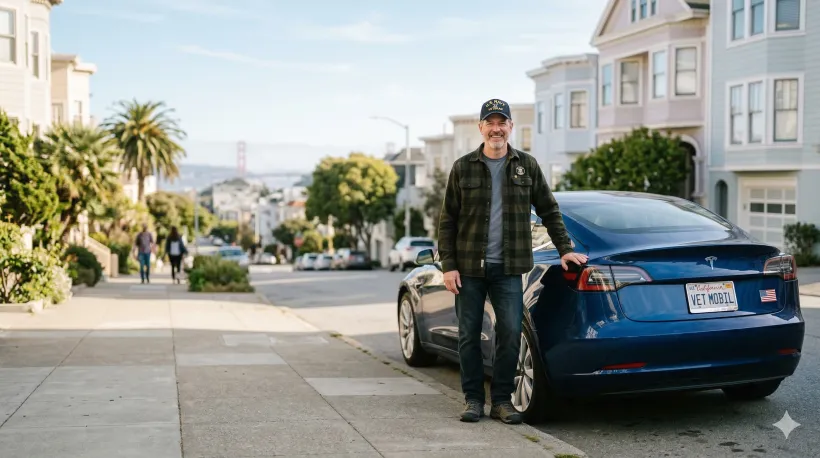
Disabled Veteran License Plates
The most well-known of these programs.
Veterans who meet the criteria set by the California Department of Motor Vehicles may be exempt from certain registration fees if they use the vehicle for personal transportation. In many cases, this means a significant reduction or complete waiver of standard fees.
Details can be found on the DMV website.
Special License Plate Programs
California also offers various special license plates, where a portion of the fees may be directed toward specific programs, such as the following:
- conservation;
- educational programs;
- support for national parks.
Although these plates sometimes require an additional initial fee, in some cases they can alter the structure of certain fees.
Low-Income Assistance Programs
Some drivers may have access to state or local assistance programs that indirectly reduce vehicle costs. For example, transportation assistance programs or environmental programs may cover a portion of transportation-related expenses.
Information about such programs is typically available on DMV websites, local transportation agency websites, or through California state programs.
Other Potential Reductions
In certain cases, drivers can reduce their costs if:
- the vehicle has a special status or use;
- the driver is eligible for special license plates or exempt categories.
That is why it is worth checking all possible programs before paying the registration renewal notice, especially if the amount seems too high.
How does Xtreet help drivers manage vehicle registration renewal?
Even when drivers understand the structure of California vehicle registration renewal fees, the renewal process can sometimes be complicated. Errors in the data, insurance issues, or incorrect vehicle classification can lead to delays or additional costs.
That’s why it’s convenient for drivers to use services like Xtreet, which help simplify the renewal process.
Xtreet offers:
- verification of registration fees before payment;
- quick online renewal processing;
- assistance with document issues;
- support in correcting common DMV errors.
This approach allows drivers to avoid delays and unexpected costs that can arise during the standard procedure.

FAQ
1. Why are California registration fees so high?
Because registration consists of several different fees, including the vehicle license fee, base registration, CHP fee, and local transportation surcharges.
2. What is the Vehicle License Fee?
It is a tax calculated based on the vehicle’s value. It amounts to approximately 0.65% of the vehicle’s market value.
3. Why is my registration renewal higher this year?
The amount may vary due to local fees, penalties, changes in the vehicle’s value, or other additional charges.
4. Do electric vehicles have higher registration fees?
Electric vehicles may be subject to an additional road improvement fee since they do not pay fuel tax.
5. Can I lower my registration cost?
Yes, sometimes this is possible—for example, by renewing on time, checking eligibility for discount programs, or correcting errors in the vehicle’s classification.
6. What happens if I renew late?
The DMV may charge late penalties, which increase depending on the length of the delay.
7. Can unpaid tickets increase the renewal cost?
Yes. Unpaid parking tickets or toll road violations can increase the renewal fee or even block the renewal process.
8. Is online renewal cheaper than in-person renewal?
The DMV fees themselves are the same, but online renewal often allows you to complete the process faster and avoid delays.
Conclusion
For many drivers, registration renewal in California seems expensive, but this is due to the structure of the payments. The total amount consists of several different fees, among which the vehicle license fee—which depends on the value of the vehicle—plays a key role.
The final amount is also influenced by local transportation taxes, regional programs, and possible fines. That is why two drivers may end up with completely different renewal amounts even for similar vehicles.
The good news is that drivers can reduce costs by renewing on time, verifying documents, and avoiding fines.
Xtreet helps simplify the renewal process, check fees faster, and avoid common mistakes that can lead to additional costs or delays.