Buying a Used Car in California: DMV Checklist Most Drivers Forget
Buying a used car in California is more complicated than simply inspecting it and settling up with the previous owner. The state has strict rules regarding vehicle transfers, meaning the buyer must take care of a whole set of requirements.
Many drivers focus on the car's history but forget key elements: from a current smog check to the necessity of VIN verification.
We will provide a complete checklist for used car buyers in California.
You will learn which documents you must demand from the seller, which mistakes most often lead to fines, when the smog check should be done by the seller versus the buyer, how much a new registration costs, and how to avoid problems that drag the process out for weeks and empty your wallet.
What Paperwork Must You Get From the Seller?
The first and most critical stage is obtaining a complete document package from the seller. Without it, you simply won't be able to register the car with the DMV, and an incomplete package will lead to a constant need to clarify and obtain missing items.
Properly signed title
The title is the document that proves ownership. It must be correctly signed in the appropriate fields by:
- the seller (seller’s signature);
- all co-owners, if there are several (especially in the case of AND between names);
- the buyer (buyer’s signature).
Common mistake: The seller signs the wrong field or leaves errors that cause the DMV to reject the documents. Meanwhile, you have already paid for the car.
Odometer disclosure
Mandatory for vehicles under 20 years old. It must include:
- current mileage;
- confirmation that the readings are accurate (not actual/rolled back).
Common mistake: Buyers forget to check the consistency between the mileage on the dashboard and the documents.
Bill of Sale
Not always mandatory, but highly recommended. It records:
- the transaction amount;
- the date of sale (critical for deadlines);
- the seller’s and buyer’s information.
Later, it will be needed to calculate use tax and will simplify the process, protecting you from errors.
Smog certificate
In California, the seller is specifically required to provide a smog certificate performed no earlier than 90 days before the sale. So, if the seller tries to push this onto you, feel free to cite the law.
Exceptions that do not require a smog certificate: Electric vehicles, certain generations of hybrids, diesel vehicles newer than 1998, and vehicles less than 4 years old (though in this case, the buyer pays a smog transfer fee).

Is a Smog Check Required for Used Cars?
A smog check is one of the items most often forgotten when buying a car, usually because each party is certain the other will handle it.
In California, it is required for most vehicles older than 4 years. The seller must pass the smog inspection and provide the certificate to the buyer before the deal. The certificate is valid for 90 days.
A smog check is required for:
- gasoline vehicles older than 4 years;
- diesel vehicles 1998 or later with a weight up to 14,000 lbs;
- most passenger cars on the market.
A smog check is NOT required for:
- electric cars;
- vehicles younger than 4 years;
- certain low-emission hybrid models;
- motorcycles and some diesel trucks.
If the smog check is not done by the seller, the DMV may refuse registration, and you will be forced to undergo the inspection at your own expense—this violates the law, though buyers often don't realize it. Always demand the certificate or check its status in the database.
It is important to note that if the vehicle does not require an inspection, the buyer themselves pays a smog transfer fee, which goes toward local road needs.
VIN Verification: When Do You Need It?
VIN verification is a physical inspection of the VIN code on the vehicle to ensure it matches the documents.
In most cases, it is only required when there is suspicion of additional risks or in non-standard situations. However, for your own peace of mind, it is better to check it always.
VIN verification is mandatory when:
- the vehicle arrived from out-of-state;
- the VIN on the title, registration, or documents does not match exactly;
- the VIN is damaged, erased, or hard to read;
- there are doubts about the vehicle's authenticity, the legality of its sale, or suspicion of a salvage history.
The verification can be performed by:
- the DMV;
- the CHP (California Highway Patrol) in complex cases;
- licensed private inspectors.
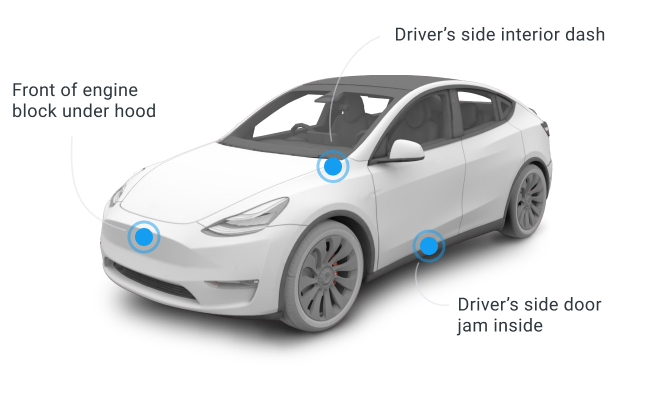
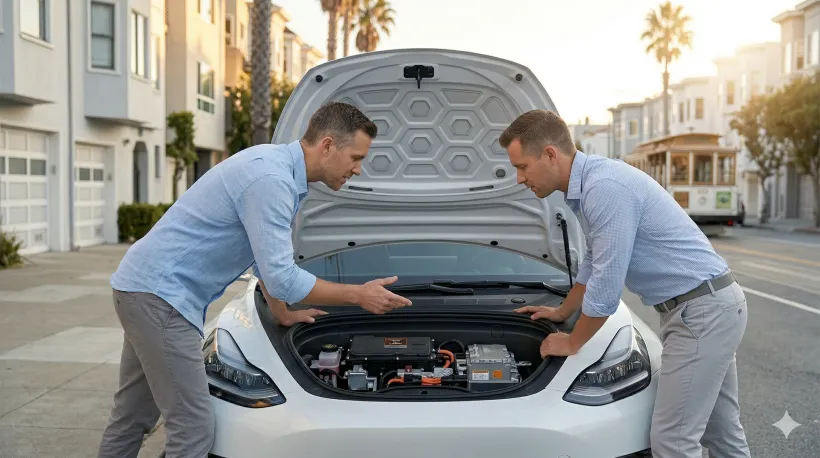
How the process works: The inspector examines the VIN plates on the car (dashboard, door pillars, sometimes the engine), compares them with the documents, and records the mileage and basic characteristics. Without this verification, the DMV will not allow the registration of an out-of-state vehicle to be completed.
Even if verification isn't mandatory, it's better to know the car's history and be confident in the safety of your purchase.
What Is the Transfer Deadline Most Buyers Forget?
California has a strict rule: after buying a used car, you have 10 days to complete the title transfer. This deadline applies to every buyer.
What happens if you miss the deadline?
- a late transfer penalty that grows every month;
- additional DMV fees;
- delays in receiving plates and a registration card;
- issues with Use Tax: the system may charge interest.
Typical fines can start from approximately $15-$30 and grow depending on the length of the delay. In complex cases (especially if several months have passed), the buyer risks paying several hundred dollars extra.
Why do people miss the deadline?
Most often, it is due to
- The seller incorrectly filled out the title, and the buyer cannot submit it.
- The smog certificate is missing, causing the documents to get "stuck."
- The buyer thinks the deadline is counted "from the moment of registration" rather than the date of sale.
- Lack of information about the DMV's operating schedule.
- The buyer postpones processing because the car is already in their possession.
The best rule: process the documents during the same week you bought the car—either through the DMV or through an online service like Xtreet.
Which Fees and Taxes are Required?
| Fee | What it covers | Typical Amount |
| Registration fee | Initial vehicle registration | ~$60+ |
| Title transfer fee | Transfer of ownership | ~$15-$25 |
| Use tax | Tax on the purchase price, depends on the county | 7-10% |
| Smog fee | If smog was not handled by the seller | ~$20-$50 |
These payments are mandatory and apply in most cases.
Use tax is calculated based on the actual amount on the bill of sale or the market value (the DMV may adjust the valuation based on many factors).
The DMV Checklist Most Drivers Forget
Here is the full list of steps every used car buyer must complete:
- Check the title
It is very important to ensure the VIN on the car matches the one in the documents, there are no errors in signatures, and there are no liens. - Obtain a smog certificate
Check the issue date (no older than 90 days); if it doesn't exist yet, ensure the seller knows their responsibility and provides it before the transfer of ownership. - Perform VIN verification (if needed)
Mandatory for out-of-state vehicles or if there are discrepancies in the documents. - Submit documents for title transfer
This can be done at the DMV or through a partner service like Xtreet. Remember the 10-day deadline! Fines are no joke. - Pay fees and taxes
To gain the right to the new vehicle, you will have to pay the registration fee, Use Tax, smog fee (under certain conditions), and title transfer fee. - Receive registration card, plates/sticker
The DMV issues license plates and a registration card after all procedures are completed.
What Red Flags Can You Notice When Buying a Used Car?
When buying a used car, you should watch for warning signs:
- Branded titles (salvage, rebuilt, junk)
These vehicles have a history of serious damage, and their future insurance may cost more.
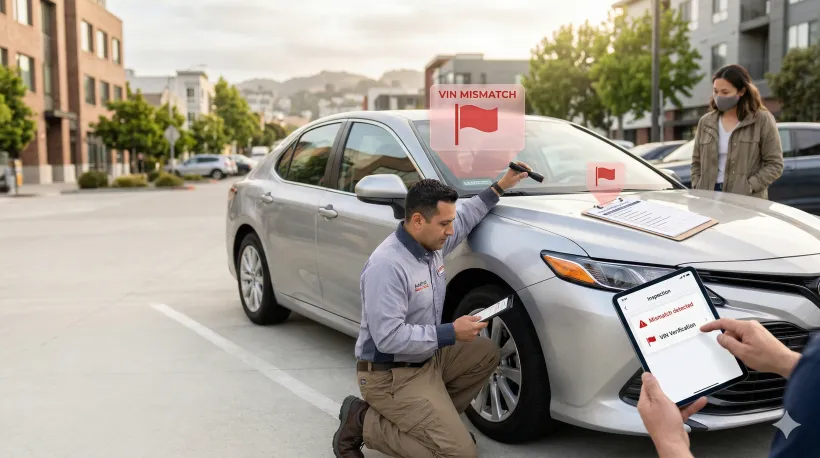
- VIN mismatch
If the VIN on the car does not match the documents, it is a sign of forgery or serious problems. For example, someone might be trying to sell you a stolen vehicle.
- Expired registration, fines, or unpaid tickets
A seller might quietly pass debts onto the buyer: the DMV will require all underpayments to be paid; otherwise, you won't get your documents. And without them, driving the new car will be illegal.
- Missing smog certificate or outdated certificate
An attempt to shift responsibility to the buyer violates the law.
- The seller does not appear on the title
This means you are dealing with a "curbstoner" (unlicensed dealer), and the documents may be invalid.
How to protect yourself: Check the VIN via Carfax/Autocheck, demand full documentation, avoid deals without a smog check (if required for that vehicle type), and carefully read the title and bill of sale.
How Xtreet Helps With Used Car Registration
Our team can step in once you have already purchased the car and moved to the registration stage.
Registering a used car can take a lot of time, especially when you need to gather documents, pass a smog check (if it comes to that), perform a VIN verification, pay taxes, and avoid mistakes.
Xtreet helps simplify the process and make it fast and stress-free.
What we do:
- automatically verify vehicle documents before submission;
- process title transfers quickly and without lines;
- advise on how to resolve document issues and inaccuracies.
FAQ
- What documents do I need when buying a used car in California?
Title, VIN, bill of sale, smog certificate (if needed), odometer disclosure.
- Who is responsible for the smog check?
The seller.
- How long do I have to transfer the title?
10 days. Do not miss this deadline, or fees will begin to accumulate.
- What fees do I have to pay?
Registration, title transfer, use tax, and smog fee (under certain conditions).
- Can I register a used car online?
Yes, through the DMV website or a partner service like Xtreet. Through Xtreet, it will be faster and simpler.
- What is VIN verification?
Verifying the match between the VIN code on the vehicle and the purchase documents.
- What happens if the seller didn’t sign the title correctly?
The DMV may refuse the transfer, and you will have to correct the signatures. It's not critical, but it's a very unpleasant delay.
- Can I buy a car with a salvage title?
Yes, but you must consider the consequences: lower resale value, additional inspections, and more expensive insurance that is harder to obtain.
- What if the car has unpaid registration fees?
The DMV will require the buyer to pay them before issuing a new registration.

Conclusion
Buying a used car in California involves more than just a technical inspection; it is a precise legal process dictated by the DMV. To avoid mistakes and fines, you must have a complete document package, check the smog and VIN, complete the title transfer on time, and pay all relevant fees. Mistakes can be costly, especially if you miss deadlines or trust unverified sellers.
Services like Xtreet help you navigate the entire journey faster, easier, and without errors—especially if you don't have the time to figure out all the DMV requirements yourself.