Failed Smog Check in California: What to Do Next
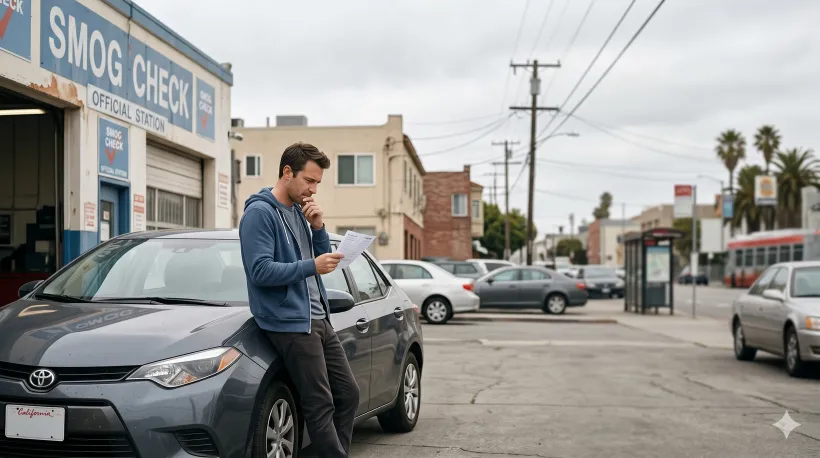
So you just got the paper that says FAIL. Maybe your check engine light has been on for a while, and you kept meaning to deal with it. Maybe this came out of nowhere. Either way, take a breath. A failed smog check in California is an inconvenience, not a dead end, and there are more options available to you than most people realize.
We're going to tell you what to do next (without losing your mind).
Here's what you need to know: you can't renew your vehicle registration without a passing smog certificate, but you don't have to figure this out alone or pay full price.
California's Bureau of Automotive Repair (BAR) administers a program called the Consumer Assistance Program (CAP) that can cover more than $1,450 in emissions-related repairs if you qualify. If your car isn't worth fixing, the same program will pay you $1,350 to $2,000 to retire it voluntarily. And if you need time to sort things out while your registration deadline ticks closer, there's a temporary operating permit that keeps you legal on the road while you do.
We walk you through every path forward, step by step.
Wait—What Does "Failed Smog Check" Actually Mean?
Before you do anything else, it's worth understanding exactly what failed and whether your car even needed the test in the first place. Not every vehicle in California is subject to the smog check requirement—and if you're driving something that's exempt, the situation looks very different.
What does the test actually check?
California's smog inspection has two main components.
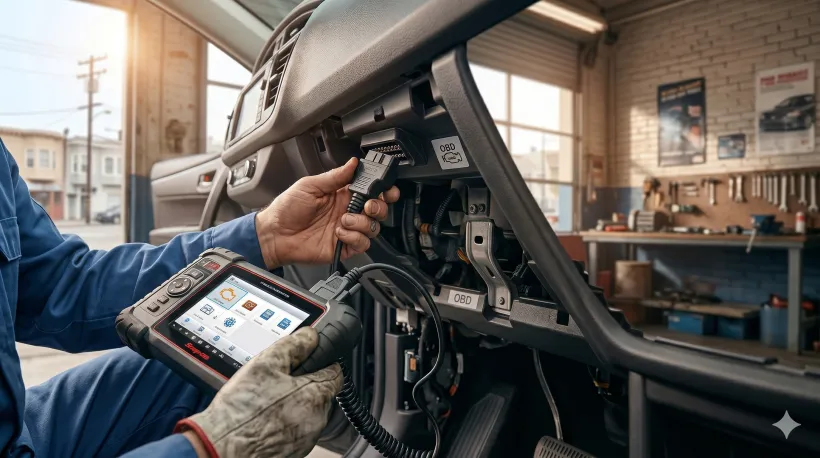
The first is an OBD-II scan—your vehicle's onboard diagnostic system is queried for any active or stored fault codes. As of 2025, California has tightened OBD-II readiness requirements, and depending on your vehicle's model year and emissions profile, incomplete monitors may now trigger a failed inspection.
The second component is a visual inspection of emissions control equipment—the catalytic converter, gas cap, and other hardware. Common reasons for failure include an illuminated check engine light, a faulty oxygen sensor, a failing catalytic converter, or evaporative emissions leaks in the fuel system.
After the test, the station gives you a Vehicle Inspection Report (VIR). Hold onto it—it tells you exactly what failed, and you'll need it if you apply for state assistance.
Does your car actually need a smog check?
This is the question a lot of people skip, and sometimes the answer saves them a lot of stress. Here's how the rules break down, according to the California DMV and Bureau of Automotive Repair (current as of 2026).
| Vehicle type | Smog check status |
| Gasoline/hybrid/alt-fuel, 1976 and newer, 9+ model years old | Required every 2 years |
| Gasoline/hybrid/alt-fuel, 8 model years old or newer | Exempt from biennial test—pay smog abatement fee instead |
| Gasoline/hybrid/alt-fuel, 1975 model year and older | Fully exempt — no test, no fee |
| Diesel, 1998 and newer, with GVWR 14,000 lbs or less | Required—no model year exceptions for diesel |
| Diesel, 1997 or older, OR GVWR over 14,000 lbs | Exempt |
The difference between "fully exempt" (pre-1976 gasoline vehicles and EVs) and the "newer vehicle exemption" matters.
Pre-1976 gasoline vehicles and EVs are exempt from the program entirely — no test, no fee, no smog-related requirement at all when renewing. Vehicles in the 8-model-year window, on the other hand, are exempt only from the physical smog test—they still pay an annual smog abatement fee as part of their registration renewal, and they'll need to test once that window closes. Think of it as a delay, not a permanent pass.
Your 3 Options After a Failed Smog Check
A failed result doesn't lock you into one path. California gives drivers three realistic routes depending on the condition of the vehicle and the budget available.
Here's an honest look at each one.
Option 1—Repair and retest
The most straightforward path is to fix what failed and go back for a retest. Start with the vehicle inspection report from the station—it lists every failure reason by code and description. Take that report to a station licensed to perform emissions repairs.
Not every shop qualifies; your DMV renewal notice will specify whether you need to go to a STAR station (a higher-performance tier of station that handles high-polluting vehicles and is required for some directed inspections).
After completing repairs, have your vehicle retested. The station will provide a final report once your vehicle passes and will electronically send the certificate to the DMV. That transmission typically reaches the DMV within 24 to 48 hours, after which the registration hold clears and you can complete your renewal.
One practical note on retesting: some stations offer a free retest if the vehicle returns within a certain timeframe after the original inspection, but this varies by station, so confirm the policy before you leave after your initial test.
Option 2—Consumer Assistance Program: state money for repairs
If the repair estimate is making you wince, this is the part of the guide worth reading twice. California's Consumer Assistance Program (CAP), administered by the Bureau of Automotive Repair, provides income-eligible vehicle owners with financial assistance for emissions-related repairs after a failed smog check.
Model year 1996 or newer vehicles may qualify for up to $1,450 for emissions-related repairs. Model year 1976–1995 vehicles may qualify for up to $1,100. These amounts were increased as of January 1, 2025.
To qualify for repair assistance, you need to meet all of the following.
| Requirement | Details |
| Who can apply | Registered owner with title in their name |
| What triggered the eligibility | Failed biennial (every-other-year) smog inspection—not aborted or training tests |
| Income threshold | Household gross income ≤ 225% of the current federal poverty guidelines (e.g., earlier it was $70,200/year for a family of 4) |
| Registration status | Valid registration sticker, OR all DMV fees paid with registration not expired more than 365 days |
| Vehicle conditions | Not in the process of being sold, not undergoing initial CA registration, and not registered to a business or non-profit |
| Emissions system | Must not have been tampered with or intentionally disabled |
You pay a co-payment—the exact amount determined under current CAP rules—and CAP covers the rest up to the program maximum. Repairs must be performed at a CAP-authorized STAR station, not just any shop.
Critical step: apply before you authorize any repairs.
If you get the work done first and then apply, the costs won't be covered. The application is available at the BAR site or by phone at (866) 272-9642.

Option 3—Vehicle retirement: turn in the car, get paid
If the repair estimate exceeds what the car is worth—which happens more often than you'd think with older vehicles—California will pay you to retire it. Income-eligible applicants receive $2,000; applicants who don't meet income requirements receive $1,350 for the voluntary retirement of an operational vehicle.
To qualify for retirement, the vehicle must be drivable and able to reach a BAR-contracted dismantler and must pass a visual and operational inspection—including having all doors, the hood, the windshield, and at least one headlight and taillight present. The vehicle must also have been continuously registered in California for the two consecutive years before the application.
The same rule applies here as with repairs: apply and get approved first, then bring the vehicle in. The retirement payment comes from the state, not from the dismantler.
What About a Smog Check Waiver?
You went through the repair process and spent real money, and the car still won't pass. There's one more option that sits between "keep trying" and "retire the vehicle"—a smog check waiver.
What a waiver is and when it applies?
A smog waiver allows you to register your vehicle even without a passing smog certificate—but only under specific conditions. The core requirement is that you've already spent a qualifying amount on emissions-related repairs at a licensed station and the vehicle still isn't passing.
The BAR sets the minimum repair expenditure threshold for waiver eligibility; this amount can be adjusted, so check the current figure before counting on it.
A waiver is temporary. It allows you to complete registration for that cycle, but the vehicle will be subject to the smog requirement again in the next renewal period. It's a bridge, not a permanent solution.
When won't a waiver be issued?
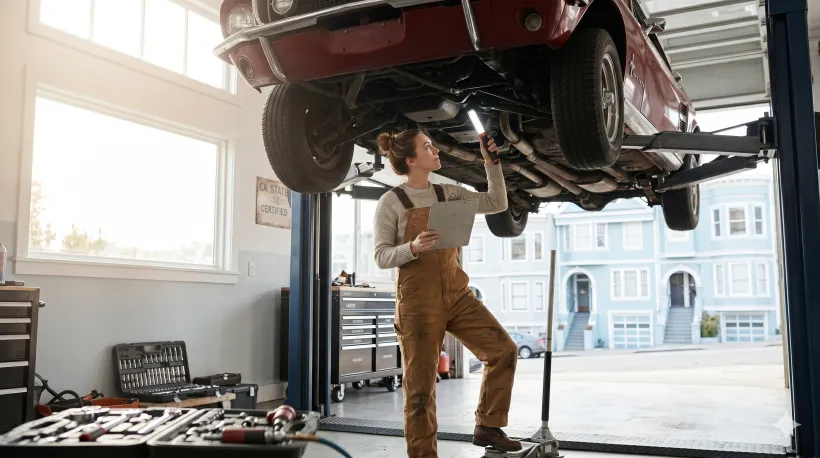
Not every vehicle qualifies, regardless of how much you've spent. The BAR will not issue a waiver if the vehicle has been officially identified as a high-emissions vehicle (gross polluter) or if the emissions control system was intentionally tampered with or removed. Repairs also must have been performed at a station licensed by BAR—work done at an unlicensed shop won't count toward the waiver threshold.
Can You Drive While You're Sorting This Out?
Repair takes time. If your registration deadline is close—or already past—you might be wondering whether it's legal to keep driving while you work through the process. The answer is yes, under one condition.
The Temporary Operating Permit (TOP)
California issues a temporary operating permit to drivers who need to operate their vehicle while resolving a smog check issue. The permit costs around $50 in counties where biennial smog inspections are required and is free in the case of an initial registration or title transfer. Note this: TOP varies depending on the registration scenario, and some smog-related permits may be issued at no additional cost.
To get one, you'll need a copy of your failed smog test, proof of insurance, and your renewal or transfer fees.
The TOP buys you time—it's not a permanent fix, and the vehicle must still pass a smog inspection before registration can be fully renewed. Think of it as a hall pass: it keeps you legally on the road while you work through the repair or CAP application process, without the risk of being cited for expired registration.
After You Pass—Completing Your Registration
Passed the test. Finally. Here's what happens next and how to make sure the renewal actually goes through without another delay.
How do results reach the DMV?
Once your vehicle passes, the station issues a smog certificate that is electronically sent to the DMV. This typically takes 24 to 48 hours to appear in the DMV's system. The smog certificate is valid for 90 days—so if you've been sitting on a passing certificate from a few months ago, confirm it's still within that window before trying to renew.
Completing the renewal
Once the DMV has the passing certificate on file, you can complete your registration renewal online.
Xtreet, as a licensed California DMV partner, allows you to finalize the renewal entirely online—submitting the required information, processing the state fees, and receiving your new registration sticker by mail without visiting a DMV office.
If there are any additional holds on your registration alongside the smog requirement—say, an unpaid parking violation—those can be addressed in the same session.
FAQ
- Can I renew my registration if my car failed a smog check in California?
The DMV will not complete your registration renewal until a valid smog certificate is on file. However, you can pay your renewal fees in advance to avoid late penalties while you sort out the smog issue, and you can get a temporary operating permit to stay legal on the road in the meantime.
- How long do I have to fix my car after a failed smog check?
There's no single statewide deadline that starts counting from your failed test. The pressure comes from your registration expiration date—once that passes, late fees start accumulating, and you're at risk for a citation. If your registration is close to expiring, get a TOP and either begin repairs or start your CAP application immediately.
- Is the smog retest free if I go back to the same station?
It depends on the station. Some offer a free retest if the vehicle returns within a specific window after the original inspection—typically within 30 days—but this is a station-level policy, not a statewide requirement. Confirm with the station before you leave after your initial test.
- Who qualifies for California's Consumer Assistance Program (CAP)?
To qualify for repair assistance, you must be the registered owner of the vehicle with the title in your name, your vehicle must have failed its most recent biennial smog inspection, and your household gross income must be at or below 225% of the federal poverty level. The vehicle must also be currently registered (or have fees paid with registration not expired more than 365 days) and cannot be in the process of being sold or initially registered in California.
- How much does California pay for smog repairs under CAP?
For model year 1996 or newer vehicles, up to $1,450 for emissions-related repairs. For model year 1976–1995 vehicles, up to $1,100. You pay a co-payment—typically around 20% of total costs—and the state covers the rest up to the program maximum. Amounts effective January 1, 2025.
- What is a smog check waiver, and how do I get one?
A waiver lets you register your vehicle without a passing smog certificate if you've already spent a qualifying amount on emissions repairs at a licensed BAR station and the car still won't pass. Apply through the Bureau of Automotive Repair. The waiver is valid for one registration cycle only—the car will be tested again at the next renewal.
- Can I drive my car after it fails a smog check?
If your registration is still valid, you can technically drive—but you won't be able to renew it until you pass. If registration has already expired, you're at risk for a citation. The cleanest option in either case is to get a temporary operating permit, which keeps you legally on the road while you work through the repair process.
- How long after passing smog does my registration update?
The smog certificate is transmitted electronically to the DMV, typically within 24 to 48 hours of your passing test. The certificate is valid for 90 days from the test date. Once it's in the DMV's system, you can complete your registration renewal online—through the DMV directly or through Xtreet.
- Can I use CAP if I already started repairs?
No. CAP requires that you apply and receive approval before authorizing any repair work. If the work has already been done, those costs cannot be reimbursed retroactively. Apply first, wait for the approval letter, then take your car to a CAP-authorized STAR station.
- What if my car fails again after I paid for repairs?
If you've spent the qualifying minimum on repairs at a licensed station and the vehicle still won't pass, you may be eligible for a smog check waiver. If the cost of further repairs is prohibitive, vehicle retirement through CAP is another option—you could receive $1,350 to $2,000 depending on income eligibility.
Conclusion
A failed smog check is one of those DMV moments that feels bigger than it is. The paper says "FAIL" in big letters, your renewal is blocked, and suddenly you're doing math on what the repair might cost. But California built a fairly solid system of options around exactly this situation—more so than most states—and most drivers who hit this wall have a path forward that doesn't involve panic or a $2,000 bill paid entirely out of pocket.
The practical order of operations: read your Vehicle Inspection Report to understand what failed; get a Temporary Operating Permit if your registration is close to expiring; and decide which path makes sense for your situation—repair (potentially with CAP covering most of the cost), waiver if repairs have already been attempted, or retirement if the numbers don't add up.
Once you have a passing certificate in hand, completing your registration renewal is the easy part. Xtreet handles that step online—no office, no line, and stickers by mail.