Registration Renewal Deadlines in California: How to Avoid Penalties
Vehicle registration renewal in California has strictly defined deadlines, and missing them is very easy.
This comes at a cost: late renewal penalties are applied automatically because the DMV system makes no exceptions and provides no extra time. Unlike some other states, California has no grace period, so even a single day’s delay can result in a penalty.
Many drivers misunderstand exactly when the deadline occurs, how the annual registration cycle works, and why receiving a reminder notice from the DMV is merely an option, not a guarantee that you won't miss the date.
Xtreet will explain how deadlines work, the amount of fines, what they depend on, how to avoid delinquency, and how to renew your registration without lines, delays, or extra costs using Xtreet.
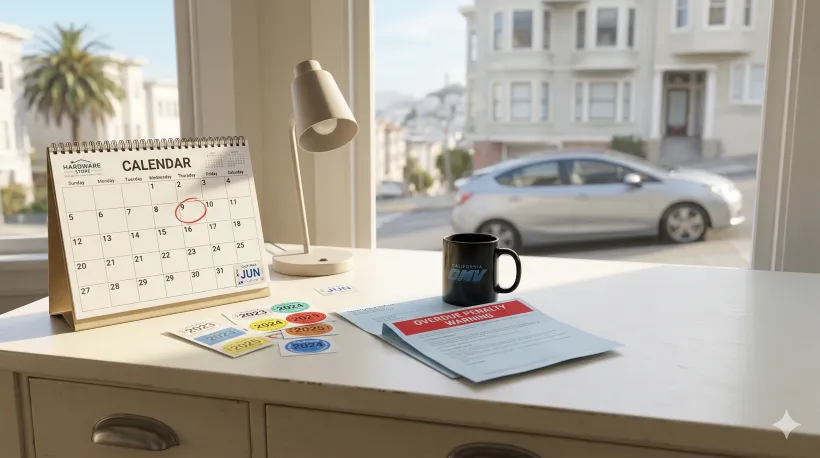
How Are California Registration Renewal Deadlines Work?
Vehicle registration is governed by California state law and administered by the California DMV. Every owner has a personal renewal date—it is indicated on the registration card and the license plate sticker. This exact date is the official renewal deadline.
If the owner does not submit an application and make a payment by the specified date, the system automatically assesses late penalties. There is no official "extra days" period in the state, and even paying the morning after the deadline already generates a fine.
The DMV usually sends a renewal notice, but if the letter is lost or was never sent at all, it does not exempt the driver from responsibility.
It is also important to remember that registration works on an annual cycle: the date is established at the time of the first registration and does not change from year to year, regardless of when the payment for the renewal was made.
In the event of non-payment, the vehicle's status in the system changes to "expired" the next day, which affects insurance, the ability to drive without hindrance, and the amount of future payments.
Understanding these rules helps avoid unnecessary costs and legal consequences, especially if you use online services like Xtreet, which allow you to renew your registration quickly and without lines.
Penalty Structure for Late Registration Renewal
Late registration penalties in California are calculated on a progressive scale. The longer the delay, the higher the payments become.
According to Vehicle Code §9554, the system divides late fees into the following levels:
| Delay | Registration Fee Penalty | Vehicle License Fee Penalty | CHP Penalty |
| 1-10 days | 10% | 10% | $10 |
| 11-30 days | 20% | 20% | $15 |
| 31 days - 1 year | 60% | 60% | $30 |
| 1-2 years | 80% | 80% | $50 |
| >2 years | 160% | 160% | $100 |
The first 10 days after the deadline are the best time to renew a delinquent registration. If the delinquency exceeds 1 year, the vehicle is considered seriously overdue and often requires additional inspections.
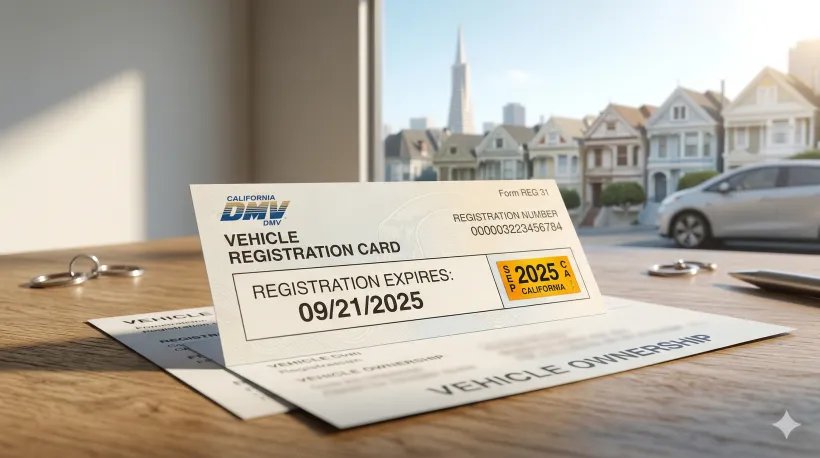
Each component of the fine has its own purpose:
- Registration fee penalty compensates for the late-paid registration,
- CHP penalty provides funding for patrol officers,
- Vehicle license fee penalty is based on the vehicle's value.
Even a single day of delay between levels changes the amount. The total fine can grow by hundreds of dollars in just a few months.
Additionally, driving a car with an expired registration is a violation of California law. This can lead to:
- receiving a fine specifically for this separate offense,
- vehicle impoundment (if the expiration is more than 6 months),
- receiving a "fix-it ticket," which must be cleared with an updated registration.
And, of course, an expired registration can affect auto insurance. Many insurance companies may increase premiums if a car is driven with an invalid registration, as it is considered a risk factor. Some may even cancel the policy—this is not a common practice, but it's better to be forewarned.
Common Reasons Why Drivers Miss Renewal Deadlines
Most drivers miss the deadline not because of a conscious disregard for the rules but due to technical and organizational details.
Typical reasons:
- Incorrect address at the DMV
If the owner changed their place of residence and did not update the address, the renewal notice will go to the old address.
Tip: Check your address at the DMV once a year or every time you move.
- Missed or lost notice
USPS may delay or lose the letter.
Tip: Do not wait for the letter—check the date on your registration card.
- Expired smog check
Without a smog check, a vehicle is not permitted for renewal.
Tip: Complete the smog check approximately one month before the deadline.
- Incorrect data in the system
Errors in documents or incorrect payment amounts.
Tip: Use the Xtreet online platform, which automatically verifies information.
- Lines at the DMV
Many drivers postpone payment until the last day and don't manage to submit documents and file the application.
Tip: Switch to online renewal and leave at least a few days of buffer.
- Sticker lost or never arrived
The status is updated, but there is no sticker.
Tip: Keep your proof of payment to avoid a police fine and order a replacement.
How to Avoid Penalties and Stay Compliant?
To avoid fines, it is not enough to just pay on time—you need to control all related steps.
- Check your address at the DMV
Address errors are the most common trigger for delinquency. The owner receives the notice too late or not at all.
- Pass the smog check early
Smog is one of the key delays. If the station is overloaded or the vehicle fails the test, registration is automatically blocked; furthermore, even a completed smog check does not appear in DMV databases instantly.
- Keep all proof of payment
If the sticker hasn't arrived or is delayed, proof of payment proves you updated the registration on time—this can simplify a conversation with patrol officers, although it's unlikely to save you from being issued a "fix-it ticket."
- Do not pay on the last day
The system may hang, the bank may decline the transaction, and DMV lines may be too long. Do not risk it.
- Use online services
Platforms like Xtreet send data to the DMV without delay and automatically check for errors—this will save you a lot of time and nerves.
- Check the status
If there is no update in the system 2-3 days after payment, you need to clarify with the DMV what happened.
- Act first if the sticker has not arrived
The DMV allows for USPS delays or the loss of mailings. If you have proof of payment, you are not breaking the law.
What to Do If You Already Missed Your Renewal Deadline?
Delinquency is not a critical situation, but you must act quickly so the fine amount doesn't grow.
- Determine the penalty tier
Depending on the number of days past due, the fine may be minimal or significant. - Pay immediately to minimize the amount
Each new level increases the fine size. - Missing a smog check?
Complete it as soon as possible. Without it, renewal is impossible.
Can late fees be contested?
In certain cases, yes. For example, if there was a system error or the DMV provided incorrect data. But you will need to prove that the delay was not your fault.

How Does Xtreet Help You Avoid Renewal Penalties?
The Xtreet team helps vehicle owners update their registration faster and without the risk of delinquency. Our online service:
- instantly submits data to the DMV;
- automatically verifies information and warns of potential delays;
- helps order a replacement sticker in case of loss;
- eliminates the need to visit the DMV and stand in lines.
Alice turned to Xtreet one day before her deadline because she didn't have time to update her registration at a DMV office due to long lines—it was peak season. Fortunately, she had the necessary documents: in a couple of minutes, she submitted the application and avoided the fine.
FAQ
- When is my California registration renewal actually due?
On the exact date printed on your registration card and sticker.
- Is there a grace period for late renewal in California?
No. Penalties start immediately after the expiration date.
- How much are the penalties for renewing late?
Fees depend on how many days have passed and include multiple penalty categories.
- What if my notice didn’t arrive and I missed the deadline?
You are still responsible. Do the registration ASAP.
- Can I drive with expired registration?
No. It may result in fines, citations, or vehicle impound.
- Does a smog check affect renewal deadlines?
Yes. If your smog is expired, renewal cannot be completed.
- Can Xtreet help me renew registration online?
Yes. Xtreet processes renewals instantly and helps avoid penalties.
Conclusion
Deadlines for renewal in California are strict: the system makes no exceptions, and fines are applied automatically. The most common reasons for delinquency are failed smog checks, address issues, lost notices, or DMV lines.
Using online partners like Xtreet helps avoid errors, speed up submission, monitor registration status, and reduce the risk of missing the deadline.
Timely renewal is not only a way to save money but also a guarantee of legal safety and continuous insurance coverage.