Do You Need VIN Verification in California? Situations Most Drivers Don’t Expect
VIN verification in California is a legal procedure required far more often than many realize.
There is a myth that a VIN inspection is only necessary when bringing a car in from out of state, but the DMV requires a physical examination of the VIN in a variety of additional situations: from errors in documents to suspicions that the number does not match factory specifications.
Understanding these requirements helps avoid delays, returned documents, inspection lines, and re-submitting applications to the DMV. In this material, we break down all official grounds, non-obvious cases, and typical mistakes and show how to prepare for VIN verification so that the registration or title transfer process goes as quickly as possible.
When Is VIN Verification Required by California Law?
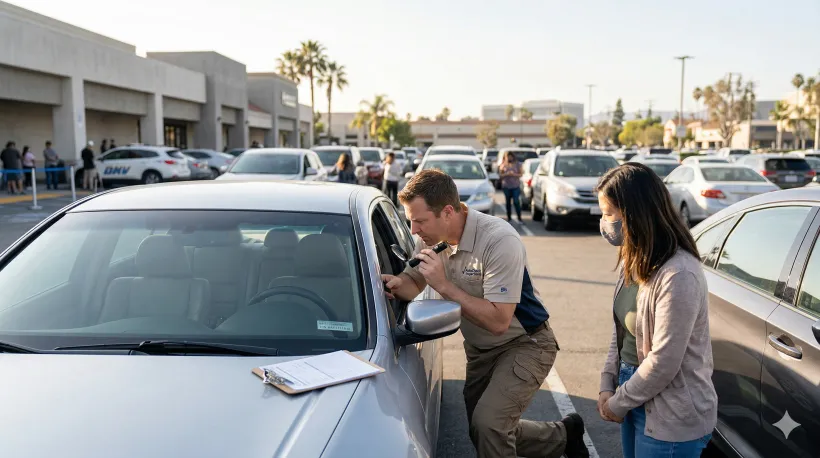
In California, a physical verification of VIN compliance is conducted in cases where the DMV is obligated to confirm the legality of a vehicle's origin, the consistency of its documentation, and the authenticity of the factory number.
Here is the full list of situations provided for by law:
- Out-of-state vehicle
All vehicles sold to California residents from another state must undergo VIN verification before registration. The DMV must ensure the number has not been altered and matches federal standard structures.
- Missing or damaged California record
If the DMV cannot find or read a previous record for a vehicle, an authorized inspector must physically verify the VIN on the car.
- DMV doubts regarding number compliance
If the number is unclear, has an unusual location, or the VIN does not match the model year template, an inspection is mandatory.
- Salvage or rebuilt title
In the case of restored or totaled vehicles, the inspection is conducted by the CHP. This is done to confirm the vehicle is not in stolen vehicle databases.
- Change in construction or body type
Any modifications that change the type of vehicle (e.g., converting a truck) require verification.
- Incorrect VIN in documents
A single incorrectly recorded digit is enough for an automatic VIN inspection requirement.
- Vehicles brought in after moving
Even if the vehicle has long belonged to the owner, but they moved from another state, an inspection is necessary.
- Potential signs of VIN tampering
If the DMV notices risks of plate alteration or document forgery, an inspection is mandatory.
Situations Most Drivers Don’t Expect
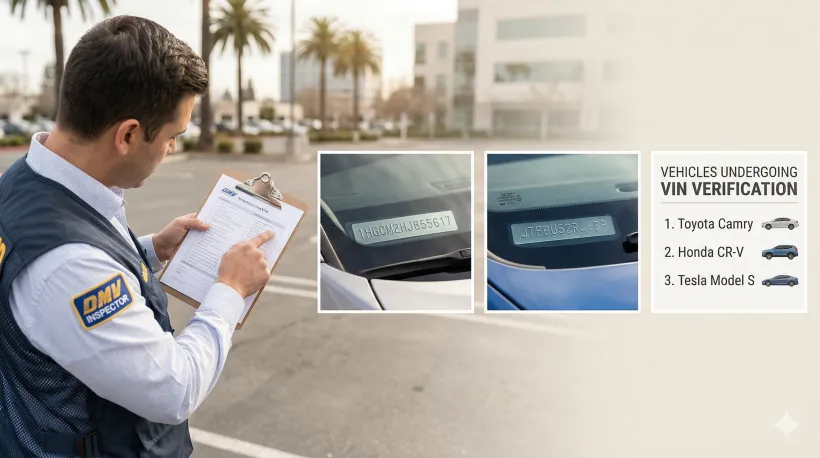
In addition to formal requirements, there are many real-life situations where drivers do not expect the need for VIN verification at all. However, the DMV acts strictly and will not begin processing documents until the VIN has been inspected.
- Buying a car that has "sat" for a long time without registration
A car that hasn't undergone registration for several years almost always triggers an additional check. The DMV wants to ensure the number wasn't changed or lost due to repairs or an accident.
- Errors in the bill of sale or title
One mistake—a missing digit, a mixed-up letter, an incorrect year—automatically creates a discrepancy between the document and the actual VIN on the car. A typical situation: a dealer processes documents quickly and makes a typo. For the DMV, this is a “possible discrepancy” and grounds for inspection.
Inattention and the human factor are typical causes of paperwork delays.
- VIN mismatch in different parts of the car
There may be different plates on the door and under the windshield (especially after repairs). If the numbers do not match, an inspection is mandatory, and in some cases, a CHP inspection is required.
- A car after cosmetic repairs where the plate was removed or moved
Even if the repair was simple, moving a VIN plate without proper marking automatically triggers a mandatory check.
- Vintage cars with shortened or non-standard VINs
Vehicles made before 1981 have short VINs. Due to the non-standard format, an inspector must verify them manually.
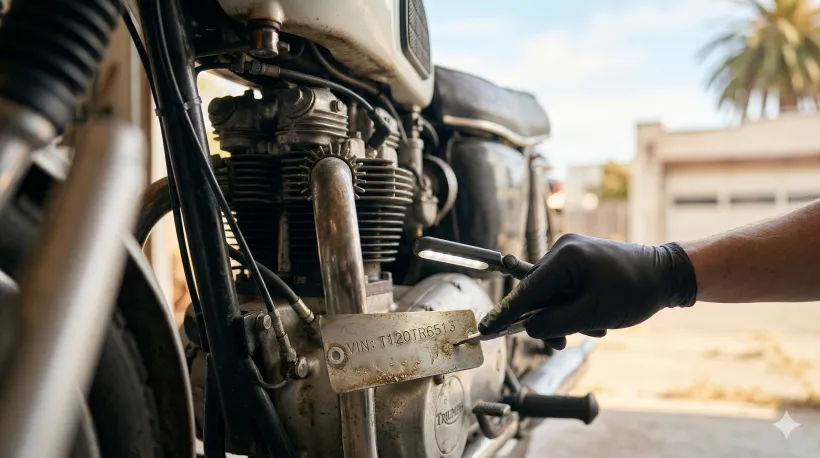
- Motorcycles and trailers with VINs in hard-to-reach places
The DMV often cannot read a VIN without a physical inspection, as the number may be hidden or poorly visible.
- Suspicion of tampering or damaged VIN
Even if the car is completely legal, any trace of grinding, painting over, or panel replacement triggers a CHP inspection requirement.
For each of these cases, untimely VIN verification delays processing for weeks and sometimes leads to a registration denial, requiring a new application. Therefore, to save time and stay within legally permitted deadlines, it is vital to consider all nuances.
Not sure if you need VIN verification? Xtreet experts can advise you.
Who Can Perform VIN Verification in California?
In California, there are several categories of specialists authorized to conduct VIN inspections. The choice affects the speed of processing.
| Authorized Persons | Pros | Cons |
| DMV Inspectors | Official source; information goes directly into the database. | Long lines, appointment required, limited hours. Often unavailable for salvage or complex cases. |
| California Highway Patrol | Conduct inspections in complex or high-risk cases: salvage title, suspicion of tampering, serious document discrepancies, and VIN mismatch in multiple locations. | Getting a slot is difficult; sometimes you have to wait several weeks. |
| Private Certified Specialists | Speed, mobile service to the client, handles most vehicle types. | Cannot inspect salvage or suspicious cases. |
| AAA | Convenient for service members, often free or for a small fee. | Does not conduct complex or “flagged” inspections. |
How Does VIN Verification Affect Registration & Title Processing?
Without VIN verification, the DMV does not start processing documents. If a VIN inspection is required by law, the DMV simply will not open your case until it receives confirmation. This is the most common cause of delays.
Typical consequences of missing VIN verification:
- return of the document package marked "incomplete";
- a delay of 2-6 weeks, depending on lines;
- the need to re-submit documents;
- risk of receiving fines for late registration.
Common Mistakes and How to Avoid Them
Most drivers make the same mistakes, which are easy to fix in advance.
1. Arriving without documents
For VIN verification, you need the title, bill of sale, registration, or any documents confirming ownership.
- Solution: Gather a complete package in advance.
2. Dirty or illegible VIN
An inspector cannot record the number if it is covered by dust or paint.
- Solution: Clean the VIN before the inspection.
3. Missing or mixed-up digits in the title
One error makes the document unfit for processing.
- Solution: Verify the VIN in all documents before submission.
4. Wrong form or missing pages
Drivers most often incorrectly fill out REG 31.
- Solution: Check the form against instructions or contact a service like Xtreet for help.
5. Incorrectly stated mileage
In the case of a significant discrepancy, the DMV may require an additional check.
- Solution: Verify odometer readings before buying the car.
6. Approaching an agency that lacks the necessary jurisdiction
AAA does not inspect salvage; a licensed verifier cannot examine suspicious cars. Which service to use depends on your individual situation.
- Solution: Correctly choose the type of inspector based on the case.
How Does Xtreet Help With VIN Requirements?
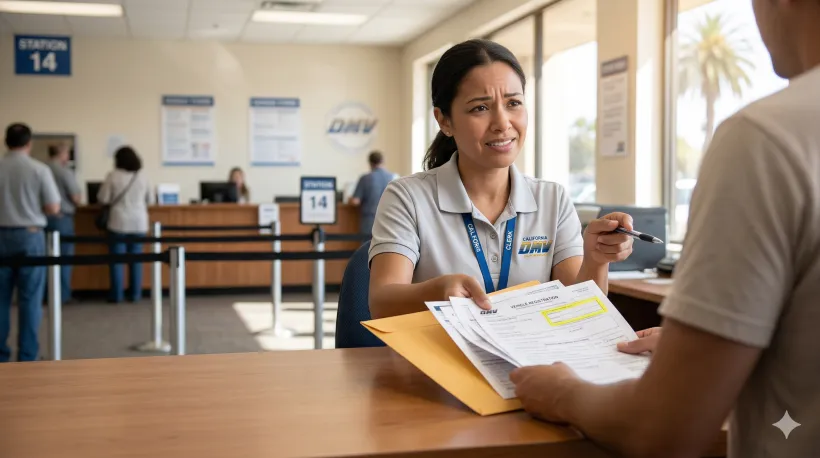
Xtreet acts as a service that optimizes the entire registration and title transfer process. We do not conduct VIN inspections, but we guide clients through all stages and prevent time loss due to incorrect documents.
Xtreet helps to
- conduct a preliminary document review;
- determine if VIN verification is necessary;
- direct you to a licensed or appropriate inspector;
- avoid incorrect forms or filling errors;
- ensure fast document processing after the VIN inspection is complete;
- minimize the risk of the DMV returning your application.
This way, the client receives a fully prepared document package and completes registration without delays.
FAQ
- Do all out-of-state vehicles need VIN verification?
Yes, without exception.
- How long does a VIN inspection take?
On average, 5-15 minutes.
- Can a private VIN verifier check salvage vehicles?
No, salvage is inspected only by the CHP.
- Is VIN verification required every time ownership changes?
No, only if there are discrepancies between the documents and the VIN.
- What happens if my VIN plate is damaged?
The DMV will direct you to the CHP. Waiting for their inspection can take a long time, so it's better to do this in advance and on your own.
- Can I register my car without VIN verification?
No, if the law requires an inspection.
- How much does VIN verification cost?
On average $10-25, but some private services cost over $100 due to additional “convenience” services.
Conclusion
VIN verification when registering a car in California is needed far more often than most drivers expect.
A physical inspection allows the DMV to confirm the legality of the vehicle, eliminate document errors, and prevent the registration of cars with altered or forged numbers.
A correct understanding of when a VIN inspection is necessary helps avoid registration delays and returned documents. Timely preparation and the support of the Xtreet service allow you to go through the process quickly, without unnecessary trips to the DMV, and without the risk of an application rejection.