California Title Transfer Timeline: How Long It Really Takes
In California, a title transfer is a multi-step process that takes more time than it seems to drivers without experience in it. It includes preparing documents from the seller, verification by the DMV, payment of fees, a smog check, and, if necessary, a VIN verification.
Some drivers underestimate the actual timelines, expecting the new title to arrive instantly after signing the agreement. In reality, processing time depends on the submission method, the completeness of the package, and the presence of potential errors on the title.
We will tell you how long a title transfer actually lasts in California, which stages take the most time, what factors can slow down the process, and how to avoid them.
Do you want to receive a new title without delays? This is for you.
What is the Standard Title Transfer Timeline in California?
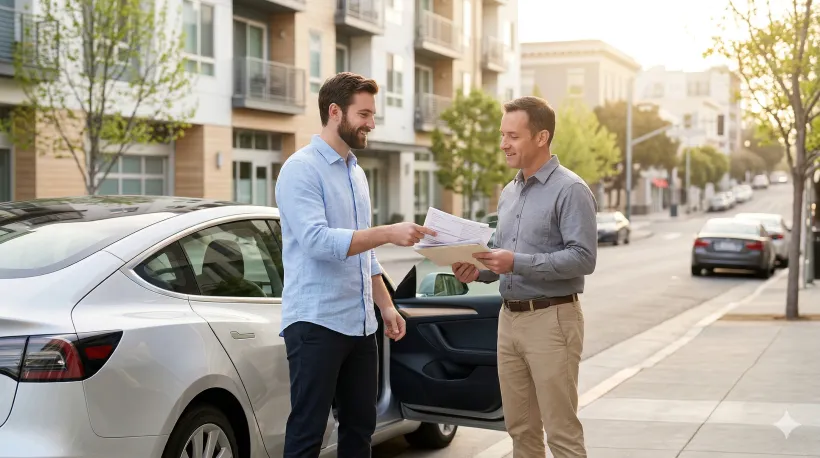
Standardly, a title transfer in California takes from 7 to 30 days, but the exact time depends on the submission method, the completeness of the package, and the requirement for inspections such as a smog check or VIN verification. The main stages of the process include DMV document processing, confirmation of fee payments, and the issuance of the new title.
- DMV Document Processing
After submission, the document package is checked for correct signatures, the presence of a lien release, and data consistency. If documents are incomplete or contain errors, this stage can drag on for several days or weeks.
- Confirmation of Fee Payments
The payment of all relevant fees and penalties must be confirmed in the DMV system. Delays at this stage often arise due to incorrect amounts or unaccounted payments from the previous owner.
- Issuance of the New Title
After verifying all documents and confirming payments, the DMV generates a new title, which is printed and prepared for mailing. The printing process itself takes several days, and delivery can add another 1-2 weeks, especially if the mail is seasonally busy.
It is important to remember that a complete document package is the key factor for a fast transfer. Incomplete forms, the absence of a smog certificate, or issues with VIN verification for out-of-state cars can increase the timeframe by 1-2 weeks and add significant stress. Proper preparation and choosing the optimal submission method help you get a new title without delays and avoid typical problems faced by California drivers.
How Does the Submission Method Affect Processing Time?
The method of submitting documents for a title transfer in California significantly affects processing time. Choosing between filing at a DMV office, by mail, or online through authorized partners will determine how many days you wait for your new title.
- DMV Office
Submitting documents in person at a DMV field office usually takes an average amount of time but a great deal of effort. Long lines, manual document verification, and potential paperwork errors extend the process to 15-30 days. Furthermore, during peak periods—such as the beginning of the year or during mass vehicle sales—processing times can increase by several weeks. This is suitable for those who prefer old-school methods.
- Mail-in Submission
Sending documents by mail takes from 20 to 60 days. The main risks are delays through USPS or the loss of documents. Also, if the document package is insufficient or contains errors, the entire process may stop, and you will receive a notice regarding the need for re-submission, which "restarts" the timer. This is suitable for those who have plenty of time.
- Online DMV Partners (e.g., Xtreet)
Online submission significantly reduces timelines. For example, the Xtreet platform verifies documents automatically, identifies errors before sending, and allows you to avoid physical lines, missing information, or document duplication. Thanks to this, processing is reduced to 7-10 days. Additionally, the user receives a transparent status at every stage of the transfer, including smog and VIN verification. This is optimal for those who want to receive a new title as quickly as possible and without stress.

Which Required Steps Influence the Timeline and How?
A title transfer in California includes several mandatory steps, each of which affects the overall processing time. Understanding which stages can delay the process helps in planning the timeline and avoiding issues.
- Obtaining Documents from the Seller
Drivers often delay the transfer due to an incomplete package of documents: missing signatures, an incorrect lien release, or missing forms. To speed up the process, ensure you know the full required list of documents and check them before submission.
- Smog Check
For most vehicles in California, a smog certificate is mandatory. If the inspection is not passed or the previous certificate has expired, the DMV will not accept the documents, adding 1-2 weeks to the timeline for updating the inspection and transmitting the results.
- VIN Verification
For out-of-state cars or imported vehicles, a VIN verification is required. This can take from one to five days depending on the verification method and the workload of the inspecting authority.
- Payment of Fees
Incorrect payment or skipping fees blocks further processing. Check all amounts in advance and keep confirmation of payments.
- Data Entry into the DMV
Manual document processing increases timelines, especially with offline submission. Online services, such as Xtreet, automate this stage, reducing delays to a minimum.
- Issuance and Printing of the New Title
After verifying all data, the DMV prints a new document, which is sent by mail. DMV workload and USPS delays can add another 1-2 weeks to the timeline. Most likely, you will receive your title sooner, but during peak periods, this delay should be taken into account.
Among all steps, the biggest bottlenecks are the smog check, VIN verification, and incomplete documents. Timely preparation and the use of online platforms with automatic verification allow you to minimize these delays.
Our practice shows that proper organization of each stage reduces transfer time by 30-50% compared to classic offline submissions.
Common Delays and How to Avoid Them
A title transfer in California is often delayed due to typical mistakes and unforeseen factors. Understanding these reasons and how to avoid them helps shorten the timeline and obtain a new title without unnecessary problems.
- Errors in Documents
The most common cause of delays is incorrect seller signatures or the absence of a lien release. If one of the signatures is missing or incorrectly placed, the DMV will not accept the documents.
- Tip: Before submission, check every item of the document; ensure the lien release is prepared and signed correctly.
2. Incomplete Paperwork
Skipped forms, missing copies of the smog certificate, or old registration cards block processing at the DMV.
- Tip: Use an Xtreet checklist or the official DMV checklist to verify all required documents before submission.
3. Untimely or Incorrect Payment of Fees
Debts or errors in paying DMV fees result in a refusal to accept documents.
- Tip: Verify the amount before submission, keep payment confirmations, and use DMV online calculators if in doubt.
4. Smog Check Delays
For most vehicles, a smog certificate is mandatory. If the inspection is not passed, documents will not be processed. Also, keep in mind that stations performing smog checks send data in batches, so the DMV will not receive them instantly.
- Tip: Complete the smog check in advance and ensure the certificate is valid at the time of submission.
5. VIN Verification for Out-of-State Cars
VIN verification is necessary for cars from other states or imported machines. If this stage is skipped, the DMV will not accept the documents.
- Tip: Arrange verification through an authorized DMV agent or use the support of an online partner.
6. Mail Delays (USPS)
With mail-in submission, documents can get lost or arrive late, especially if you send them during a busy season.
- Tip: Use tracking and services with electronic confirmation of submission status.
7. DMV Workload
During peak periods, when many drivers submit documents, timelines can increase by 1-2 weeks.
- Tip: Avoid peak months or submit documents online through Xtreet, which reduces processing time and ensures status transparency.
8. Failure to Follow the Sequence of Steps
Submitting documents without a smog check, fee payment, or lien release stops the entire process.
- Tip: Follow the correct order: documents → smog/VIN → payment → submission.
9. Issues with the Previous Owner
If the seller does not provide all required forms or has outstanding fines, the transfer is delayed.
- Tip: Ensure all the seller's obligations are met before starting the submission.
Following these recommendations allows you to minimize typical delays. Online services like Xtreet help verify documents in advance, automatically detect errors, and ensure fast submission to the DMV. This way, you receive a new title significantly faster and without unnecessary delays.
How Long Should You Wait Until You Receive Your New Title?
Usually, the paper document arrives by mail 2 to 6 weeks after the DMV completes processing. The timeline consists of several stages.

The first is the day of document submission. This does not mean processing began immediately; there may be a queue for verification at the DMV.
The next stage is the electronic confirmation, which indicates that the document package has been accepted and is being verified. At this stage, possible errors or missing payments become visible.
After confirming the documents, the DMV generates and prints the new title. This process usually takes a few business days, but timelines can increase during peak periods or when there is a heavy load on DMV printing facilities.
The final stage is mail delivery. Even after printing, the document may take 5 to 14 days before it reaches your mailbox. USPS sometimes delays delivery, especially during holiday or peak seasons.
What to do if the title has not arrived within a 6-week timeframe?
It is recommended to:
- Check the status through the official DMV portal.
- Ensure all fees and payments are completed.
- If necessary, submit a duplicate title request.
Understanding this timeline helps avoid unnecessary worry and provides a clear idea of when to expect the physical document. Planning and verifying each stage ensures that your title transfer is completed without additional delays.
Can You Drive Before the Title Transfer Is Complete?
Yes, but under certain conditions.
The key factor is having a valid registration and current registration stickers. If your registration is processed and all fees are paid, the DMV allows you to use the vehicle even if the paper title has not yet arrived.
It is important to understand the difference between a title and registration. A title proves ownership of the car, while registration gives the legal right to use it. The absence of a title does not prohibit driving as long as the registration is valid.
There are cases where a driver cannot use the vehicle before the transfer is complete:
- Smog check not passed—the DMV will not accept the documents, and the vehicle cannot be legally operated.
- Presence of a lienholder—a bank or lender has restrictions on using the car until the debt is paid.
- Issues with the seller's documents—if forms are incomplete or contain errors, the transfer is not finished, and the technical legality of using the car is questionable.
Thus, driving a car is possible before the title transfer is complete if all DMV requirements are met and there is confirmation of registration. Online services, such as Xtreet, help quickly verify all documents and avoid issues related to the illegal use of a vehicle.
How Xtreet Speeds Up the Title Transfer Process
The Xtreet online service significantly accelerates title transfers in California by eliminating many traditional delays.
First of all, the platform verifies documents even before submission to the DMV, identifying errors or missing forms. This allows you to avoid re-submissions and delays due to an incomplete document package.
Furthermore, Xtreet ensures fast online submission. The automated system transmits data to the DMV without lines, reducing processing time by 30-50% compared to offline submissions or mail. Additionally, the platform helps correct errors in real-time and supports the user with the smog check and VIN verification for out-of-state cars, which often becomes a bottleneck in the standard process.
Thus, Xtreet not only shortens the timelines but also minimizes the risk of typical delays, allowing drivers in California to receive a new title quickly, without stress, and without additional visits to the DMV.
FAQ
- What is the average title transfer time in California?
On average, a transfer takes from 7 to 30 days, depending on the submission method and the completeness of the documents. Online submission through Xtreet reduces timelines to 7-10 days.
- Does the DMV process online transfers faster?
Yes, online submission is processed faster because documents are checked automatically and there are no lines. However, even the DMV website is slower than online partners like Xtreet.
- How long does it take to receive a new title in the mail?
After processing is complete, the paper title arrives by mail in 2-6 weeks. The timeframe depends on the submission method, data accuracy, and the workload of the DMV and post office.
- Can delays happen even if all documents are correct?
Yes, delays are possible due to DMV workload or postal issues.
- Can I drive without the completed title transfer?
You can, if there is a valid registration and current stickers. The title proves ownership but does not affect the legality of using the car.
- What if the seller made a mistake on the title?
The transfer is delayed. You need to correct the errors or obtain a proper lien release.
- Do I need a smog check before transferring the title?
For most cars—yes. Failing a smog inspection blocks the DMV from accepting the documents.
- How long does VIN verification take?
For out-of-state cars, VIN verification takes from one to five days, depending on the method and the workload of the agents.
- Can Xtreet submit my title transfer online?
Yes, Xtreet allows you to submit documents online, verify them, and receive assistance from the team if needed.
Conclusion
A title transfer in California is a structured process involving document preparation, DMV verification, fee payment, a smog check, and VIN verification. Transfer timelines depend on the submission method and the completeness of the document package. The most common delays arise from seller errors, the absence of smog, or VIN issues, as well as DMV workload and mail delays.
Online submission through authorized partners, such as Xtreet, allows for a significant reduction in processing time, automatically verifies documents, helps correct errors, and ensures transparency at all stages. Drivers receive their new title faster, minimizing stress and the risk of delays.
Following the correct order of steps, having a complete document package, and using online platforms are the keys to a successful and fast transfer in California.