Why Your California DMV Registration Is On Hold — And How to Fix It Fast
You sat down to renew your car registration—just like every year—and then the screen stopped you cold. A hold. Or worse, a suspension notice in the mail that you're pretty sure you've never seen before. If that sounds familiar, you're not alone. Thousands of California drivers run into exactly this wall every year, usually at the worst possible moment—right before registration expires or right after they've bought a car. And with it, you couldn't do the renewal until you resolved a specific issue with the DMV.
The good news: most DMV holds can be resolved completely online, often in a matter of days.
The bad news: the DMV's website is not exactly known for holding your hand through the process. Our guide breaks down every common type of hold (there are six main reasons), what it means, and the fastest path to clearing it online—without a 3-hour wait at a DMV office.
So, What Does "Registration Hold" Actually Mean?
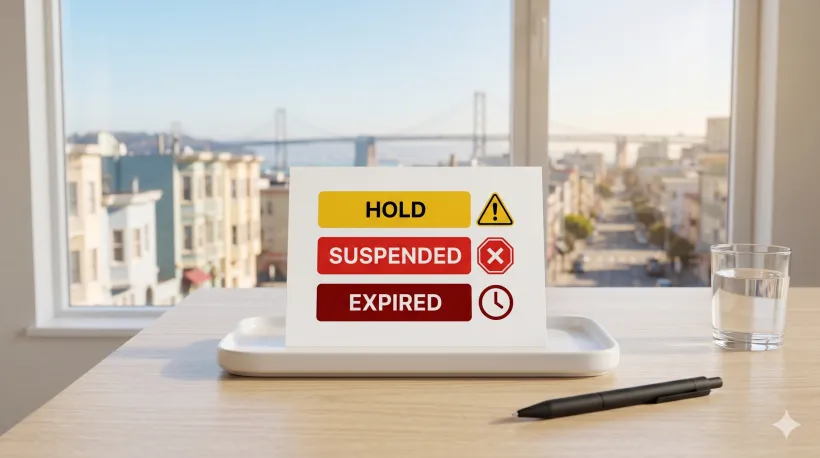
Before diving into causes and fixes, it's worth clearing up one thing that trips a lot of people up: a "hold" and a "suspension" are not the same thing—and the difference matters quite a bit for what you need to do next.
Hold vs. Suspension — The Difference You Need to Know
In practice, a registration hold means the DMV has placed a compliance block on your renewal and won't let you finish it until you fix something specific. Your registration may still technically be valid—but the clock is ticking.
A suspension, on the other hand, means your registration has already been revoked. Driving with a suspended registration is illegal and can result in fines, impoundment, and a much bigger headache than whatever caused the suspension in the first place.
| Status | What it means | Legal to drive? | How to resolve |
| Hold | Renewal is blocked pending a specific fix | Technically yes, but risky | Resolve the underlying cause |
| Suspended | Registration has been revoked | No—illegal | Pay fees + $14 reinstatement |
| Expired | Missed the renewal deadline | No—citation risk
| Renew and pay late penalty |
The safest approach if you have any kind of hold is to treat it as urgent and resolve it before your current registration expires. Once it tips into suspension territory, you're dealing with reinstatement fees on top of whatever caused the hold in the first place.
The 6 Most Common Reasons Your Registration Is on Hold
California's DMV registration system is deeply interconnected with other state and local agencies—courts, the Air Resources Board, toll authorities, and insurance companies. That's actually great for keeping the roads safe, but it also means there are more ways than you'd expect for a hold to land on your record, sometimes without any obvious warning.
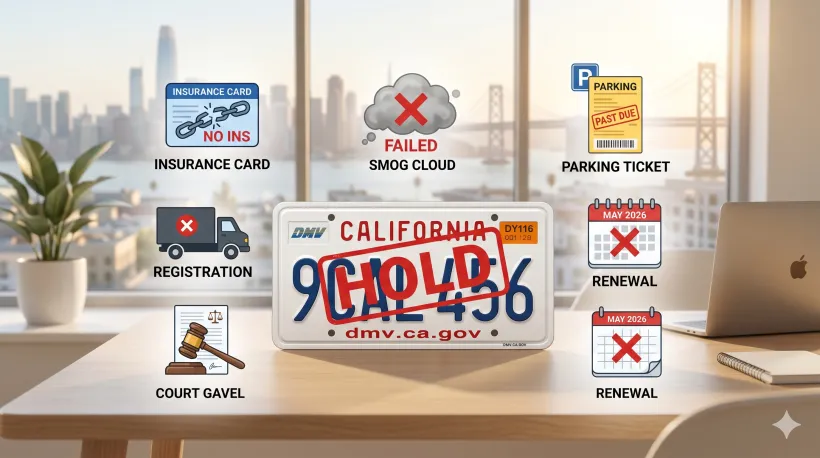
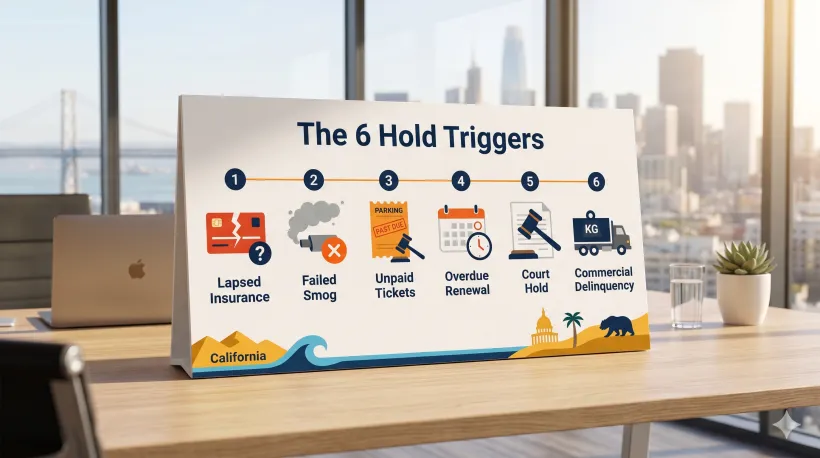
Here are the six culprits that account for the overwhelming majority of registration holds in the state.
Reason 1 — Lapsed or Missing Insurance
This is the most common reason for a registration hold, and it catches drivers off guard more often than you'd think—especially when they believe they're fully insured. Under California's Vehicle Registration Financial Responsibility Program, the DMV is required to suspend a vehicle's registration if proof of insurance isn't submitted within 30 days of a new registration card being issued or if a policy is cancelled and a replacement isn't confirmed within 45 days.
The sneaky version of this problem: your insurance company entered your VIN incorrectly when they set up your policy. As far as the DMV is concerned, your car has no coverage — even though you've been paying premiums every month. If you receive a notice about missing insurance, the first call you should make is to your insurer to confirm your VIN on file.
How to fix it?
Submit proof of insurance online through the DMV's Vehicle Registration Financial Responsibility portal and pay the $14 reinstatement fee. You can also email a scanned copy of your insurance card to VehicleFRProgram@dmv.ca.gov. The DMV office itself cannot clear this hold—so don't waste a trip.
Reason 2 — Failed or Missing Smog Check
California has some of the strictest vehicle emissions standards in the country, which is a reasonable thing given that the state is also home to some of the worst air quality in the nation. Most gasoline-powered vehicles more than eight years old require a smog check every two years. If your car failed the test or you simply never completed it, the DMV will not process your registration renewal—even if you've already paid the fees.
Worth knowing: if you paid your renewal fees but your car failed the smog check afterward, your registration is still not valid. The payment goes through, but the registration doesn't activate. New vehicles (under 8 years old), battery-electric vehicles, and some diesel trucks are exempt from the biennial smog requirement—a full list is available on the California Air Resources Board website.
How to fix it?
Take your vehicle to a licensed smog check station. Once it passes, the station transmits results directly to the DMV electronically. The hold is typically cleared within one to two business days after a passing test is recorded.
Reason 3 — Unpaid Parking Tickets or Toll Violations
If you've ever lived in San Francisco, you know that parking tickets have a way of arriving before you've even finished parallel parking. And while a single forgotten ticket might seem minor, California law is clear: registration renewal cannot be completed if there are any unpaid parking or toll violations on the vehicle's record.
Here's the part that genuinely surprises people—the DMV can place a hold on a vehicle you're trying to register if you have outstanding fines tied to a different car you own or previously owned.
Does it mean that the hold follows you, not just the car? It's not a fact from laws, but simply—yes. In some cases, unresolved violations linked to your DMV record—not just the vehicle you're currently renewing—can affect registration eligibility.
So if you're buying a used vehicle or registering a second car, it's worth checking your full DMV record first.
Toll violations work the same way. The Transportation Corridor Agencies have had an agreement with the California DMV since 1996 to share license plate data and authorize registration holds for unpaid tolls on state routes. If you missed a toll on the Bay Bridge or the 73 freeway and never paid the invoice, that could be exactly why your renewal is blocked.
How to fix it?
Pay the outstanding violations through the DMV portal, which can retrieve your outstanding fines, process payment, and clear the hold in a single session. If you believe a ticket was issued in error, you'll need to dispute it directly with the issuing agency—the DMV cannot remove a citation without a release from that agency.
Reason 4 — Registration Expired Over 6 Months Ago
Missing your renewal deadline by a few weeks is an inconvenience. Missing it by more than six months is a different story.
Long-expired registrations may require additional review and accumulated penalties before online renewal becomes available. You can no longer just log in and renew; you have to address the accumulated late fees before anything moves forward.
California's late registration penalties escalate fast: 10% of the renewal fee for the first 10 days, 20% after that, and continuing to stack up to a maximum of 160% for registrations expired more than two years. These penalties apply on top of the base renewal fee, which already varies from a few hundred to well over $500 depending on your vehicle's value, weight, and county.
How to fix it?
Pay all accumulated late penalties along with your standard renewal fees.
Reason 5 — Court-Ordered Hold (Failure to Appear)
If you received a traffic citation and never showed up to court—or didn't pay the fine within the required window—the court can notify the DMV, which then places a "Failure to Appear" hold on your registration. This type of hold is different from the others because it originates in the court system, not the DMV itself.
A failure-to-appear hold can be released by paying the full outstanding amount to the court, by appearing before a judicial officer, or by entering a payment plan through the court's collections division with an initial payment. One critical thing to keep in mind: in many cases, simply scheduling a hearing does not automatically clear the DMV block or prevent a suspension from being issued. You need to actually resolve the underlying case, not just schedule it.
How to fix it?
Contact the court that issued the hold directly. This is the one type of hold where Xtreet cannot intervene on your behalf—it's entirely within the court system's jurisdiction. Once the court sends a clearance notice to the DMV, the hold is lifted and you can proceed with renewal.
Reason 6 — Clean Truck Check Non-Compliance (Commercial & Fleet Vehicles)
If you own or operate a diesel or alternative-fuel heavy-duty vehicle with a gross vehicle weight rating over 14,000 pounds, there's an additional compliance layer to be aware of. Under Senate Bill 210, the California Air Resources Board implemented the Clean Truck Check program, which requires vehicles to report to the CTC-VIS system, pay annual compliance fees, and pass emissions testing. The DMV places a registration hold on any vehicle that falls out of compliance with these requirements.
This affects not just commercial fleets but also motorcoaches, transit vehicles, school buses, and some large personal motorhomes—even vehicles registered outside California that operate on California roads. If your vehicle's compliance deadline has passed and you haven't submitted a passing emissions test, the hold is automatic.
How to fix it?
Register or update your vehicle in the CTC-VIS system at arb.ca.gov, pass the required emissions test (you can test up to 90 days before the compliance deadline), and pay the annual compliance fees. Once the system marks you compliant, the DMV hold is cleared.
For fleet operators managing multiple vehicles, Xtreet's commercial registration services can help streamline the process.
How to Check If Your Registration Actually Has a Hold
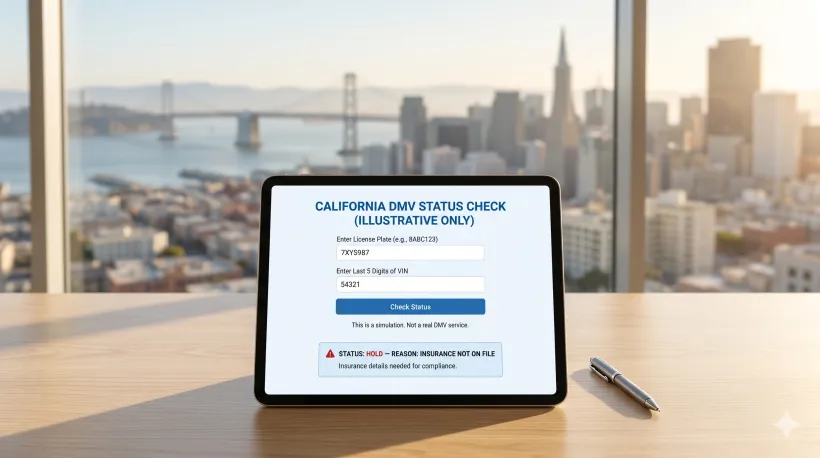
Before you start guessing what's wrong or making phone calls, spend two minutes checking your actual registration status online. California's DMV system will tell you exactly what type of hold is on your vehicle and what's needed to resolve it, which is a lot more efficient than working from assumptions.
Step-by-Step: Check Your Status Online
- Go to DMV site and navigate to "Renew Your Vehicle Registration" or "Check Registration Status."
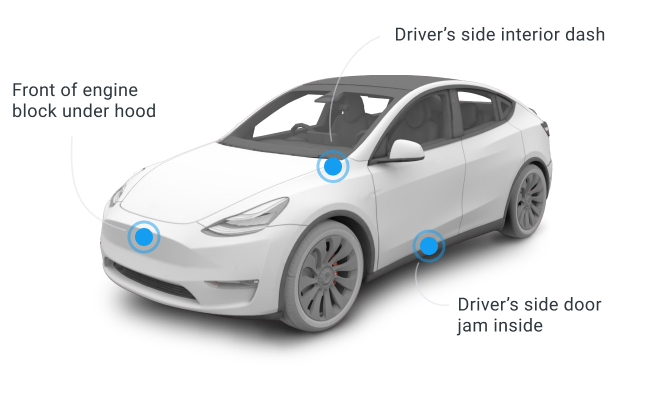
- Enter your license plate number and the last 5 characters of your VIN (you can find the VIN on your dashboard, driver-side door jamb, or registration card).
- The system will display your current registration status: active, hold, or suspended.
- If a hold is present, the system will indicate the reason—this is your starting point for the fix.
If you prefer a non-digital option, the DMV's automated voice line at 1-800-777-0133 can verify your suspension status and, for insurance-related holds, accept payment.
What Common DMV Messages Actually Mean
The DMV's error messages aren't always written for clarity. Here's a quick decoder for the ones you're most likely to encounter:
| DMV Message | What does it actually mean? | Where to start? |
| "Insurance information not on file" | Your insurer didn't send proof of coverage, or the VIN on file is wrong | Call your insurer first, then submit proof online |
| "Smog certification required" | Your biennial smog check is due or your vehicle failed | Book a smog check at a licensed BAR station |
| "Parking/toll violation on record" | Unpaid tickets or tolls are blocking renewal | Pay via DMV portal or Xtreet |
| "Registration hold — contact DMV" | Often a court or agency hold requires direct contact | Call DMV or check court records |
| "Vehicle not eligible for online renewal" | A condition requires manual review | May need in-person or mail submission |
How to Remove a DMV Registration Hold — Your Fix-It Checklist
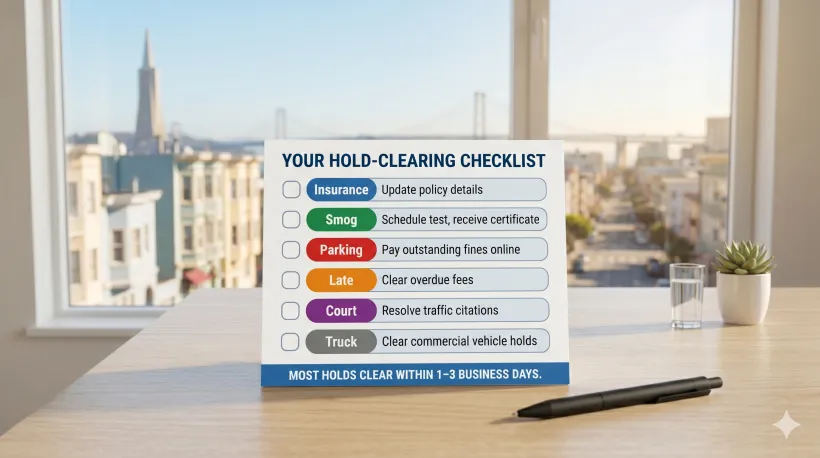
Now for the part that actually matters: getting the hold off your record. The good news is that for five of the six hold types covered in this guide, you can start the resolution process right now, from your phone or laptop. Here's the full picture at a glance, followed by the one shortcut worth knowing about.
| Hold Type | Resolution | Online | Clearance Time |
| Lapsed insurance | Submit proof of insurance and pay a $14 reinstatement fee | Yes | 1-3 business days |
| Smog check failure / missing | Pass a licensed smog check; data sent to DMV automatically | Partial (test is in-person) | 1-2 days after passing test |
| Unpaid parking / tolls | Pay violations through DMV portal | Yes | Same day to 1 business day |
| Expired 6+ months | Pay all accumulated late penalties and renew registration | Yes | 1-3 business days |
| Court-ordered hold | Resolve the underlying case with the court directly | No—court jurisdiction | Depends on the court |
| Clean Truck Check | Register in CTC-VIS, pass emissions test + pay compliance fees | Partial | 1-7 business days |
The Xtreet Shortcut: One Place for Most Holds
As a licensed California DMV partner, Xtreet can process payment directly to the DMV and complete your registration renewal—all in a single online session.
What Happens If You Drive With a Registration Hold?
Look, life is busy. You get the hold notice, you intend to deal with it next week, and then next week turns into next month. It happens. But it's worth knowing exactly what "next month" actually costs you in California, because the numbers are not trivial.
A citation for driving with expired registration under California Vehicle Code § 4000(a) runs between $197 and $360. Many of these are issued as "correctable violations" or fix-it tickets—meaning if you renew your registration within the timeframe specified and provide proof to the court, the fine can be reduced to a dismissal fee of around $25-50. That's the best-case version. If you ignore the citation, the fine stands and may generate an additional court hold on your record, which layers on top of the existing registration hold.
If the vehicle gets stopped multiple times, or law enforcement determines it's been operating illegally for an extended period, impoundment becomes a real possibility. Recovering an impounded vehicle in California typically means paying $200-$400 in towing fees plus $50-$100 per day for storage—and that's before you've resolved the registration issue that caused the stop in the first place.
All told, what starts as a $14 reinstatement fee can become a $700 problem if you leave it long enough.
Important: It's not a legal quote, just a common cost.
FAQ
We pulled the questions that come up most often from California drivers dealing with registration holds. Here are the straightforward answers.
- How do I know if my registration has a hold in California?
You can check your registration status anytime at the DMV using your license plate number and the last five characters of your VIN. The DMV's automated phone line at 1-800-777-0133 also lets you verify your status without waiting on hold for an agent.
- Can I drive my car if there's a registration hold?
If your registration is still technically valid but renewal is blocked by a hold, you're in a gray area—legal for now, but not for long. Once your registration expires, driving is a violation of California Vehicle Code § 4000(a), and you risk a citation of up to $360. If the hold has progressed to a full suspension, the vehicle is not legal to operate at all.
- How long does it take to clear a DMV hold after paying?
For insurance-related holds and parking/toll payments, clearance usually happens within one to three business days. Smog check results are typically transmitted to the DMV electronically within one to two days of a passing test. Court-ordered holds depend entirely on how quickly the court sends notice to the DMV, which can take anywhere from a few days to a couple of weeks after resolution.
- Do I have to go to the DMV in person to remove a hold?
For most hold types—insurance, parking violations, toll holds, and late renewals—no in-person visit is required. The DMV's own guidance notes that a DMV office or call center cannot clear a registration suspension; those must be handled through the specific online or mail-in channels. The exception is court-ordered holds, which require resolution with the court system before the DMV can act.
- Will unpaid parking tickets from another car affect my registration?
Yes. California's DMV may block registration on any vehicle you own or attempt to register if outstanding fines are tied to other vehicles on your record. If you're buying a used car or registering a second vehicle and hitting an unexpected hold, checking your full DMV record for violations across all associated vehicles is a smart first step.
- What is the reinstatement fee for a suspended registration in California?
For insurance-related suspensions, the reinstatement fee is $14. This is paid alongside your proof of insurance submission through the DMV's Vehicle Registration Financial Responsibility portal. Note that this fee applies specifically to insurance suspensions; other types of holds may involve different fees or no reinstatement fee at all.
- Can a smog check failure prevent my registration renewal?
Yes, and this one catches people off guard: even if you've already paid your renewal fees, if your vehicle hasn't passed a smog check (or the results haven't been transmitted to the DMV), your registration is not valid. Payment goes through, but the registration doesn't activate until the smog requirement is satisfied.
- What is a Clean Truck Check hold?
It's a DMV registration hold that applies to diesel and alternative-fuel heavy-duty vehicles over 14,000 lbs GVWR that are noncompliant with California's Clean Truck Check program (Senate Bill 210). Affected vehicles must be registered in the CTC-VIS system, pass an emissions test, and pay annual compliance fees. The hold is placed automatically when a compliance deadline is missed.
- What happens if I ignore a DMV hold for months?
The hold escalates into a full registration suspension, which means the vehicle is illegal to operate. Late fees continue to compound. If you're stopped by law enforcement, you face citations between $197 and $360, and if the vehicle is cited multiple times or deemed abandoned, impoundment becomes possible—with towing fees of $200-$400 and storage costs of $50-$100 per day. What could have been resolved in fifteen minutes online becomes a genuinely expensive problem.
Conclusion
A registration hold is the DMV's way of waving a flag and saying "something needs attention before we can move forward." It's not a punishment — it's a flag. And like most flags, it's a lot easier to deal with the moment you see it than after you've driven past it for six months.
Most holds—insurance lapses, parking tickets, toll violations, and late renewals—can be resolved entirely online in a matter of minutes, with clearance typically arriving within a few business days. The ones that require more legwork (smog failures, court holds, Clean Truck Check) still have clear resolution paths; they just involve an additional step or two.
If you'd rather handle it all in one place without navigating multiple portals, Xtreet's online platform is designed exactly for this: as a licensed California DMV partner, it can calculate any fees, process your registration renewal, and send it to the DMV—all without a queue, an appointment, or a trip across town.