California Disabled Person Parking Placard: How to Apply and Replace
Quick answer: To apply for a handicap placard in California, complete Application for Disabled Person Placard or Plates (REG 195), obtain the required medical certification unless an exception applies, and include proof of your true full name and date of birth. Submit an eligible application online, by mail, or at a DMV office. Replace a valid lost, stolen, or damaged placard through DMV's online service or with REG 156.
California DMV calls it a Disabled Person (DP) parking placard. Permanent, temporary, and travel placards have different eligibility, validity, and fee rules. Choosing the correct type and form makes the process easier from the start.
That distinction also matters when replacing a DMV-issued item. Placard applications and replacements go directly through DMV, while Xtreet's Replace Stickers service is limited to eligible replacement vehicle registration stickers and cards.

Who qualifies for a California DP parking placard?
You may qualify if a disability meets at least one of California's mobility, vision, respiratory, or cardiovascular standards. Under California Vehicle Code section 295.5, qualifying conditions include:
- Loss or loss of use of one or more lower extremities or both hands
- A significant limitation in the use of the lower extremities
- A diagnosed disease or disorder that substantially impairs or interferes with mobility
- A disability that prevents movement without an assistive device
- Vision that meets the law's visual-acuity or visual-field limits
- Lung disease that meets the law's respiratory thresholds
- Cardiovascular disease classified as Class III or Class IV under standards accepted by the American Heart Association
California doesn't use a general "unable to walk 200 feet" test for DP placard eligibility. The condition must meet one of the standards in state law and, in most cases, be certified by an authorized medical provider.
Choose the right California DP parking placard
On its Disabled Person Parking Placards & Plates page, DMV identifies four placard categories:
| Placard type | Who it is for | Validity | DMV fee |
|---|---|---|---|
| Permanent | A person with a permanent qualifying disability | Two years; expires June 30 of every odd-numbered year | No fee |
| Temporary | A person with a qualifying temporary disability | Up to 180 days or the provider-certified end date, whichever comes first | $6 |
| Travel for a California resident | An eligible resident who has either a permanent California DP placard or qualifying DP/DV plates, but not both | Up to 30 days from DMV's issue date | No fee |
| Travel for a nonresident | A permanently disabled nonresident or disabled veteran traveling in California | Up to 90 days or the provider-certified end date, whichever comes first | No fee |
A placard can move between vehicles when the placard holder is being transported. DP license plates stay with the vehicle to which they're assigned.
How to apply for a handicap placard in California
Complete the current REG 195, secure any required medical certification, provide acceptable identity documentation, and use the submission method that fits your application.
1. Complete REG 195
Enter the applicant information, select the requested placard, and sign the certification on REG 195. The applicant's name must match the identity document submitted with the application.
For a paper application, use the original completed form with original signatures. Photocopied or faxed signatures aren't accepted, and alterations or whiteout will void the form. A quick review before submission can prevent the application from being returned.
2. Obtain the required medical certification
An authorized, currently licensed medical provider must usually complete the certification section. REG 195 permits physicians, surgeons, physician assistants, nurse practitioners, certified nurse-midwives, chiropractors, podiatrists, and optometrists to certify conditions within the limits of their professional authority.
Those limits matter. For example, a chiropractor may certify only specified lower-extremity or hand-use conditions, a podiatrist may certify a qualifying foot or ankle disability, and an optometrist or physician or surgeon specializing in eye disease may certify a qualifying vision condition.
Medical certification isn't required when:
- The applicant has lost a lower extremity or both hands, appears in person at a DMV office, and submits REG 195.
- The applicant has a current permanent California DP placard or California DP/DV plates and enters the placard or plate number on REG 195.
The second exception doesn't apply if DMV canceled the prior placard or plate, no longer has it on record, or has issued four replacement permanent placards during the current two-year renewal period.
3. Include proof of true full name and date of birth
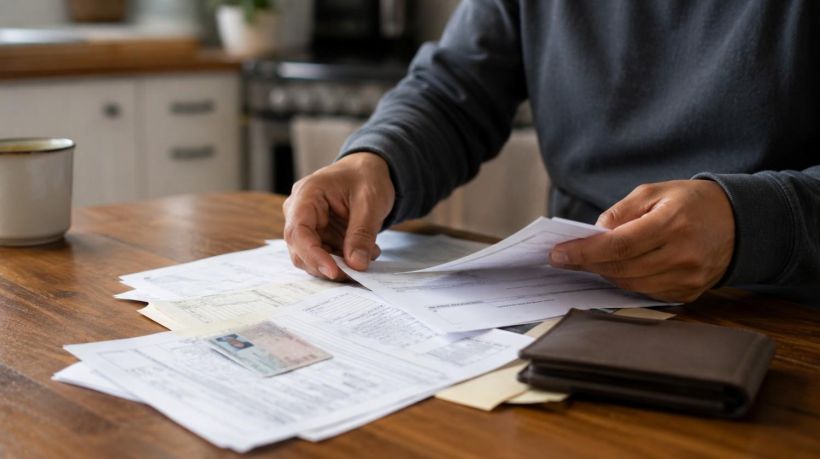
Include a copy of an acceptable identity document, such as a state-issued driver's license or identification card, a U.S. birth certificate, or a valid, unexpired U.S. passport or passport card. DMV lists additional acceptable documents on its Disabled Person Parking Placard Application page.
4. Submit the application and applicable fee
Use one of these submission methods:
- Online: Use DMV's Disabled Person Parking Placard Application for an original placard when you have a completed REG 195 signed by the medical provider. Upload the form and identity document, then pay the $6 fee if requesting a temporary placard.
- By mail: Send the original completed REG 195, a copy of the identity document, and the $6 temporary-placard fee (if applicable) to DMV Placard, P.O. Box 997600, M/S D238, Sacramento, CA 95899-7600.
- In person: Bring the documents and applicable fee to a DMV office. No appointment is needed for a disabled placard application. An applicant using the observable-loss exception must apply in person.
- At an Xtreet Office: Instead of visiting the DMV or relying on regular mail, you can schedule an appointment to submit your original physical forms (such as REG 156) or pick up finished registration materials in person at our San Francisco or San Jose offices.
Permanent and travel placards have no DMV issuance fee. A temporary placard costs $6.
How to replace a lost, stolen, or damaged DP placard
Use DMV's Disabled Person Parking Placard Replacement service to replace a valid permanent or temporary placard or placard identification card. The service generates the replacement application for signature and collects any applicable fee.
You can also complete the Application for Replacement Plates, Stickers, Documents (REG 156) and submit it at a DMV office or mail it to:
DMV Placard
P.O. Box 942869
Sacramento, CA 94269-0001
Follow these replacement rules:
- Surrender a damaged or mutilated placard to DMV.
- If a missing placard is found after DMV replaces it, the original is invalid and must be destroyed or returned to DMV.
- Replacing a permanent or travel placard is free. Replacing a temporary placard costs $6.
- A routine replacement doesn't require new medical certification. If DMV canceled the placard because of misuse, fraud, or an erroneous application, the person must reapply with a new REG 195 and medical certification.
DMV estimates that a replacement parking placard will arrive approximately two to four weeks after the application is submitted.
What if the placard never arrived?
Allow 30 days from DMV's issue date before requesting a nonreceipt replacement. Submit REG 156, select "Not Received from DMV," and don't include a replacement fee. DMV's Nonreceipt of Certificates, License Plates, Stickers, and DP Parking Placards instructions confirm that a permanent or temporary placard not received within that period may be replaced without a fee.
How to renew a California DP parking placard
Permanent placards expire every two years on June 30 of odd-numbered years. DMV generally sends the next placard automatically, but the holder must provide a signature every six years or at the third renewal. No medical recertification or renewal fee is required.
When a signature is due, DMV mails a renewal notice. The holder can use DMV's Permanent Disabled Person Parking Placard Renewal service or sign and return the notice by mail. A holder without the notice can renew online using the required identifying information or submit an Application for Permanent Disabled Person Placard Renewal (REG 195 A) by mail or in person. Keep the mailing address on file with DMV current so the placard and renewal notice go to the right place.
A temporary placard doesn't renew automatically. If the qualifying disability continues, submit a new REG 195 with a provider-certified end date and the $6 fee. California allows no more than six consecutive temporary-placard renewals.
Frequently asked questions
Can I get two DP parking placards in California?
No. An individual may have only one permanent DP placard at a time, even if they use more than one vehicle. The placard can move between vehicles when the holder is being transported. An eligible California resident may also obtain a separate 30-day travel placard if they have either a permanent DP placard or qualifying DP/DV plates, but not both. DMV limits substitute permanent placards to four during a two-year renewal period; another request requires a new REG 195 with medical certification.
Can I use my handicap placard in a rental car in California?
Yes. The placard belongs to the holder, so it may be displayed in a rental car or another person's vehicle while that vehicle is transporting the holder. Under California Vehicle Code section 4461, another person may use the placard only while in the holder's presence or reasonable proximity for the purpose of transporting them. Keep the placard identification card with you whenever the placard is used.
Can you park for free with a handicap placard in California?
Yes, at on-street parking meters. A valid DP placard or qualifying plates also allow parking in accessible spaces, next to blue curbs, next to green curbs without the posted time limit, and in areas requiring resident or merchant permits. California Vehicle Code section 22511.5 doesn't make parking free in private garages, hotel lots, or other off-street facilities that charge a fee, so check the posted terms.
Can a vehicle with a DP placard be towed in California?
Yes. A DP placard doesn't exempt a vehicle from all parking and towing laws. DMV's Disabled Person Parking Placards & Plates page states that a placard doesn't authorize parking next to red, yellow, or white curbs or in a crosshatched access aisle. A vehicle parked illegally may be cited or towed when applicable law and local enforcement rules allow it.
Can I use my California handicap placard in other states?
It depends on the destination state. Recognition and parking privileges aren't identical in every jurisdiction, and the destination controls its meter-fee exemptions, time limits, display rules, and acceptance of out-of-state placards. Check its official motor vehicle agency through the USAGov state motor vehicle services directory before traveling. Eligible California residents can also request a 30-day travel placard, but the destination's rules still apply.
Use the correct replacement service
A new DP placard requires REG 195, while a lost, stolen, damaged, or unreceived placard uses DMV's replacement process or REG 156. Permanent placards follow a separate renewal process. Starting with the correct form keeps the request on the right track and helps avoid preventable delays.
Xtreet's service applies to replacement registration sticker or registration card requests for eligible vehicles with active California registration. Disabled person placard applications, replacements, renewals, and travel placards must be handled directly through DMV. For a qualifying vehicle registration replacement, we can collect the vehicle and owner details, payment, shipping information, and signed REG 156, then provide updates as it's processed.
Replace your California registration sticker online through Xtreet.