California License Plate Frame Laws: What's Legal and What Gets You Fined
Quick answer: A narrow license plate frame is generally legal in California when the plate remains securely mounted, clearly visible, legible, and readable by electronic systems. Fully clear, tinted, smoked, reflective, retractable, and anti-camera covers are generally illegal. Operating with a prohibited plate-obscuring device or altering a plate to avoid visual or electronic capture can result in a $250 fine per violation.
California license plate cover laws treat a frame differently from a cover placed over the plate. What matters is if the accessory hides plate information, alters the reflective surface, or interferes with visual or electronic recognition.
If a registration sticker or card is missing from an eligible vehicle with active California registration, you can request a replacement online through Xtreet.
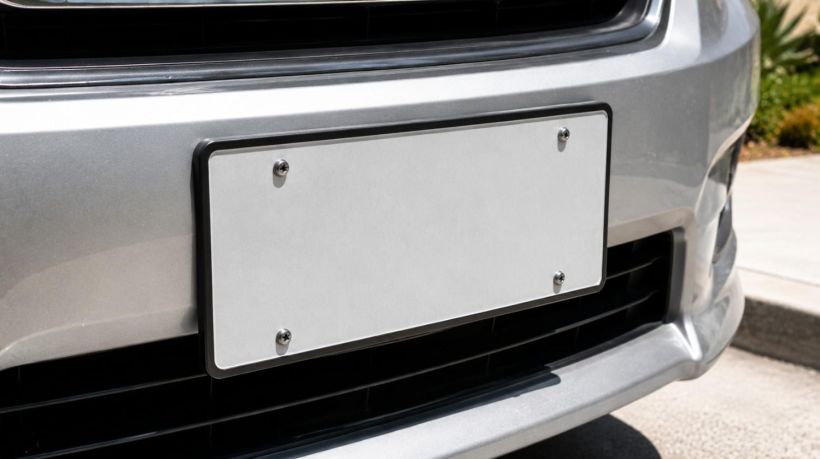
License plate cover laws California drivers must follow
California Vehicle Code section 5201 requires license plates to remain securely fastened, clearly visible, upright, and legible. It generally prohibits covers placed over a plate.
The law allows only narrow exceptions for:
- A weather cover over an entire lawfully parked vehicle, which an authorized official may move to inspect the plate
- A security cover limited to the registration-tab area that doesn't overlap the plate number or impair recognition
California also prohibits any casing, shield, frame, border, shade, tint, product, or device that obstructs electronic plate reading by law enforcement, toll systems, or remote emissions equipment.
A narrow, unobstructed frame may comply. A full cover isn't legal merely because it is clear or sold as protective. A product label is marketing, not legal approval.
Legal license plate frames in California
A frame is generally legal when it stays around the plate's edges and doesn't interfere with visibility, legibility, or electronic recognition.
It must leave these details visible:
- Every letter and number
- The issuing state name
- The month and year registration tabs
The plate must remain firmly attached, upright, and readable from left to right. Thick borders, oversized dealership frames, decorative bolts, tilted brackets, or loose mounts can violate the law when they cover information or make the plate harder to read.
California sets no percentage for how much a frame may overlap. There is no reliable "10% rule." The issue is whether the plate remains clearly visible and readable.
Use a slim frame and check it from several angles for glare or obstruction.
Illegal license plate covers and plate-obscuring devices
The strictest license plate cover laws California drivers encounter apply to products placed over the plate or designed to prevent identification.
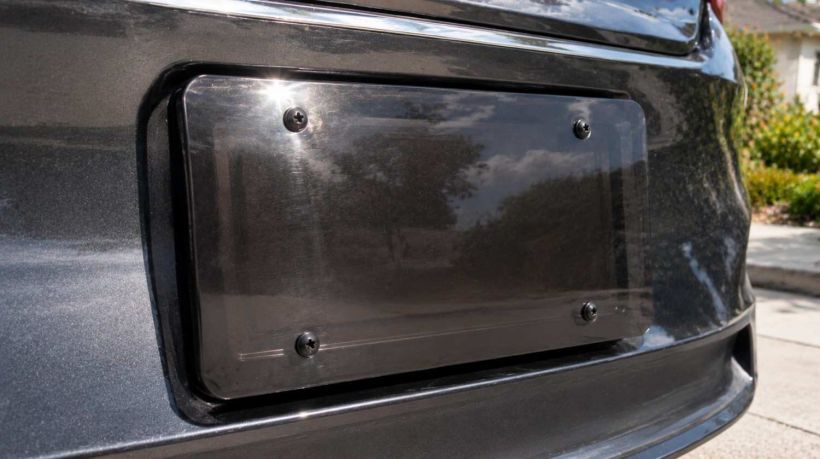
Clear, tinted, and smoked covers
Full plate covers are generally prohibited, including products marketed as clear, weatherproof, tinted, smoked, anti-glare, reflective, or shatter-resistant.
A clear plastic shield is still a covering. It can create glare, collect dirt, distort characters, or interfere with cameras and electronic readers.
The registration-tab security exception is much narrower. The device must remain directly over the tabs, cannot overlap the plate number, and cannot impair recognition of the state, plate number, or registration tabs.
Anti-camera sprays and reflective films
Don't apply sprays, films, paint, reflective coatings, or other treatments intended to prevent cameras from reading the plate.
California Vehicle Code section 5201.1 prohibits erasing or painting over the reflective coating or otherwise altering a plate to avoid visual or electronic capture. This includes attempts to defeat toll, red-light, speed, law-enforcement, or remote-emissions systems.
Retractable and electronic covers
Motorized shields, sliding covers, flip mechanisms, remote-controlled blockers, and devices that darken or become opaque when photographed are prohibited plate-obscuring devices.
A device designed to conceal the plate on demand can violate the law even when it is not constantly blocking the plate.
Fines for illegal license plate covers in California
The penalty depends on the conduct and code section cited. A minor mounting issue and an intentional anti-camera device aren't automatically treated the same.
Operating with an obscuring device
Operating a vehicle with a product that obscures, or is intended to obscure, visual or electronic plate reading carries a statutory $250 fine per violation under section 5201.1.
The same fine applies when a person erases, paints over, or alters the reflective coating to avoid visual or electronic capture.
Selling or manufacturing illegal covers
Selling or manufacturing a prohibited plate-obscuring product in California carries a statutory $1,000 fine for each item sold or manufactured.
The change took effect on January 1, 2026. On its DMV Highlights New Laws in 2026 page, DMV explains that the law targets illegal covers used for toll evasion and other activity involving concealed plates.
Correctable plate citations
Some mounting, lighting, or display violations may be issued as correctable offenses. The driver must fix the problem, provide proof, and follow the court's instructions.
California Courts' fix-it ticket guidance states that a qualifying correctable violation requires a $25 fee for each fix-it ticket. Don't assume every frame or cover citation qualifies; the cited offense and ticket determine the process.
Front plate, mounting, and lighting rules
California Vehicle Code section 5200 requires a vehicle issued two plates to display one attached to the front and one attached to the rear. A vehicle issued only one plate generally displays it at the rear.
A front plate loose on the dashboard does not satisfy the attachment requirement.
For most passenger vehicles, the front plate cannot be mounted more than 60 inches above the ground. The rear plate generally must be mounted between 12 and 60 inches above the ground.
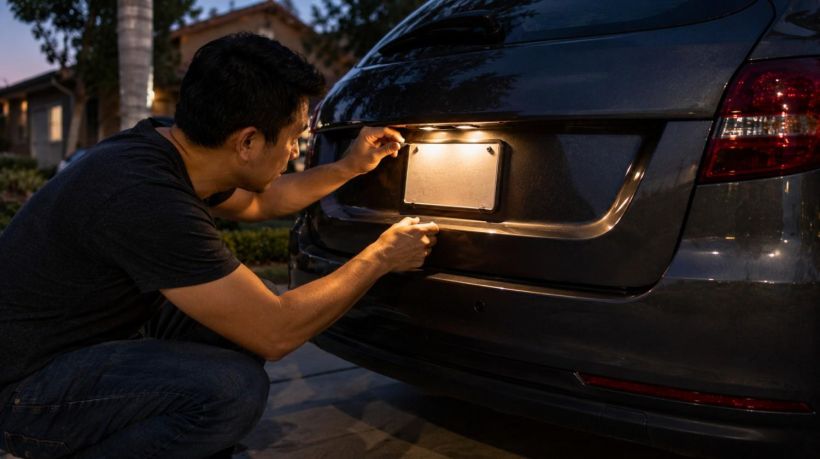
Under California Vehicle Code section 24601, the rear plate must be illuminated by white light during darkness and readable from 50 feet behind the vehicle.
The California Driver's Handbook also instructs drivers not to operate a vehicle with an illegible plate or alter one in any way.
California license plate frame and cover checklist
Use this five-point check before driving to confirm that your frame, plate surface, mounting, and rear light meet California requirements.
1. Remove any full plate cover
Don't rely on labels such as clear, weatherproof, camera-safe, or legal in all states. California generally prohibits plate covers outside the narrow exceptions.
2. Check all plate information
Make sure the characters, state name, and registration tabs are visible and aren't overlapped by the frame, bolts, or mounting hardware.
3. View the plate from different angles
Look for glare, shadows, tint, thick borders, or distortion that could interfere with visual or electronic reading.
4. Remove films and coatings
Don't repaint, recolor, spray, or apply your own vinyl wrap to a DMV-issued plate. Replace a damaged or illegible plate instead. See How to Replace a Damaged License Plate in California for the process.
5. Check mounting and lighting
Tighten loose hardware, keep the plate upright, clean the surface, and confirm that the rear plate light works after dark.
A basic frame that passes these checks is the safer choice.
California license plate cover law FAQs
Are license plate covers legal in CA?
Full license plate covers are generally illegal in California. This includes clear, tinted, smoked, reflective, and anti-camera covers. California allows narrow exceptions, including a security device limited to the registration-tab area that doesn't overlap the plate number or impair recognition.
What is the California Vehicle Code for license plate covers?
Vehicle Code section 5201 governs plate mounting, visibility, covers, frames, shades, tints, and electronic readability. Section 5201.1 prohibits selling, manufacturing, or operating with plate-obscuring devices and prohibits altering a plate to avoid visual or electronic capture.
Is it legal to wrap your license plate in California?
You can't apply your own wrap, vinyl, paint, or color treatment to a DMV-issued plate. Altering it can reduce legibility, affect the reflective coating, or interfere with electronic reading. A state-authorized alternative device approved through California's program is different from modifying a standard plate yourself. Vehicle Code sections 4853 and 4854 govern approved alternatives.
Can I get a ticket for no front license plate in California?
Yes, if DMV issued two plates for the vehicle. California requires one attached to the front and one attached to the rear. A citation may be correctable depending on the offense and how the ticket is marked.
What is the new license plate law in California?
The law, effective January 1, 2026, strengthened California's restrictions on plate-obscuring products. It added shades and tints to section 5201, prohibited manufacturing obscuring products in California, and set a $1,000 fine per item sold or manufactured. Operating with a prohibited device or altering a plate to avoid capture carries a $250 fine per violation.
Remove illegal covers and replace missing stickers
California plate-cover rules require drivers to keep plates visible instead of covering, tinting, or altering them. A legal frame can't fix a lost, stolen, damaged, or illegible registration sticker or registration card.
Xtreet handles qualifying replacement requests for vehicles with active California registration. Our service doesn't resolve plate-cover citations or make an obstructing accessory legal. For an eligible request, we can collect the vehicle and owner details, provide a fee estimate, accept payment and shipping information, guide you through the signed Application for Replacement Plates, Stickers, Documents, Form REG 156, and provide status updates.
Replace your California registration sticker or card online through Xtreet.