How Weight, Value, and Location Affect Your Registration Cost
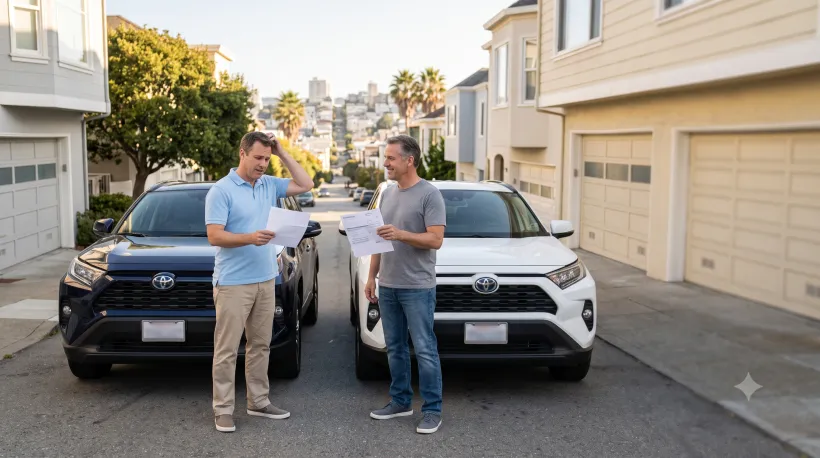
Two drivers in California. Similar cars, same model year. One pays $340 to register their vehicle. The other pays $480. Neither has done anything wrong, neither has a spotty driving record, and the DMV hasn't made a mistake. The difference comes down to three variables that California builds directly into its registration formula: the value of the vehicle, its weight, and where in the state it's registered.
Most drivers know that registration isn't free, but very few know exactly which part of the bill they could predict in advance—and which parts are completely outside their control. Understanding how value, weight, and location each feed into the total doesn't just explain the number on the renewal notice. It also helps you estimate what you'll owe before the notice arrives, plan for the cost of registering a car you're thinking of buying, and recognize immediately when something on your bill looks wrong.
We got you covered.
How Vehicle Value Affects What You Pay
The largest variable on most California registration bills is the Vehicle License Fee, and the VLF is driven entirely by your vehicle's current assessed value. The formula is straightforward: the DMV calculates 0.65% of your vehicle's assessed value and charges that as the VLF each year.
What makes this interesting is how the assessed value moves over time. California applies a depreciation schedule that reduces the taxable value of your vehicle by roughly 10 percentage points per year for the first eleven years—starting at 100% of the purchase price in year one, dropping to approximately 90% in year two, 80% in year three, and so on down to around 15% of the original price in year eleven. After year eleven, the VLF stabilizes at that floor.
What this means in practice
On a vehicle originally purchased for $40,000, the VLF in year one is 0.65% × $40,000 = $260. By year six, when the assessed value is approximately 50% of the purchase price ($20,000), the VLF has dropped to $130. By year eleven, at 15% of the original price ($6,000), it's $39. That single line item on the registration bill has dropped by more than $220 over the vehicle's life—entirely automatically, without any action from the owner.
The VLF is also the only part of your registration bill that is tax-deductible on your federal income tax return, if you itemize deductions—because it's calculated as a percentage of your vehicle's value, making it an ad valorem tax under IRS rules. The DMV provides a dedicated VLF for tax purposes. Look for exactly this.
Remember that we simplified for clarity: the exact depreciation percentages are derived from DMV rate tables published in the REG 360/364/365 formats and reflected in the DMV fee calculator. The figures above represent the schedule as consistently described in DMV-sourced materials. For your vehicle's precise assessed value and VLF, use the DMV fee calculator.
The reset rule: buying used changes everything
One of the most important—and most overlooked—rules about value-based fees is that vehicle transfers reset the VLF depreciation clock. When you buy a used car, the DMV recalculates the VLF from year one using the price you paid, not the original manufacturer's price and not the previous owner's assessed value.
This is why a seven-year-old car that the previous owner was registering for well under $300 can suddenly generate a higher registration bill for the new buyer. If you paid $22,000 for a used car, your year-one VLF is 0.65% × $22,000 = $143—regardless of how long that car has been on the road or what the previous owner paid. The model year is never used to determine VLF. Only the purchase price and how many registration years have elapsed since the most recent transfer matter.
The Transportation Improvement Fee also scales with value
Beyond the VLF, California's Transportation Improvement Fee—created by Senate Bill 1 in 2017 to fund road infrastructure—also varies based on your vehicle's assessed value. The TIF is structured in tiers: vehicles in lower value brackets pay a lower flat amount, and vehicles in higher brackets pay more. Commercial vehicles with an unladen weight of 10,001 pounds or greater are exempt from paying the TIF.
Because the TIF is adjusted for inflation annually, the exact tier thresholds and amounts shift from year to year. The DMV fee calculator reflects the current-year TIF schedule, which is the only reliable source for your actual TIF amount in a given renewal cycle.
How Weight Affects What You Pay
Weight fees are California's way of accounting for the fact that heavier vehicles cause more wear on roads than lighter ones. They apply to commercial vehicles—not to standard passenger cars—and the calculation method depends on which weight threshold your vehicle falls into.
Passenger vehicles: weight doesn't add to your bill
Standard passenger vehicles—sedans, SUVs, minivans, and most personal-use vehicles—don't pay a separate weight fee. Their registration costs are driven entirely by the VLF, TIF, base fees, and county charges. Weight simply isn't a factor in the calculation for this category.
Commercial vehicles under 10,001 lbs GVW: unladen weight and axles
Commercial vehicles are subject to weight fees in addition to registration and vehicle license fees. The weight fee amount is determined based on the vehicle's unladen weight, gross vehicle weight (GVW), or combined gross vehicle weight (CGW) and number of axles.
For commercial vehicles operating under 10,001 pounds gross vehicle weight—including most pickups and light commercial trucks—weight fees for vehicles operated under 10,001 pounds gross vehicle weight and for pickups are determined by the number of axles and the unladen weight. The specific dollar amounts for each unladen weight and axle combination are published in the DMV's Appendix 1F fee schedule, available at dmv.ca.gov.
Pickup trucks continue to be registered by the unladen weight and assessed a weight fee regardless of the vehicle's GVW. The unladen weight of a pickup cannot exceed 8,000 pounds, and its GVW rating must be less than 11,500 pounds.
One nuance worth knowing: owners of commercial motor vehicles with an unladen weight of 6,001 pounds or more, except pickups, must complete, date, and sign a Declaration of Gross Vehicle Weight/Combined Gross Vehicle Weight (REG 4008) form to declare the maximum operating weight of their vehicles with a load. This declared weight is what the DMV uses to calculate fees—and it matters.
Commercial vehicles over 10,001 lbs GVW: CVRA fees
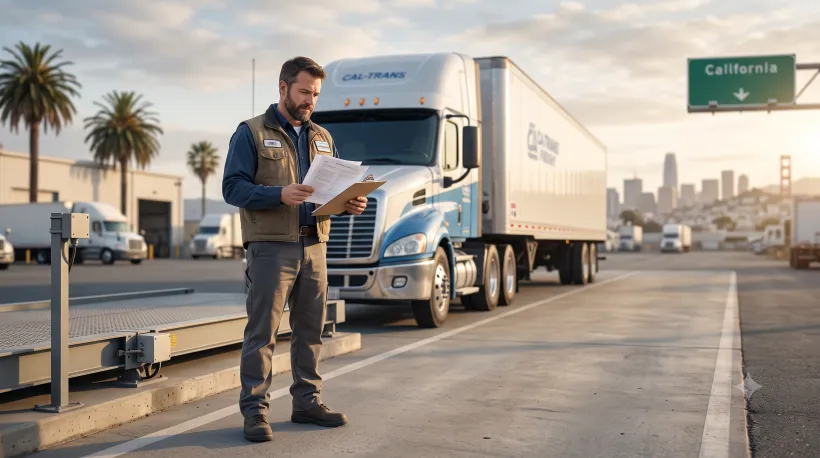
Heavier vehicles—those operated at 10,001 pounds gross vehicle weight or more—fall under the Commercial Vehicle Registration Act (CVRA) fee structure instead of the standard weight fee schedule. Vehicles that weigh 10,001 lbs. or more are assessed Commercial Vehicle Registration Act of 2001 (CVRA) fees instead of weight fees. These vehicles are still subject to the registration fee, vehicle license fee, and any city/county fees.
CVRA fees include a motor vehicle fee of $122, a Cargo Theft Interdiction Program fee of $3, and a CHP CVRA fee of $36, in addition to the weight-based CVRA charges calculated from the declared GVW or combined GVW. These vehicles are also exempt from the Transportation Improvement Fee.
Operating at a weight higher than declared will subject you to late fee penalties (CVC 9554.2), as well as a citation (CVC 9406.1), and upon conviction, substantial fines (CVC 42030.1) up to or in excess of $2,000 per violation. For commercial operators, declaring the correct weight isn't just a paperwork formality—it's a legal obligation with significant consequences if violated.
Electric commercial vehicles
Electric vehicles designed, used, or maintained as commercial vehicles are subject to electric vehicle weight fees based on the unladen weight of the vehicle. The specific EV weight fee schedule is published in Appendix 1F at dmv.ca.gov.
How Location Affects What You Pay
The state-level fees—VLF, TIF, base registration, and CHP fee—are the same formula for every California driver. But the county and district add-ons that appear on your bill are set locally, by agencies that have nothing to do with the DMV, and they vary significantly from one part of the state to another.
What the county fees actually fund
The local add-ons on your registration bill typically cover a mix of programs: air quality management fees set by each air quality management district, SAFE fees (Service Authority for Freeway Emergencies) that fund call boxes and emergency roadside programs, abandoned vehicle abatement fees, auto theft interdiction programs, and county-specific transportation or court automation surcharges.
None of these are optional. They're embedded in your registration total automatically based on where your vehicle is registered—the ZIP code on your registration address determines which county and district fees apply.
The difference between counties
Drivers in Los Angeles, Alameda, and San Diego counties face the highest local add-ons in the state, typically in the $40–$50 range when all district fees are combined. Air quality management fees in the South Coast Air Quality Management District (which covers Los Angeles and parts of surrounding counties) run higher than in less urbanized regions. SAFE fees, fingerprint identification fees, and county transportation surcharges stack on top of that.
Drivers in rural counties—much of the Central Valley, the Sierra Nevada foothills, and California's northern regions—often pay closer to the $25 minimum in local add-ons. The difference between a high-fee county and a low-fee county can be $20 to $30 per year on an otherwise identical registration bill.
Air quality fees specifically range from $2 to $19 depending on the district. SAFE fees range from $1 to $3. These small amounts add up across all the district programs that apply to your ZIP code.
Does your address on file need to be current?
Yes—and this affects more than just which county fees apply. The address on your DMV record is the address the DMV uses to determine your county of registration, send your renewal notice, and mail your sticker. If your address on file is outdated and you've moved to a different county, you may be paying the wrong county's fees in either direction. California requires vehicle owners to report an address change to the DMV within 10 days of moving, using the DMV 14 form available online.
How Xtreet Makes Registration Simpler—Regardless of What You Owe
Understanding what goes into your registration total is one thing. Actually completing the renewal—especially when the bill is higher than expected, or when there's a hold on the account, or when you're not sure whether everything is in order—is another challenge.
Xtreet is a licensed California DMV partner, which means registration renewals processed through the platform carry exactly the same legal standing as renewals completed through the DMV directly. The difference is in how the process feels.
When you enter your plate number and VIN on Xtreet's platform, it retrieves your renewal details from the DMV database—including your itemized fee total, any outstanding violations on the account, and the current status of your registration. You see the actual breakdown before you pay anything: the VLF, the TIF, the county add-ons, and any situational fees. No surprises at checkout, and no need to cross-reference the DMV fee calculator separately.
If there are outstanding parking or toll violations blocking the renewal, Xtreet can retrieve and process those in the same session—so you're not bouncing between multiple portals to clear holds before the registration will go through. Once everything is resolved and payment is processed, your new registration sticker is mailed directly to you.
For drivers who've just bought a used car and need to handle a title transfer before registration, Xtreet offers that service as well—the whole sequence from transfer to renewal can be handled in one place online, without a DMV office visit.
The registration formula may be complicated. The process of completing it doesn't have to be.

FAQ
- Does vehicle value affect California registration fees?
Yes—significantly. The vehicle license fee, which is typically the largest variable on a California registration bill, is calculated at 0.65% of your vehicle's current assessed value. That assessed value decreases on a set depreciation schedule over eleven years, which is why registration costs drop automatically as a vehicle ages. The transportation improvement fee is also tiered by vehicle value, meaning higher-value vehicles pay more in that category as well.
- Do I pay a weight fee on my personal car in California?
No. Standard passenger vehicles—sedans, SUVs, minivans, and most personal-use vehicles—are not subject to weight fees. Weight fees apply to commercial vehicles: those under 10,001 lbs GVW pay weight fees based on unladen weight and axles; those at 10,001 lbs GVW or over pay CVRA fees based on declared gross vehicle weight.
- Why does my registration cost more than my neighbor's for the same car?
Most likely because of county differences. If you're in different counties, the local add-on fees—air quality management, SAFE fees, and transportation surcharges—vary significantly from one county to another. Drivers in Los Angeles, Alameda, and San Diego counties pay the highest district fees in the state. Beyond that, if you bought your vehicle at a different price—even the same model—your VLF base will differ.
- Does where I live in California change my registration fees?
Yes. County and district fees are set locally by agencies independent of the California DMV. Your county of registration—determined by your address on file—determines which local fees apply to your bill. Moving to a different county and updating your DMV address will change the local portion of your registration fees at the next renewal cycle.
- How does buying a used car affect my registration cost compared to what the previous owner paid?
When a vehicle is transferred, the VLF depreciation clock resets to year one using the price you paid as the new starting value. A car that the previous owner was registering at a low VLF because it had depreciated significantly can generate a notably higher VLF for you if you bought it at a price well above the previous assessed value. The model year is never a factor—only the purchase price and registration history since the most recent transfer.
- What is the CVRA, and who does it apply to?
The Commercial Vehicle Registration Act (CVRA) fee structure applies to commercial vehicles operated at 10,001 pounds gross vehicle weight or more. Instead of the standard weight fees that apply to lighter commercial vehicles, CVRA vehicles pay a motor vehicle fee of $122, a Cargo Theft Interdiction Program fee of $3, and a CHP CVRA fee of $36, plus weight-based charges from the CVRA schedule. These vehicles are exempt from the Transportation Improvement Fee. Passenger vehicles are not subject to CVRA fees.
- What happens if I declare the wrong weight for my commercial vehicle?
Under California Vehicle Code § 9406.1 and § 9554.2, operating a commercial vehicle at a weight higher than declared subjects the operator to late fee penalties, a citation, and, upon conviction, fines of up to $2,000 or more per violation. CVRA fees must be paid before operating the vehicle at any increased weight, and the registration card must reflect the correct GVW or CGW.
- Can I estimate my registration fees before the renewal notice arrives?
Yes. The DMV fee calculator has tools for renewal estimates, new vehicle purchases, and used vehicle purchases. It incorporates your specific county's fees and the current-year TIF schedule, making it significantly more accurate than any general estimate. Xtreet's platform also retrieves your actual fee total from the DMV database when you enter your plate number and VIN, showing you the itemized breakdown before you commit to payment.
- Is the VLF tax-deductible?
Yes—the VLF only. Because it's calculated as a percentage of your vehicle's assessed value, it qualifies as an ad valorem personal property tax deductible on your federal income tax return if you itemize. The base registration fee, CHP fee, TIF, and county fees do not qualify. The DMV provides a dedicated VLF for tax purposes lookup at dmv.ca.gov.
- Does Xtreet show me the fee breakdown before I pay?
Yes. When you enter your vehicle details on Xtreet's platform, it pulls your renewal information directly from the DMV database and displays the itemized fee total—including the VLF, TIF, county fees, and any situational fees—before you authorize payment. This is the actual amount calculated by the DMV for your specific vehicle and county, not an estimate.
Conclusion
California's registration formula looks complicated until you know which three levers control most of it. Vehicle value drives the VLF—the biggest line item for most drivers—and that value decreases automatically each year you own the car, which is why registration gets noticeably cheaper over time. Weight adds a separate fee category for commercial vehicles, with the calculation method changing at the 10,001-pound threshold. And location determines which county and district fees land on top of the statewide charges, independent of anything the DMV itself controls.
Knowing this doesn't lower your bill, but it does make the bill readable—and it makes the fee calculator at dmv.ca.gov a genuinely useful planning tool rather than just a number-checking exercise before renewal.
If you'd rather skip the calculation and go straight to completing the renewal, Xtreet retrieves your actual fee total from the DMV database, handles any outstanding violation holds in the same session, and processes everything online with your sticker delivered by mail—as a licensed California DMV partner.