Moving to California With a Car: The Complete Registration Checklist
If you’re planning to move to California with your car, it’s important to know that, by law, you must register your vehicle within 20 days of establishing residency. Otherwise, you may face not only fines but also an unpleasant start to life in your new state.
To help you avoid this, here is a complete checklist for registering an out-of-state car in California, including:
- what documents you need to prepare;
- how much registration costs;
- how to avoid fines and delays;
- how to speed up the process using online services.
You can check the official residency requirements on the California Department of Motor Vehicles website.

When do you need to register your car in California?
California has a clear rule: once you become a resident of the state, you have 20 days to register a car from another state. This rule is in place to:
- ensure vehicle data is up to date;
- guarantee compliance with local standards (insurance, environmental regulations);
- properly distribute transportation taxes among regions.
What does “becoming a resident” mean?
According to the California Department of Motor Vehicles, you are considered a California resident if:
- you start working in the state;
- you rent or buy a home;
- you obtain a California driver’s license;
- you register to vote;
- you enroll your children in school in California.
Even just one of these actions could mean that the 20-day countdown has already begun.
What happens if you don't register your car on time?
Missing the deadline can result in additional costs. The DMV imposes penalties and additional fees, which increase over time.
Here are some typical penalties and additional costs:
| Situation | Possible Penalty | Notes |
| Late registration (1-30 days) | Additional fee (~$30-$50+) | Depends on the registration amount |
| 30-60 days late | Higher penalty | Increased gradually |
| 60+ days late | Significant penalties | May exceed $100+ |
| Continued delay | Registration hold | Possible additional restrictions |
In addition to financial penalties, other issues may arise:
- difficulties when dealing with the DMV;
- delays in receiving license plates;
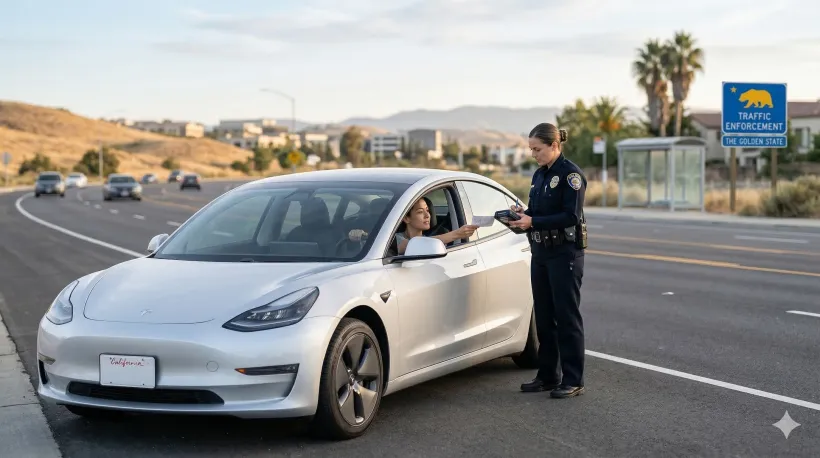
- risk of additional fines during roadside checks.
That is why it is important to start the registration process immediately after moving, rather than putting it off.
Who needs to register an out-of-state vehicle?
Not everyone needs to register an out-of-state vehicle in California—it all depends on your status and length of stay. It’s quite simple:
| Situation | Registration Required | Timeline |
| New resident | Yes | Within 20 days |
| Student | Sometimes | Depends on residency status |
| Military | Often exempt | Depends on place of service |
| Temporary stay | No | If residency is not established |
Students may be subject to different rules:
- if they are now considered California residents—registration is required
- if they are temporarily in the state, they may keep their out-of-state registration.
To avoid unnecessary expenses, check your status with your educational institution or the DMV.
Military personnel often have exemptions. If they are in California on duty, they may:
- keep their home state registration;
- be exempt from certain local fees.
This depends on their service status and permanent residence, so clarify this when transferring.
People who have arrived for tourism or short-term work do not need to register—this is considered temporary residence.
It is important to correctly determine your status. Many drivers mistakenly believe they can delay registration, even though they are already formally considered residents.

Complete checklist for registering an out-of-state car in California
Before you begin the registration process, it’s important to have everything ready—this will help you avoid delays and meet the 20-day deadline.
You can save this step-by-step checklist and complete the registration yourself through the California Department of Motor Vehicles or save time by contacting Xtreet—our specialists will review your documents and guide you through the process from start to finish.
Step 1 — Get California insurance
The first step is to obtain auto insurance in California. Without it, the DMV will not accept your application.
What you need to do:
- choose a licensed insurance company;
- purchase a policy that meets the state’s minimum requirements;
- obtain proof of coverage (an insurance card or electronic document).
You can do this online—the process usually takes anywhere from a few minutes to an hour. We’re sure you’ve already checked out some insurance companies!
Step 2 — Complete VIN verification
VIN verification is the process of checking a vehicle’s unique identification number. It confirms that the vehicle matches the documents and has no registration issues. It is required for vehicles from another state or when registering a vehicle for the first time.
It is performed by:
- the DMV;
- the California Highway Patrol;
- licensed VIN inspectors.
This usually takes 10-20 minutes.
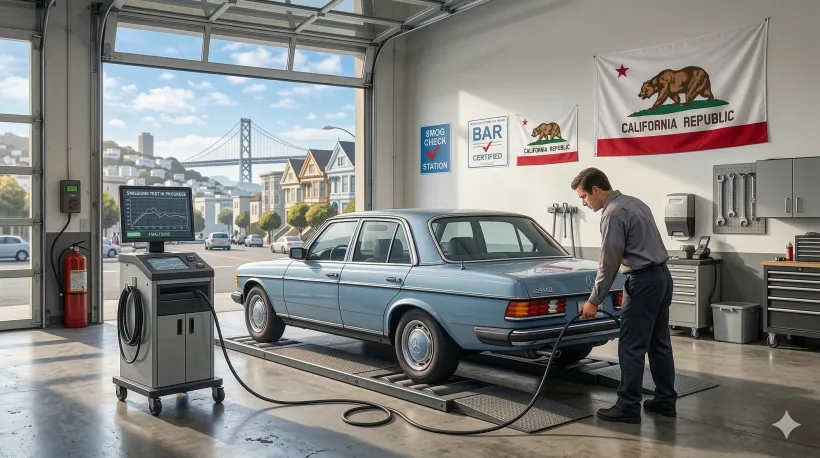
Step 3 — Pass smog inspection
A smog check is an environmental inspection of a vehicle’s emissions.
The following vehicles must undergo this inspection:
- most gasoline-powered cars older than a few years;
- diesel-powered cars (with certain exceptions).
Exempt from the inspection:
- electric vehicles;
- new cars (usually only for the first few years).
How the inspection works: you go to a certified station, a technician checks the emission levels, and the result is automatically sent to the DMV.
Step 4 — Submit application
After preparing all documents and passing the inspections, you need to submit a registration application.
Options:
- in person through the California Department of Motor Vehicles;
- online (limited functionality);
- through Xtreet—the most convenient option, because:
- all documents are verified;
- errors are minimized;
- processing time is reduced.
In addition to the documents we’ve already mentioned, you’ll need that.
Checklist:
- Out-of-state title
This is the main document confirming that you are the vehicle’s owner. Required in most cases. If the car is financed, lienholder information may be submitted instead of the title.
You can obtain it from the DMV of your previous state or from a financial institution that has the relevant documents.
- Current registration
Required to confirm that the vehicle was previously registered legally. This is usually simply your current registration card.
- Driver’s license
A California driver’s license isn’t always required at the start, but the DMV may request it during registration. It’s recommended to replace it with a local one at the same time and familiarize yourself with California traffic laws.
Step 5 — Pay fees and taxes
At this stage, you pay all fees:
- basic registration fee;
- vehicle license fee;
- possible use tax (equivalent to sales tax);
- local fees.
The total amount depends on the car’s value, the county, and the type of vehicle. It’s best to calculate it in advance and have the funds ready to avoid putting a dent in your family budget.
Step 6 — Receive plates and registration
Processing the application takes an average of 14 days. After that, you will receive:
- California license plates;
- a local registration card;
- a sticker.
If you applied online or through a service, the documents will be mailed to you. If you applied at a DMV office, some of the documents may be issued to you immediately.
How much does it cost to register an out-of-state car?
The cost of registering a car from another state in California consists of several fees. The total amount depends on the car’s value, the county, and its specifications, but the main components are as follows:
| Fee Type | Typical Cost |
| Registration | $60+ |
| Title transfer | ~$15-$25 |
| Use tax | 7-10% (varies) |
| Smog check | $30-$70 |

The registration fee is the basic payment that all car owners pay.
Title transfer is a one-time fee for transferring ownership to California.
Use tax—the largest portion of the cost. This is similar to sales tax, calculated based on the car’s market value and subject to local rates.
Smog check — paid separately at a certified facility.
The final amount is always calculated by the California Department of Motor Vehicles and can vary significantly—from ~$100 to several hundred dollars. It is also influenced by the presence or absence of fines, unpaid parking tickets, etc.—we’ve covered this in detail.
How does Xtreet simplify out-of-state registration?
The registration process through the California Department of Motor Vehicles often takes time: lines, document checks, and the risk of errors that force you to start all over again.
Xtreet helps simplify the entire process by handling the key steps:
- document verification before submission;
- fast application processing;
- support for complex or non-standard cases;
- help in avoiding common mistakes.
This is especially helpful for new residents who are not yet familiar with California DMV requirements and want to complete the process without unnecessary stress.
FAQ
1. How long do I have to register my car in California after moving?
You have 20 days after establishing residency.
2. Can I drive with out-of-state license plates in California?
Yes, but only temporarily. Once you become a resident, the 20-day period begins.
3. Do I need a California driver’s license first?
Not always, but the DMV may require it during registration.
4. What is VIN verification?
It is a check of the vehicle identification number to confirm it matches the documents.
5. Do I need a smog check for a new car?
New cars are usually exempt from the smog check for the first few years.
6. How much tax will I pay when bringing a car to California?
The use tax is usually 7-10% of the car’s value, depending on the county.
7. Can I register a car online?
Yes, partially through the California Department of Motor Vehicles or entirely through third-party services like Xtreet.
8. What happens if I miss the 20-day deadline?
Fines and additional fees will be assessed, which increase over time.
9. Can someone else register the car for me?
Yes, through a power of attorney or specialized services.
Conclusion
Registering a car after moving to California is a mandatory procedure that drivers should not delay.
You have only 20 days, and the process involves several key steps: VIN verification, smog check, obtaining insurance, and paying fees. The cost is made up of several components, so it often seems higher than expected.
Errors in documents or delays can lead to fines and additional costs. That’s why it’s important to prepare in advance or use services that simplify the process. Xtreet lets you complete registration quickly, avoid common mistakes, and focus on adjusting to life in your new state.