What Happens If You Ignore DMV Notices Completely
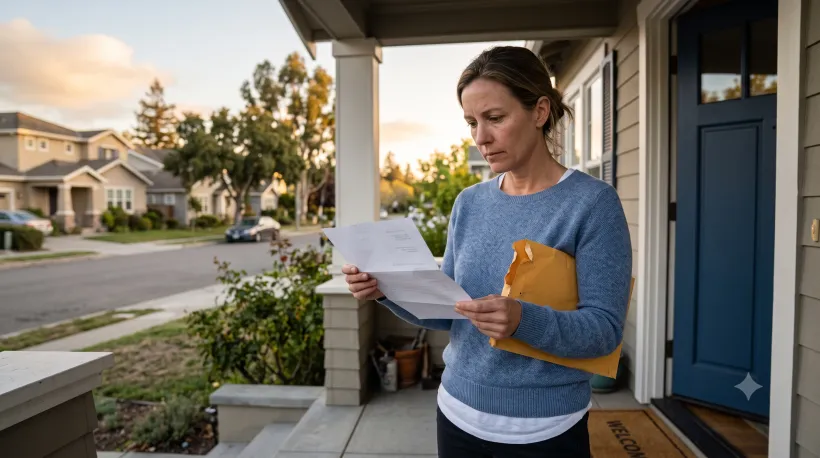
Most people who ignore a DMV notice don't do it out of defiance. They do it because the envelope looks like bad news, life is busy, and the problem feels too big to start dealing with right now. But in California, it's one of the more expensive responses.
The California DMV operates on a cascade model: every ignored notice moves the problem one step further along a sequence that becomes progressively harder and more costly to undo.
A renewal notice ignored becomes a lapsed registration. A lapsed registration with an insurance flag becomes a suspension. A suspension notice ignored can result in a vehicle that's illegal to operate and, in some cases, a hold on your ability to renew your driver's license.
None of these consequences require you to do anything wrong after the first notice—they happen automatically as deadlines pass and thresholds are crossed.
This Xtreet blog covers every type of DMV notice California sends to vehicle owners, what happens specifically when each one is ignored, and how to stop the progression at whichever stage you're currently at—including how to clear the most common issues through Xtreet in a matter of minutes without a DMV office visit.

Type 1: The Registration Renewal Notice
The most common DMV notice most California drivers receive is the registration renewal notice—a billing statement sent approximately 60 days before your vehicle's registration expiration date. It shows the amount owed, your expiration date, and instructions for renewing through multiple channels.
If you do not receive a billing notice approximately 60 days before your vehicle's registration expires, contact Customer Service or use the Fee Calculator to find out what your fees are. The longer you delay payment, the greater the penalty amount will be.
What happens when you ignore it: Month by month
The consequences of ignoring a renewal notice are entirely predictable—California's penalty schedule is fixed and publicly available.
| Time past expiration | Penalty on VLF | Registration late fee | CHP late fee |
| 1–10 days | 10% | $10 | $10 |
| 11–30 days | 20% | $15 | $15 |
| 31 days–1 year | 60% | $30 | $30 |
| More than 1–2 years | 80% | $50 | $50 |
| More than 2 years | 160% | $100 | $100 |
At the six-month mark, an additional threshold is crossed. Under California Vehicle Code § 22651(o), a peace officer or authorized public employee can have a vehicle towed from a highway or public property once registration has expired for more than six months—without prior notice.
After four years without registration, the vehicle's digital record may no longer be available in the DMV's system, requiring a more involved re-registration process rather than a standard renewal.
The renewal notice itself is not a legal prerequisite for the obligation to renew. California Vehicle Code § 1661 requires the DMV to notify vehicle owners at least 60 days before the registration expiration date, but failure to receive that notice does not relieve you of the obligation to renew on time or pay applicable penalties. Your expiration date is on your registration card—that's the authoritative deadline whether a notice arrives or not.
Type 2: The Registration Suspension Notice
If the DMV flags your vehicle's registration for a specific reason—most commonly a gap in insurance coverage—it sends a suspension notice before any action takes effect. This notice tells you the suspension effective date and what you need to do to prevent it from going into effect.
If you do not respond by the suspension effective date on the notice and a suspension occurs, a second notice will be mailed.
The window between receiving a suspension notice and the suspension taking effect is your best opportunity to resolve the issue at the lowest cost. For insurance-related suspensions: you have 30 days from the date of the notice for newly acquired vehicles and 45 days from the date of the notice for a cancelled policy. The DMV must receive the proof of financial responsibility prior to the suspension effective date printed on the notice.
If the notice is ignored and the suspension takes effect, the consequences are immediate and specific. If your renewal notice reads "Registration Suspended," your vehicle cannot be operated or parked on California roadways until your registration is reinstated. This is not a citation risk—it's an absolute prohibition on operating or parking the vehicle anywhere on public roads.
If the registration is suspended when the renewal notice is printed, you will not be given the option of renewing your vehicle registration via the Internet. The renewal notice will provide instructions for clearing the suspension and renewing the registration. This means ignoring a suspension notice doesn't just create a legal problem—it locks you out of the online renewal channel entirely until the suspension is cleared.
Under California Vehicle Code § 8800, the DMV has authority to cancel, suspend, or revoke a vehicle's registration when required fees have not been paid upon reasonable notice and demand; minimum liability insurance is not obtained or maintained for the vehicle; or the registration could have been refused when last issued or renewed. Notice is the operative word—the DMV doesn't act without notifying you first, but once notice has been given and ignored, the action proceeds automatically.
What clearing a suspension actually requires
For insurance-related suspensions, reinstatement requires submitting current proof of California insurance to the DMV's Vehicle Registration Financial Responsibility Program unit and paying a $14 reinstatement fee. This cannot be done at a DMV field office—it must go through the VRFRP unit specifically, by email to VehicleFRProgram@dmv.ca.gov, by mail, or through the online portal.
Type 3: The Failure to Appear Notice—When a Traffic Citation Gets Ignored
A traffic citation isn't technically a DMV notice—but ignoring one creates consequences that run directly through the DMV and affect your ability to register your vehicle and, in some cases, maintain your driver's license.
When you receive a traffic citation in California, the citation includes a deadline—typically referred to as an "appear by" date—by which you must respond: pay the fine, request a court date, or submit a trial by written declaration.
If you do not pay the fine, request a court date, or submit a trial by written declaration by that deadline, the court treats your case as a failure to appear (FTA). A failure to appear triggers a cascade of consequences under Vehicle Code section 40508. The court adds a civil assessment of up to $300 to your original fine under Penal Code section 1214.1. The court also notifies the DMV, which places a hold on your driving record.
The DMV may place a hold on your vehicle's registration upon the court's notification. Therefore, neither you nor your family will be able to use the car. This hold prevents registration renewal across all channels until the court clears it.
The consequences can extend further.
Once you miss your court date, the judge may issue a bench warrant for your arrest. The court also notifies the California DMV, which then places a hold on your license under applicable vehicle code provisions. That hold can trigger a license suspension that remains in effect until the court clears it. This can happen without your knowledge. Many drivers only find out about the suspension when they're pulled over or try to renew their license.
Important note: California Vehicle Code § 40509.5, which allowed the DMV to place a hold on a driver’s license for an FTA, has been repealed. However, courts may notify the DMV through VC § 13365 and other mechanisms, which may result in the suspension of a driver’s license. The legal consequences of an FTA depend on the specific court and the type of violation—for an accurate understanding of your situation, we recommend contacting the court directly.
A failure to appear on hold may also be released by appearing before a judicial officer or by appearing in collections to set up an installment payment plan with an initial payment. Please be advised, if your case is in Collections, scheduling a future court hearing will not stop a DMV hold, suspension, or warrant from being imposed on your case.
Type 4: The Dishonored Check or Payment Notice
If a payment you made to the DMV—for registration, a driver's license, or any other service—was returned by your bank, the DMV sends a Demand for Payment letter. Ignoring this notice is particularly consequential because a dishonored payment voids the original transaction entirely.
For registration payments: the registration is not considered renewed, late penalties accrue from the original expiration date, and a $20 to $30 administrative fee is added on top of the original fees owed. Repayment must be by cashier's check, money order, or cash—personal checks are not accepted after a dishonored check.
For driver's license payments, the consequences are more serious. Under California law, the DMV can cancel a driver's license for a dishonored check. A cancelled license must be surrendered to the DMV. Driving on a cancelled or subsequently suspended license is a misdemeanor under California Vehicle Code § 14601.1, carrying penalties including up to six months in jail and fines of $300 to $1,000.

The Compounding Problem: How Ignored Notices Stack
The most important thing to understand about California's DMV notice system is that ignored notices don't resolve themselves—they layer.
An ignored renewal notice becomes a registration lapse. A lapsed registration combined with an ignored insurance notice becomes a suspension. A suspension notice ignored online lock renewal, which means the next renewal notice also requires in-person or specialized processing. A failure to appear on a citation for the original expired registration adds a court hold to the same registration record.
By the time a driver has ignored several notices across several years, they may be dealing with accumulated late penalties on multiple delinquent years, a registration suspension requiring reinstatement fees before renewal can proceed, a court hold blocking the registration from clearing regardless of payment, and, in some cases, a driver's license complication on top of the vehicle registration situation.
None of these combinations are uncommon—the Judicial Council of California has reported that nearly 3 million Californians have had licenses suspended for FTA or unpaid fines. Each of those situations started with a notice that seemed easier to ignore than to deal with.
The good news is that none of them are permanent. Every layer of the problem has a specific resolution process, and most can be addressed without a DMV office visit.
How to Stop the Spiral—And Where Xtreet Fits In
The fastest way to stop the compounding effect of ignored DMV notices is to identify exactly what's on your record right now and address each issue in the correct order. That sequence matters: a court hold can't be cleared by paying registration fees, and a suspension can't be cleared by renewing online until the reinstatement step is completed first.
Check your current registration status at the DMV website using your plate number and last five VIN digits. This tells you whether the registration is active, lapsed, or suspended, and whether there are any holds on the account. For a broader picture—including whether any driver's licenses exist—check your driver record through MyDMV.
If the issue is a registration lapse with no holds, this is the simplest scenario.
Xtreet retrieves your current fee total, including all accumulated penalties, directly from the DMV database when you enter your plate number and VIN, processes payment for multiple delinquent years in a single session, and submits the renewal to the DMV. Your registration status updates in the DMV database within one to two business days. The entire transaction takes a few minutes—no DMV office, no queue.
That's the difference between letting a problem sit another week and being back to legal status before the end of the day.
If outstanding parking or toll violations are holding up the renewal, they must be paid first; then you can renew your registration through Xtreet.
If the issue is a registration suspension for insurance reasons, submitting proof of insurance and the $14 reinstatement fee to the DMV's VRFRP unit must happen before the renewal can proceed.
If the issue involves a court hold from a failure to appear, that must be resolved directly with the court—no DMV channel or licensed partner can substitute for the court clearance step. Once the court issues a release to the DMV, the hold is lifted and the registration renewal can proceed. At that point, Xtreet handles the renewal itself.
If the issue involves a replacement registration card, sticker, or title that was lost or never arrived during the period of non-engagement with DMV notices, Xtreet handles those replacement requests online as well.
The starting point in every scenario is the same: check the current status, identify what's actually on the record, and address the layers in order.
The longer that starting point is delayed, the more layers accumulate. Most of the resolution steps for the most common notice types can be completed today, online, in less time than it takes to get through the DMV's phone queue.

FAQ
- What happens if I ignore a California DMV registration renewal notice?
Your registration lapses the day after the expiration date printed on the notice and your registration card. Penalties begin immediately—10% of the Vehicle License Fee plus flat fees for the first ten days, growing to 160% of the VLF plus $200 in flat fees for registrations expired more than two years. After six months, the vehicle becomes eligible for towing under CVC § 22651(o). After four years, the digital registration record may be purged from the DMV's system. Ignoring the notice doesn't pause any of these timelines.
- What happens if I ignore a suspension notice from the DMV?
If the suspension notice is ignored and the suspension effective date passes without a response, the suspension goes into effect. The vehicle cannot be legally operated or parked on public roads. Online renewal is disabled—the DMV's own system will not allow internet renewal for a suspended registration. A second notice is mailed after the suspension takes effect. Reinstating requires addressing the specific cause of the suspension—for insurance-related suspensions, submitting proof of insurance and a $14 fee to the VRFRP unit.
- Can ignoring a traffic citation affect my vehicle registration?
Yes. If you ignore a traffic citation and miss the response deadline, the court classifies the case as a failure to appear and notifies the DMV. The court may place a hold on your registration that prevents renewal until the court case is resolved. A civil assessment of up to $300 is also added to the original fine. In some circumstances, a bench warrant may be issued.
- Will the DMV eventually give up if I ignore everything long enough?
No. Penalties compound on a set schedule and do not cap until they reach the maximum tier. Registration suspensions remain active until specifically cleared. Court holds remain until the court issues a release. The only things that resolve automatically over time are records that age out of the DMV's database after several years of inactivity—but that creates a different problem, requiring re-registration rather than renewal.
- What's the fastest way to find out what's on my DMV record right now?
Check your vehicle registration status at dmv.ca.gov using your plate number and last five VIN digits—no account required. This shows whether the registration is active, lapsed, suspended, or holds are present. For driver's license status and a full driver record, log into MyDMV.
- Can I renew my registration online if it's been suspended?
No. If the registration is suspended when the renewal notice is printed, you will not be given the option of renewing your vehicle registration via the Internet. The suspension must be cleared—the specific hold resolved and reinstatement fee paid where applicable—before online renewal becomes available again.
- Can Xtreet help me clear an ignored DMV notice situation?
It depends on the type. For registration lapse with accumulated penalties, Xtreet calculates and processes the full total, including delinquent years, in a single session. For parking or toll violation holds, insurance suspension reinstatement, and court-ordered holds, those require actions, respectively, before Xtreet can complete the renewal.
- What if I missed a Failure to Appear notice and didn't know about a hold on my registration?
Many drivers discover FTA holds only when they try to renew their registration or are pulled over. The court is required to mail notice of any hold, but mail delivery issues and address changes mean notices don't always reach drivers. If you discover an FTA hold, contact the court that issued it directly to understand your options—paying the full amount, appearing before a judicial officer, or setting up a payment plan through Collections. Once the court sends clearance to the DMV, the hold is lifted.
- Does the DMV notify you before suspending your registration?
Yes. The DMV sends a notice before any suspension takes effect, specifying the suspension effective date and what's needed to prevent it. If you do not respond by the suspension effective date on the notice and a suspension occurs, a second notice will be mailed. The system is designed to give you the opportunity to respond before the action takes effect—ignoring the first notice forfeits that opportunity.
- Can I resolve everything online without visiting a DMV office?
For the most common scenarios—registration lapse, parking violation holds, insurance suspension reinstatement, and replacement documents—yes, online resolution is available. Court-ordered holds require direct engagement with the court system. VIN verification for vehicles dropped from the DMV's database requires physical inspection by an authorized person. Everything else can generally be handled without an office visit, either through the DMV's own portal or through licensed partners like Xtreet.
Conclusion
Ignoring a California DMV notice doesn't pause the underlying obligation—it transfers control of the situation from you to a set of automated systems that compound the problem on a fixed schedule, whether you're paying attention or not. Each day past a renewal deadline adds to the penalty total. Each threshold crossed—six months, four years—adds a new layer of complexity to resolution. Each ignored suspension notice or citation deadline adds a new hold to the registration record.
The good news is that most of these problems are fixable today, at whatever stage they're currently at. The registration lapse accumulates penalties but clears the moment payment is processed. The insurance suspension clears when proof of coverage is submitted to the right unit. The parking violation hold clears when the fines are paid. The progression from bad to worse requires sustained inaction—and the reversal of that progression, in most cases, requires only a few minutes of action.
Xtreet makes the most common resolution steps—registration renewal and replacement document requests—something that can be completed in a single online session, with your registration status updating in the DMV database within a day or two.
There's rarely a good reason to keep putting it off. The cost goes one direction only, and the fix is faster than most people expect.