New California Car Laws 2026: Smog Check Exemption for Collector Cars and Lowrider License Plates
Quick Answer: On September 16, 2026, Governor Newsom signed two bills. The first, SB 1392, or Jay Leno's Law, phases in a smog check exemption starting January 1, 2028, for qualifying collector vehicles from model years 1976 through 1985. The second, AB 2541, creates a Lowrider specialty license plate program.
Neither law requires any immediate action from existing car owners. Jay Leno's Law takes effect in stages, and the Lowrider plate becomes available only after the program collects 7,500 paid applications.
In California, cars have never been just a way to get around. They are part of the culture. Classic cars get restored and shown off, custom rides become weekend projects, and lowriders still turn heads on city streets.
But for years, owners of older and historically significant vehicles have faced a tricky problem: how do you preserve a car’s original character when it still has to meet smog rules designed mainly for everyday vehicles? For decades they sat in a legal gray zone.
Two new California laws are changing the rules.
Jay Leno's Law: What Changes for Classic Car Owners
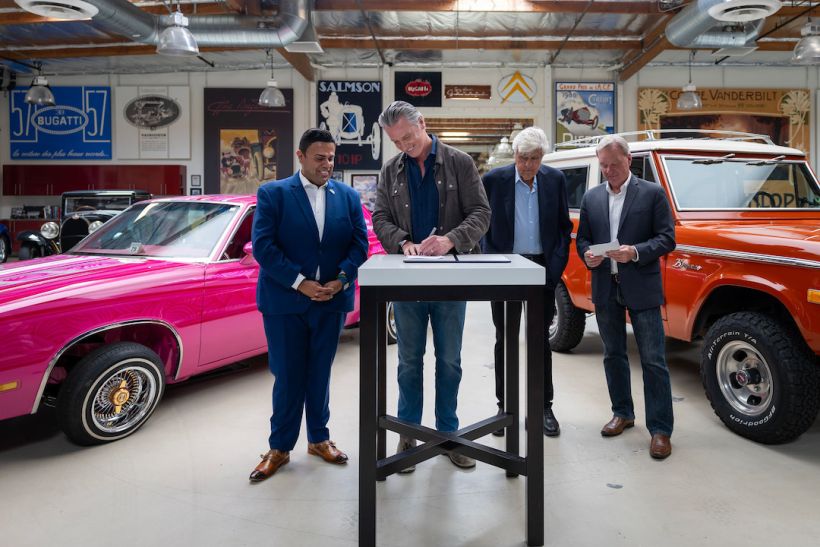
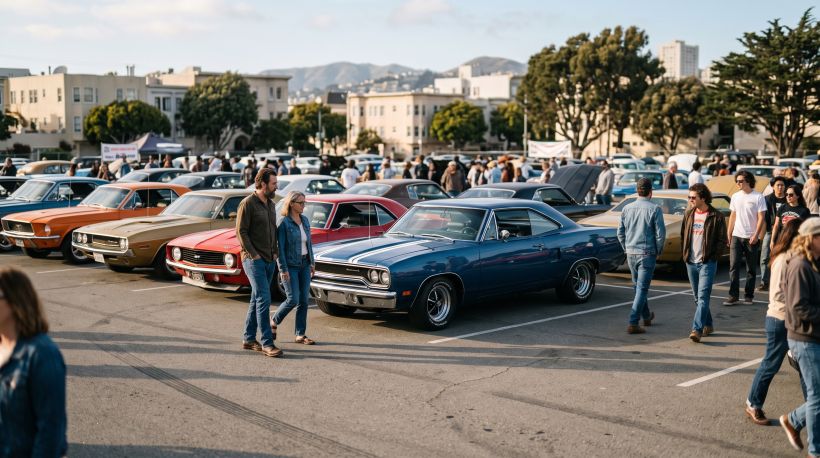
For anyone who owns or has been thinking about acquiring a collector car from the late 1970s or early 1980s, this is the law that matters most practically. SB 1392 creates a phased smog check exemption for qualifying collector vehicles from model years 1976 through 1985, with the first cohort becoming exempt on January 1, 2028.
The timeline is straightforward. Starting January 1, 2028, qualifying collector cars from model years 1976 through 1980 become exempt from California's biennial smog check. One additional model year is added every January until 1985 and is covered in 2033.
California already exempted vehicles manufactured before the 1976 model year from smog requirements. Jay Leno's Law extends that coverage gradually, bridging a ten-year gap that has long frustrated the collector community.
The key word throughout is "qualifying." The law is not a blanket exemption for everything on the road from that era.
Who actually qualifies?
SB 1392 applies to qualifying collector vehicles from model years 1976 through 1985 that are preserved and operated primarily for purposes such as car shows, parades, exhibitions, charitable events, and other limited uses rather than everyday transportation.
To qualify, a vehicle must meet one of two requirements:
- It must be insured under a collector car policy:
- It must be driven fewer than 1,000 miles per year.
These are not just administrative checkboxes. They reflect the core argument behind the law: that collector vehicles are not commuter cars. A car driven occasionally, maintained carefully, never grinding through rush hour, is exactly what the law is designed to protect.
The proposal recognizes the unique status of classic cars as limited-use, historically significant vehicles that represent less than 1% of all cars on California's roads while contributing meaningfully to the state's economy through cultural celebrations, tourism, and small business activity.
What does not change?
The law does not eliminate the smog requirement for vehicles that don't qualify. A 1979 car used as a daily driver, not insured as a collector vehicle, and logging thousands of miles per year remains subject to the standard biennial inspection.
The exemption is specific and narrow by design.
The road here was not smooth
This law did not arrive quickly. The measure follows an earlier effort backed by Jay Leno. Leno joined Grove and classic car owners outside the state Capitol in April 2025 to rally for SB 712, which would have created a broader rolling exemption for collector vehicles at least 35 years old. That proposal ultimately failed to become law.
Senators Cortese and Grove returned with a narrower version, SB 1392, in 2026, and it cleared its final floor vote 49 to 4. The bipartisan support and the narrower scope were deliberate choices: legislators wanted a bill that California's air quality regulators could accept without compromising the state's emissions commitments.
The Lowrider Plate: A Rolling Symbol of Cultural History
The second bill signed that day has a different character. AB 2541 is not primarily a regulatory change.
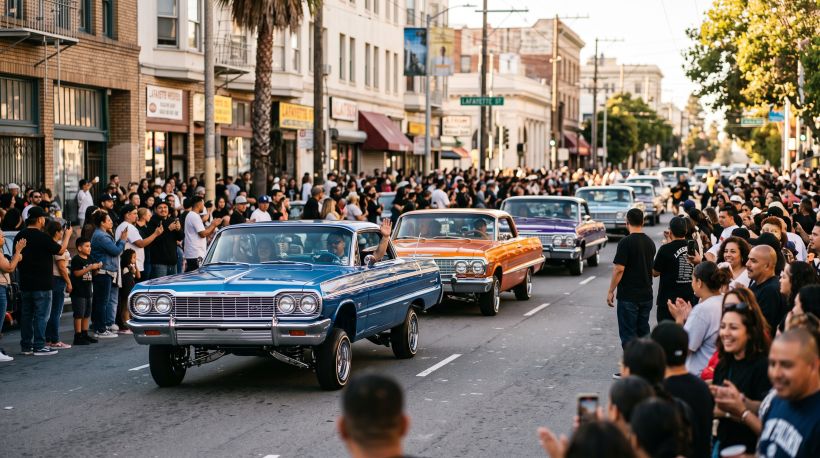
It is a statement about whose culture gets official recognition, and after decades in which lowriders were the target of local bans, cruising restrictions, and policing rather than celebration, that distinction matters. "No cruising" signs used to be posted throughout California, banning lowriders from the roads. Now, those same vehicles will be celebrated with their own custom license plate.
Lowrider culture took root in California's Chicano communities after World War II, when the classic, hydraulic lowriders became part of Chicano culture as the hot rod trend began to sweep the country.
Lowriders are customized cars with lowered bodies, often painted in colorful designs that may be fitted with hydraulics to allow height-adjustable suspension. For the communities that built and maintained this tradition through decades of legal friction, the signing of AB 2541 represents something more than a new license plate option: it is art. It can be a connection to family, community, and Chicano and Latino heritage. But for years, lowrider culture was often viewed through the lens of enforcement rather than cultural expression.
AB 2541 takes a different approach, recognizing the culture behind these vehicles and giving it greater legal protection.
How the program works?
The bill requires the California Arts Council to apply to the DMV to sponsor The Lowrider specialized license plate directs the DMV, in consultation with the Arts Council, to design the plate to reflect lowrider culture and heritage. The program is established once the DMV receives at least 7,500 paid applications by January 1, 2032.
The California Arts Council will conduct community outreach and work with other stakeholders in the lowrider community to design the plate.
The 7,500 paid applications threshold is a standard California requirement for specialty plate programs. It exists to ensure that any new plate design has a committed base of support before the DMV invests in production.
The plate design itself has not yet been determined. That process, driven by community consultation, comes once the program is formally underway.
Where the money goes?
Net revenues from the plate would flow into the state's Specialized License Plate Fund and be distributed as grants by the California Arts Council to support lowrider arts and cultural preservation efforts, youth engagement, and public educational exhibitions.
The legislation instructs the Arts Council to prioritize nonprofit organizations serving Chicano and Latino communities.
This makes the plate self-sustaining as a cultural investment. Every renewal fee from a driver who chooses it contributes directly to the programs keeping lowrider culture alive for the next generation.
What This Means for California Car Culture
These two laws arrived in the same week California also passed SB 1069, which expedites the review process for aftermarket parts manufacturers seeking state approval. Taken together, the bills represent a deliberate effort to acknowledge that car culture is part of California's identity, not in tension with its policy priorities.
California is home to both sides of the automotive spectrum. The state has surpassed 2.5 million electric vehicle sales and now has more than 216,000 public EV charging ports, while its car culture still makes room for classics like a 1979 Trans Am and a hand-painted 1964 Impala.
These are not contradictions. Jay Leno's Law was built specifically to coexist with California's clean air commitments: a narrow exemption for vehicles that barely touch the road, driven by owners who care more about preservation than horsepower numbers.
For classic car enthusiasts, Jay Leno’s Law could make the 1976-1985 model years much easier to navigate. Smog requirements have been a long-standing concern for owners who restore and maintain these vehicles, even though many classic car projects are focused on preservation rather than everyday driving. The change could also lower the barrier for younger drivers who want to get into the hobby but may have been discouraged by the extra requirements.
Lowrider culture, meanwhile, has been part of California's streets for longer than most of the state's current environmental regulations have existed. The cruising bans are largely gone, removed by AB 436 in 2023. Now the specialty plate marks another step toward recognition rather than restriction.
Taken together, these changes suggest a broader shift in California: making room for its automotive heritage without giving up the environmental and regulatory goals that shape the state’s future.
Frequently Asked Questions
Does Jay Leno's Law apply to my car right now?
Not yet. The first exemption takes effect on January 1, 2028, and covers qualifying collector vehicles from model years 1976 through 1980. One additional model year is added each January after that, reaching 1985 in 2033. If your car falls in that range and you believe it will qualify, you can begin preparing now by ensuring it is insured under a collector car policy or that you can document it is driven fewer than 1,000 miles per year.
What makes a vehicle a qualifying collector car under SB 1392?
The vehicle must be from model years 1976 through 1985 and must meet one of two requirements: it is insured under a collector car policy, or it is driven fewer than 1,000 miles per year. It must not be the owner's primary means of transportation. These requirements must be met each time the exemption is claimed. The law does not automatically exempt every vehicle of those model years.
Do I still need to smog my 1976 to 1985 car before 2028?
Yes. California's existing smog check requirements remain fully in force until the phased exemption takes effect. If your vehicle's registration is due before January 1, 2028, and it does not already qualify under a different exemption, a biennial smog certification is still required to complete renewal.
My car is from before 1976. Does Jay Leno's Law change anything for me?
No. Vehicles from model years 1975 and earlier were already exempt from California's smog check requirement before SB 1392 was signed. The new law extends coverage to the 1976 to 1985 range. Nothing changes for pre-1976 vehicles.
When will the Lowrider specialty plate be available to order?
There is no fixed date yet. The program requires the California Arts Council to collect at least 7,500 paid applications by January 1, 2032, before the DMV will produce the plate. The design has not been finalized either. That process, which involves community outreach and stakeholder consultation, is part of how the law is written. When the plate becomes available, it will be offered through the DMV as a standard specialty plate with an additional fee on top of regular registration costs.
Where do the proceeds from the Lowrider plate go?
After the DMV deducts its administrative costs, net revenue is deposited into the state's Specialized License Plate Fund. The California Arts Council then distributes those funds as grants to organizations supporting lowrider arts, cultural preservation, youth engagement, and public educational exhibitions, with priority given to nonprofit organizations serving Chicano and Latino communities.
Does the Lowrider plate replace my standard plate?
No. Specialty plates in California are optional. If you choose to order a Lowrider plate when the program launches, it replaces your current standard or specialty plate but carries the same registration validity. You pay the standard specialty plate fee in addition to your regular registration cost.
Can I renew my registration online if I have a collector vehicle that qualifies under Jay Leno's Law after 2028?
The exemption removes the smog certification requirement for qualifying vehicles; that's all. You can renew your registration online: Xtreet handles registration renewals as a licensed California DMV partner if no other holds are present.
Conclusion
On September 16, 2026, Governor Gavin Newsom signed two new laws at Jay Leno’s garage in Burbank, marking a significant moment for California’s car community.
Jay Leno's Law is a pragmatic compromise: a smog exemption narrow enough to preserve air quality policy and meaningful enough to matter to the people who spend weekends restoring cars that will never see a freeway at rush hour.
The Lowrider plate is something different in kind. It is California's formal acknowledgment of a culture that built something beautiful despite decades of legal pressure to stop.
Neither law changes anything about how most California drivers register or renew their vehicles today.
Jay Leno's Law kicks in January 1, 2028, for the first group of qualifying vehicles. The Lowrider plate requires 7,500 paid applications before the DMV will produce it. What both laws do immediately is establish where California stands on its own car culture, which turns out to be a more complicated and more interesting place than a single smog check form would suggest.
For classic car owners approaching their next registration cycle, the process remains unchanged for now.
Xtreet handles California registration renewals online as a licensed DMV partner, including any smog-related holds that may be blocking a renewal before the new exemption kicks in.