No Counters: How to Renew Registration Without Visiting a DMV Office in California
Quick Answer: California DMV field offices stopped processing simple vehicle registration renewals at the counter on June 3, 2024. Those renewals now go through out-of-office channels: online at the DMV website, by mail, at self-service kiosks, by phone in some cases, and through DMV-authorized business partners such as Xtreet.com. For most drivers, this means you never need to visit an office to renew.
If you used to renew your tags at a DMV window, the habit is hard to break even through years. You grab the notice, block out a morning, and drive to the nearest office. That trip is unnecessary for most renewals, and in many cases it will not even get you served.
We cover which renewal options exist, how DMV-authorized partners work, and how to renew in a few minutes from your phone:
- What exactly moved out of DMV offices, and what did not
- Every renewal option: online, mail, kiosk, phone, and DMV partners
- Where Xtreet.com fits in and what it costs compared to the DMV's own channels.
- A step-by-step path, common mistakes, and the cases that may still need an office.
Imagine a driver who has renewed at the same DMV counter for ten years. Or a driver who has just started driving but has heard her father talk her whole life about how exhausting it is to renew his own registration at the DMV and how to do it faster.
Both were surprised to learn that this feature was no longer available, but then they discovered that submitting an application online was much easier and faster. No lines, no need to spend half a day on a single task.

What Changed, and What Exactly Moved Out of DMV Offices
The change is official, and it is not new.
In a release dated May 22, 2024, the DMV announced that starting June 3, it would process simple vehicle registration renewals that are not past the due date only through alternative, out-of-office options. The same announcement applied the rule to driver license renewals that do not need an in-person visit and to requests for copies of vehicle registration records.
The word "simple" matters. The DMV's later wording describes the category as renewals that are not past the due date and do not require an address change. That is a narrow definition, and it is why you will still see a few renewals handled elsewhere. The DMV also reports that it more than doubled its online services, from 20 in 2019 to 50, and that more than 90% of transactions can be completed on a phone, tablet, laptop, or computer.
Basically, if your registration is current, you do not need to change your address, and nothing else is blocking the renewal; the DMV expects you to renew outside the office. Everything else is a case-by-case decision, covered later in this guide.
| Your situation | Where it is handled |
| Simple renewal, not past due, no address change | Out-of-office channels only: online, mail, kiosk, phone, or a DMV-authorized business partner |
| Renewal that is past due | Not part of the simple category. Many can still be done online if nothing blocks them. |
| Renewal that needs an address change | Not part of the simple category. Update your address first. |
| Complex cases such as a VIN problem or a missing vehicle record | Direct DMV handling, depending on the issue |
The DMV's own homepage says it plainly: most DMV business can be started or completed online without visiting a DMV office.
Your Options to Renew Without a DMV Office
California gives you several routes, and they all lead to the same result: a renewed registration and a new sticker in your mailbox.
The DMV describes these transactions as available online or by mail, and in some cases at kiosks, over the phone, or through DMV business partners. The best route depends on how fast you need it, how comfortable you are online, and whether anything on your account needs attention.
Renew online at the DMV website
This is the baseline option, and it carries no service fee beyond the state charges.
You enter your license plate number and the last five characters of your VIN, confirm that your insurance and smog information are on file, and pay by card or electronic check. The new registration card and sticker arrive by mail, usually within about two weeks.
The DMV's online system works best when your record is clean. If a parking violation, an insurance flag, or a pending smog certification is blocking your account, the system will tell you.
Renew by Mail
Mail renewal still works and has no DMV service fee. Make the check or money order payable to DMV, write your license plate number on it, and send it with your renewal notice to the address on the notice—or to DMV Renewal, PO Box 942897, Sacramento, CA 94269-0001.
It is also the slowest route, so it is a poor choice when your expiration date is close. The DMV advises that if eight weeks pass and a mailed check has not cleared your bank, you should call 1-800-777-0133.
Renew at a Self-Service Kiosk
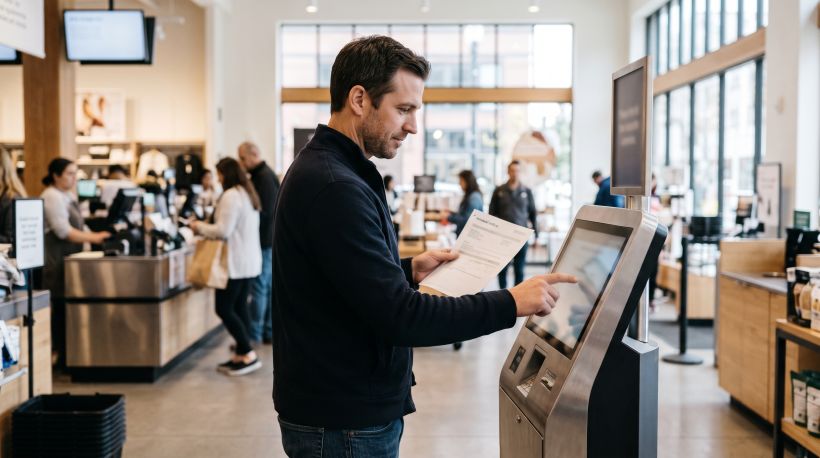
DMV self-service kiosks are located in some DMV offices and retail locations, including grocery stores. They process a standard renewal on the spot.
Credit and debit cards are accepted at all kiosk locations, and card transactions carry a 1.95% service fee. Hours and availability vary by location, so check the kiosk locator before you go.
Renew by Phone
The DMV's automated phone service at 1-800-777-0133 is available for owners who have the Renewal Identification Number printed on their paper notice.
If you opted into paperless notices, or you lost the paper notice, this option is usually not available. Use one of the other channels instead.
Renew Through a DMV-Authorized Business Partner
The DMV authorizes private companies to process certain transactions through a direct connection to its database. This group includes online providers such as Xtreet.com, as well as some in-person locations.
AAA members may also be able to handle registration services at participating California branches, and availability varies by branch, so confirm before you visit. The next section explains how partners work and what they cost.
Quick Selection Table
We've put everything in a table to make it easier for you to choose quickly.
| Channel | Extra fee on top of state charges | Speed | Best for |
| DMV online | None | Minutes to submit; sticker by mail | Clean, simple renewals |
| None | Slowest | Drivers who are not in a hurry | |
| Kiosk | 1.95% on card payments | Completes at the machine; sticker by mail | A short in-person stop |
| Phone | None | Quick, but needs the paper notice number | Drivers with the paper notice |
| DMV-authorized partner (for example, Xtreet.com) | Partner service fee, plus any state-required electronic filing fee if used | Minutes online; sticker by mail | Drivers who want one clear path from start to finish |
When You May Still Need Something Other Than a Simple Online Renewal
The DMV's change covers simple renewals. Some situations fall outside that category, and it helps to know them before you start, so you do not lose time on the wrong channel.
A past-due renewal is the most common.
Many past-due registrations can still be renewed online, with late penalties added, as long as nothing is blocking the account. If the online system stops you, the cause is usually a hold, such as unpaid parking or toll violations, an insurance flag, or a missing smog certification. Clear that first, then renew.
A renewal that requires an address change should start with updating your address on the DMV website, which takes a couple of minutes online.
A smaller group needs direct DMV handling no matter what: a vehicle with a VIN discrepancy, a vehicle that has dropped out of the DMV database after years without registration, or a title problem. If you suspect one of those, the DMV office or the process described in our guides on those topics is the right path. A late registration renewal by itself does not automatically require a DMV office visit unless it involves one of those complications.
DMV-Authorized Partners: Where Xtreet.com Fits
A DMV-authorized business partner is a private company that the DMV allows to process transactions through its own database.
The partner submits the exact state fees that the DMV calculates for your vehicle. What a partner adds is the service: a clear online process, support, and one place to handle the transaction. Because partners add a service fee, the DMV's own online portal is the lowest-cost route for a clean renewal.
Be careful with advertisements that promise discounted DMV fees. The DMV warned drivers that such ads are fraudulent because the law does not allow discounted registration renewals.
Xtreet.com is an example of one of the services where you can handle everything safely and legally, since we are licensed by the DMV (№04489).
We are a DMV-authorized service provider, not the DMV. For registration renewal, the process works like this:
- You enter your vehicle details online.
- Xtreet.com checks the available vehicle information and shows an estimate before checkout.
- You review the breakdown and pay the state fees through a secure payment system.
- Xtreet.com submits the renewal to the DMV, and you receive a digital confirmation.
- The new registration documents are mailed to you.
Xtreet.com's standard service fee for registration renewal is $49.95, and customers experiencing financial hardship receive a 20% discount on service fees. DMV fees, payment-processing charges where applicable, and document shipping are separate, and you can review the full itemized breakdown on the Xtreet.com fees page before you pay.
Step-by-Step: How to Renew Without Going to a DMV Office
The process takes about as long as ordering pizza online (or even sooner if you take your time deciding between the Margherita and the BBQ Chicken Pizza).
Here is the path that works for most drivers.
Step 1: Check your notice and your eligibility
Look at the expiration date on your registration card and your renewal notice.
If your renewal is current and you have not changed your address, you are in the simple category. If you are not sure, the DMV's website has a Service Advisor tool that shows the options available for your situation.
Step 2: Gather what you need
Have your license plate number, driver's license, the last five characters of your VIN, and a payment method ready. Confirm that your insurance is on file and that a smog certification is on file if your vehicle needs one this year.
Step 3: Choose your channel
If your record is clean, you have free time, and you want the lowest cost, use the DMV website.
If you want a fast, guided process with an estimate before checkout, use a DMV-authorized partner such as Xtreet.com.
Step 4: Review the total before you pay
The DMV fee calculator and the Xtreet.com estimate both show you the state fees up front. Compare the total with last year's renewal. If it jumped, the DMV's registration fee breakdown explains which line item moved.
Step 5: Pay, save your confirmation, and check your status
Keep the digital confirmation in your email or phone. Two days later, check your registration status at the DMV website to confirm the DMV shows the renewal as complete, because a mailed sticker alone does not prove the payment cleared.

Common Mistakes
- Driving to an office for a standard renewal
A simple, current renewal is not processed at the counter, so the trip wastes your morning.
- Waiting for the notice
Under California Vehicle Code Section 1661, not receiving a notice does not excuse a late renewal. Your expiration date on the registration card is the deadline.
- Choosing mail at the last minute
Mail is the slowest channel. If your expiration date is close, use an online option.
- Treating the sticker as proof that you are renewed
The DMV can mail a sticker before the payment fully clears. Check your registration status after you pay.
- Trusting ads that promise discounted registration
The DMV warned in June 2025 that such ads are fraudulent. A legitimate partner charges the same state fees as the DMV, plus a clearly stated service fee.
- Renewing before checking smog and insurance
Both must be on file for the renewal to complete, and neither one can be fixed at checkout.
Frequently Asked Questions
Can I renew my registration at a DMV office in California?
Not if your renewal is simple. Since June 3, 2024, the DMV processes simple renewals that are not past due only through out-of-office options. Renewals outside that category may be handled differently, so check your notice or the DMV's Service Advisor.
What counts as a simple registration renewal?
The DMV describes it as a renewal that is not past the due date and does not require an address change. If your registration is current, nothing is blocking your account, and your address is up to date, you are in the simple category.
Do I need to go to a DMV office to renew in 2026?
For a standard renewal, no. You can renew online, by mail, at a kiosk, by phone with your paper notice, or through a DMV-authorized business partner. A DMV visit is only needed for situations that online channels cannot resolve.
Does a DMV partner charge more than the DMV?
A partner charges the same state fees plus its own service fee, so the DMV's online portal is the lowest-cost route for a clean renewal. Xtreet.com's standard renewal service fee is $49.95, with a 20% discount on service fees for customers experiencing financial hardship. State fees, any applicable payment-processing charges, and shipping are separate and shown before you pay.
Is Xtreet.com the DMV?
No. Xtreet.com is a DMV-authorized service provider. It submits your renewal to the DMV, and the DMV remains the authority that sets the state fees and issues your registration.
Will I see the total before I pay on Xtreet.com?
Yes. Xtreet.com shows an estimate before checkout and an itemized fee breakdown. The DMV-generated invoice sets the final state-fee amount.
How long does it take to get my sticker after I renew?
The DMV typically mails the registration card and sticker within about two weeks of a completed online renewal. If eight weeks pass without anything arriving, call the DMV at 1-800-777-0133 to confirm that the renewal was processed.
What if my registration is already expired?
Late penalties start the day after the expiration date and increase over time. Many past-due registrations can still be renewed online if nothing blocks the account. The sooner you renew, the lower the penalty tier.
Conclusion
The offline DMV office has been out of the renewal business for simple, current renewals since June 3, 2024. For most drivers, that is good news. You can renew from your couch, at a kiosk, by mail, or through a DMV-authorized partner, and the result is the same: a valid registration and a sticker in your mailbox.
The practical approach is simple.
Check that your renewal is current and your address is up to date, confirm that smog and insurance are on file, and choose the channel that fits your timeline. If your record is clean and cost is your only concern, the DMV's own online portal is the lowest-cost route.
If you want a fast, guided process that shows an estimate before checkout and keeps everything in one place, Xtreet.com handles your renewal online as a DMV-authorized provider, with the state fees confirmed by the DMV and your new documents mailed to you.
Start your registration renewal on Xtreet.com today, and skip the DMV trip for good.