What Happens When Your California DMV Renewal Payment Fails
Quick Answer: A failed or returned payment on a California vehicle registration renewal means your registration was not completed, even if you already received the new sticker in the mail. The DMV sends stickers before confirming payment has cleared, which means the sticker on your plate is not proof that your renewal is valid.
If the payment is dishonored, the DMV will eventually send a Demand for Payment letter charging the original fees plus a dishonored check service fee, and late penalties will accrue from the registration expiration date regardless of when you receive that letter. The fastest way to confirm your registration status is to check the DMV database directly, not to look at the sticker.
Renewing your California vehicle registration online feels like a completed task the moment the confirmation screen appears. You entered the account number, clicked submit, and a few weeks later a new sticker arrived in the mail. It would be reasonable to assume everything is in order.
But California's DMV processes payment and sticker production on separate timelines.
The agency mails stickers before fully confirming that a payment has successfully cleared the banking system. If your payment fails for any reason, whether it is a transposed digit in the account number, insufficient funds, or a processing error on either side, the sticker continues its journey to your mailbox while your registration remains in a failed state in the DMV's database.
You will likely find out only when a demand for payment letter arrives weeks later or when you try to renew next year and the system flags an unresolved balance.
We explain exactly how California handles failed payments on registration renewals, what the DMV database actually shows during the gap, what penalties apply and when, and the specific steps to fix the situation before it compounds.
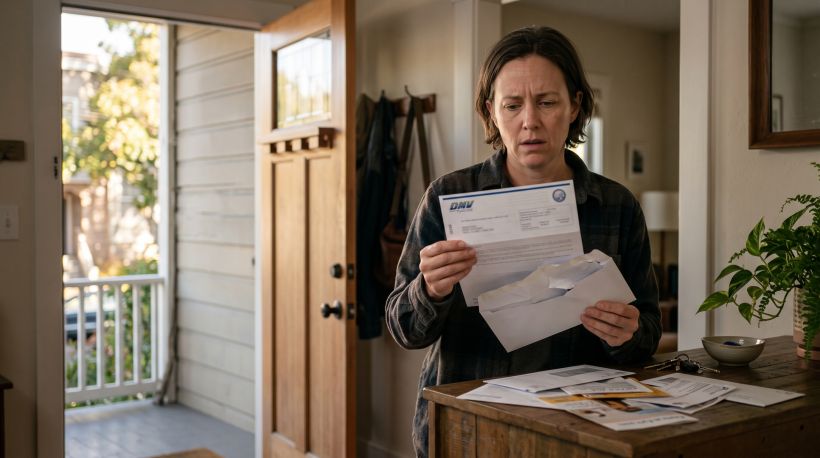
Why the Sticker Is Not Proof Your Renewal Went Through
Most drivers assume that receiving a physical registration sticker means the renewal is confirmed. This assumption is understandable and wrong.
California's DMV mails registration stickers as part of its standard renewal processing workflow, and that workflow does not pause while the agency waits for payment to fully clear. When you submit a payment online by electronic check or bank transfer, the DMV initiates the mailing process before receiving confirmation from the banking system that funds were successfully collected.
The sticker production and mailing happens in parallel with payment verification, not after it.
This means a sticker can arrive at your address while the payment that was supposed to fund it is still in transit, under review, or has already been returned by the bank. The sticker represents the renewal the DMV intended to process. It does not confirm that the renewal was funded.
The authoritative source for your registration status is not the sticker and not your own renewal records.
It is the DMV's vehicle registration database, which reflects the actual state of your account, including any payment failures that have been reported back to the agency. A registration that appears complete on your end may show as failed, pending, or flagged in the database that law enforcement accesses when your plate is read.
What Causes a Registration Payment to Fail
A payment is considered dishonored, and the dishonored check service fee is due if, for any reason, the DMV is unable to deduct funds from your account. The DMV's own definition is broad by design.
Payments fail for several distinct reasons, and not all of them are the result of an error on the driver's part.
- A transposed or incorrectly entered account number
This is the most common cause when paying by electronic check. A single digit wrong in the routing number or account number routes the transaction to a failed state. The DMV has no mechanism to catch this error before the payment attempts to process, and the mailing system does not pause waiting for the result.
- Insufficient funds at the time of processing
The DMV's payment processor may attempt the transaction days after you submit it, and if the account balance has shifted in the interim, the transaction fails.
- A closed or frozen account
If the account you drew on was closed between when you entered the information and when the transaction was processed, the payment is returned without notification at the time of failure.
- Bank errors
On either side, at your financial institution or at the DMV's payment processor, can cause failures that have nothing to do with your account balance or the accuracy of the information you entered.
The ABC7 News investigation from Walnut Creek documented a case where neither the driver's bank nor the DMV could initially account for what happened to the payment. The DMV eventually acknowledged an internal processing error.
When a check submitted by someone else on your behalf, such as a third party paying your fees, is returned by the bank, the DMV's position is that the payment remains your responsibility regardless of who wrote or submitted it.
How to Check Whether Your Registration Is Actually Valid
The fastest and most reliable way to confirm that a renewal payment was successfully processed and your registration is currently valid is to check the California DMV's vehicle registration status tool directly.
Go to the DMV website and navigate to the Registration Renewal or Check Registration Status tool.
Enter your license plate number and the last five characters of your VIN. The system will return your vehicle's current registration status, expiration date, and whether any fees are outstanding or holds are present on the record.
- If your renewal was successfully processed and payment cleared, the status will show as current with the new expiration date.
- If payment fails, the status will reflect the prior expiration date or show a flagged state indicating an outstanding balance.
Do not stop at your bank statement to verify. Whether your bank shows a pending transaction, a completed transaction, or a returned item tells you what happened on your end of the payment. It does not tell you what the DMV's system shows for your vehicle. The DMV's database is the one that law enforcement sees when your plate is queried through CLETS or an automated license plate reader.
A registration that looks valid on your bank statement but shows expired in the DMV database creates the same enforcement risk as a registration that was never renewed.
The DMV's automated phone line at 1-800-777-0133 also allows you to verify your registration status without logging into the website.
If you renewed through Xtreet.com as a licensed California DMV partner, the platform provides a confirmation of the transaction status and any issues surfaced by the DMV database at the time of submission. For any renewal processed through Xtreet.com where the DMV generates a different final invoice than the initial estimate, Xtreet.com refunds the overage.

What the Demand for Payment Letter Means and What It Will Charge You
Once the DMV's banking partner determines that a payment was returned, the DMV will automatically send a Demand for Payment letter to the address on file for the vehicle. This letter is the official notification that a payment was dishonored. It will arrive weeks after the failed transaction, which is why many drivers are already driving on what they believe is a valid renewed registration by the time they receive it.
The Demand for Payment letter will charge the following:
- The dishonored check service fee
This is a flat charge applied to every returned payment regardless of the reason for the failure. The current dishonored check service fee is $30. This fee applies even if the failure was caused by a bank error rather than anything the driver did.
- The original registration fees
They are now due again, since the prior payment was voided by the dishonored check. These are the same fees that would have been charged on a successful renewal.
- Late penalties on registration fees
They accrue from the vehicle's registration expiration date, not from the date you receive the Demand for Payment letter.
The DMV's own policy is explicit: registration fees are subject to penalties if the dishonored check remains unpaid after the vehicle's registration expiration date, regardless of when you received the Demand for Payment letter.
This means a driver whose payment failed in month one of a renewed registration period but who doesn't receive the letter until month three has already been accumulating penalties for months.
The penalty schedule applies the same tiers that govern any late registration: 10% of the VLF plus $10 registration and $10 CHP late fees for the first ten days, increasing through 20%, 60%, 80%, and up to 160% for registrations more than two years past expiration, plus escalating flat fees.
If the dishonored check was caused by a verifiable bank error, the DMV will review the case. Submit the Demand for Payment letter, documentation from your bank confirming the error and its nature, and a letter on bank letterhead to the appropriate DMV office. The DMV states it will review to determine if the dishonored check fee and any registration penalties may be fully or partially refunded in cases of confirmed bank error.
How to Pay a Dishonored Check to the DMV
The DMV accepts only specific forms of payment for dishonored check repayment. Personal checks are not accepted. Credit card payments are not accepted for this purpose through standard channels.
Accepted payment methods are:
- cashier's check or money order payable to the California DMV, submitted by mail with the Demand for Payment letter
- cash, ATM or debit card, credit card, digital wallet (Apple Pay or Google Pay), cashier's check, or money order paid in person at a DMV field office
If you have lost the Demand for Payment letter, contact the DMV at 1-800-777-0133 to obtain the account number and correct mailing address before submitting payment. The account number from the letter must be written on the front of any check or money order submitted by mail.
The VLF shown on the DMV fee calculator cannot be used for tax deduction purposes unless the dishonored check has been fully repaid to the DMV. If you use the VLF as a deduction in the tax year the payment failed, that deduction may need to be corrected once the fee is repaid.
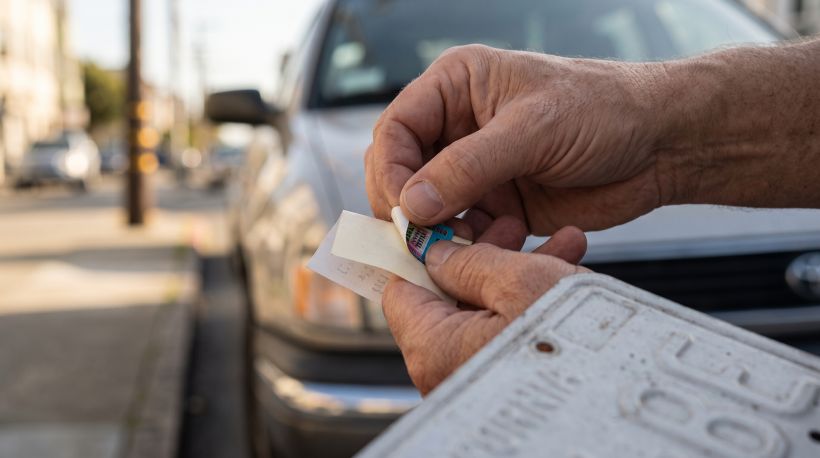
Step-by-Step: What to Do If Your Payment May Have Failed
Step 1: Check your registration status immediately
Go to the DMV website, enter your plate number and last five VIN characters, and verify the current expiration date and status in the DMV database.
Do not wait for a Demand for Payment letter to tell you something went wrong. If the status shows your prior expiration date or flags an outstanding balance, the payment did not process successfully.
Step 2: Check your bank account for the transaction
Look for a returned item, a reversal, or a notice from your bank about a failed electronic payment. If the transaction never posted or was returned, this confirms the failure.
If it appears to have posted but the DMV status is still showing an issue, contact your bank and ask whether the payment cleared or was returned.
Step 3: Contact the DMV
Call 1-800-777-0133.
Explain that you submitted a renewal payment that may not have been received. Ask whether a dishonored check flag is on your account and what the current balance is.
This call creates a record of your proactive contact and can be referenced in a penalty review request if needed.
Step 4: Resubmit payment through an accepted channel as quickly as possible
Every day past the registration expiration date that the balance remains unpaid adds to the late penalty total.
Use a debit card or credit card through the DMV's online portal, through a DMV field office in person, or through a licensed DMV partner like Xtreet. Do not resubmit an electronic check using the same banking information that produced the failed payment until you have confirmed with your bank what caused the failure.
Step 5: Request penalty reconsideration if a bank error caused the failure
Submit the Demand for Payment letter along with a letter on bank letterhead explaining the specific error to the DMV office indicated on the letter. The DMV reviews these cases on their merits. Not all penalty refund requests are approved, but a documented bank error and a proactive repayment history significantly improve the outcome.
Step 6: Confirm the repayment posted and the registration status is current
After submitting repayment, check the DMV database again within one to three business days to confirm the status has updated to current.
If it has not updated, call 1-800-777-0133 to confirm the payment was received.
How to Prevent This from Happening
The most effective protection against a failed payment causing compounding penalties is to verify the registration status in the DMV database after every renewal, regardless of whether you received a confirmation screen or a sticker.
When paying by electronic check or bank transfer, double-check the routing number and account number against a physical check or your bank's official account details before submitting. A single transposed digit sends the payment to a failed state without any immediate notification.
If you are unsure whether your electronic routing or account information is accurate, pay by debit card or credit card instead. Card payments are confirmed in real time, which means a declined card tells you immediately rather than weeks later after a sticker has already arrived.
Renewing at least 10 to 14 days before the expiration date gives you time to catch and correct a failed payment before late penalties begin. A payment submitted one day before expiration that fails leaves no buffer.
Xtreet, as a licensed California DMV partner, processes renewals using card payment options that provide real-time confirmation of the transaction status. The platform shows the itemized fee breakdown before payment is submitted and reflects any holds or outstanding balances pulled from the DMV database at the time of the transaction.

Frequently Asked Questions
Does receiving a registration sticker mean my payment went through?
No. California's DMV mails stickers before confirming that payment has fully cleared the banking system. A sticker in your mailbox confirms that the DMV initiated the renewal mailing process. It does not confirm that the payment was successfully collected. The DMV database is the authoritative source for your registration status.
How do I check whether my registration is actually valid?
Go to the DMV website and use the registration status tool with your plate number and last five VIN characters. You can also call the DMV automated line at 1-800-777-0133. The status shown in the DMV database is the same one that law enforcement sees when your plate is queried.
What is the dishonored check fee in California?
The current dishonored check service fee is $30. It is charged on every returned payment regardless of the reason for the failure, including bank errors. It cannot be paid by personal check or credit card. Accepted methods are cashier's check, money order, cash in person, or debit card in person at a DMV field office.
When do late penalties start if my payment failed?
Late penalties on registration fees accrue from the vehicle's registration expiration date, not from the date the DMV sends you a Demand for Payment letter. This means penalties can accumulate for weeks or months before you are notified of the failure.
The penalty schedule is the same as for any late registration: starting at 10% of the VLF for the first ten days, increasing through 20%, 60%, 80%, and up to 160% for registrations more than two years past expiration.
Can I get the penalties waived if a bank error caused the failure?
You can request penalty reconsideration by submitting the Demand for Payment letter and a letter on bank letterhead documenting the specific error to the DMV office indicated on the letter. The DMV reviews these cases individually.
Documented bank errors with proactive repayment improve the likelihood of a full or partial refund of penalties. The $30 dishonored check fee is reviewed separately and may or may not be refunded depending on the circumstances.
Can I resubmit the same electronic check information after a failure?
Only after confirming with your bank what caused the failure and resolving the underlying issue. If the payment failed due to incorrect routing or account information, resubmitting the same information will produce the same result. Use a debit card or credit card for the repayment to receive real-time confirmation.
What if I already paid the penalties but believe I shouldn't have?
Submit a refund request to the DMV using Form ADM 399 (Application for Refund) along with documentation supporting the bank error. Refund requests must be submitted within three years of the date the DMV received the original payment. Use the DMV address indicated on the ADM 399 form.
Can Xtreet.com help me fix a failed payment situation?
Xtreet.com processes registration renewals as a licensed California DMV partner and uses card payment options that provide real-time transaction confirmation. If your registration is showing a failed or outstanding status in the DMV database, you can complete the renewal through Xtreet, which will surface any outstanding holds or balances from the DMV database before payment is submitted. For dishonored check repayments specifically, those must go through the DMV's own repayment process with the Demand for Payment letter.
Conclusion
A failed payment on a California vehicle registration renewal is a problem that compounds silently.
The sticker arrives, the registration appears valid on the surface, and the Demand for Payment letter doesn't follow for weeks. By the time the letter arrives, late penalties have been accruing from the registration expiration date, not from the date of notification. The $30 dishonored check fee is on top of that, and the original fees are still owed in full.
The only reliable way to confirm a renewal is complete is to check the DMV database directly after every payment, regardless of whether a sticker arrived. A status check at the DMV website takes two minutes and tells you exactly what the DMV's system reflects, which is the same database law enforcement sees every time your plate is read.
If your registration is currently showing a failed or outstanding status, resubmit payment through a card-based method that confirms in real time, contact the DMV as soon as possible to document your proactive response, and request penalty review if a bank error caused the failure.
Xtreet.com processes registration renewals online with real-time card confirmation and a pre-payment breakdown of everything the DMV database shows for your vehicle.