California Is Changing Its License Plates: What Drivers Need to Know in 2026
Quick Answer: California officially retired its 46-year license plate format in 2026 after exhausting every combination from 1AAA000 to 9ZZZ999. The new format flips the sequence to three numbers, three letters, and one number, for example, 000AAA0.
If you already have California plates, you do not need to do anything. The format change affects only new plates being issued going forward. Your registration process, renewal timeline, and sticker schedule remain exactly the same.
For most California drivers, a license plate is background noise. You get it when you register, you stick the annual sticker on it, and you forget about it until someone asks for your plate number. So when the California DMV announced that the state had officially run out of its standard license plate combinations, the natural reaction was some version of, "Does this mean I have to do something?"
The short answer is no.
But the story behind the change is genuinely interesting, and for car enthusiasts and anyone registering a new vehicle in 2026 or later, knowing what format to expect and when is worth a few minutes of reading.
How Did California Run Out of License Plates?
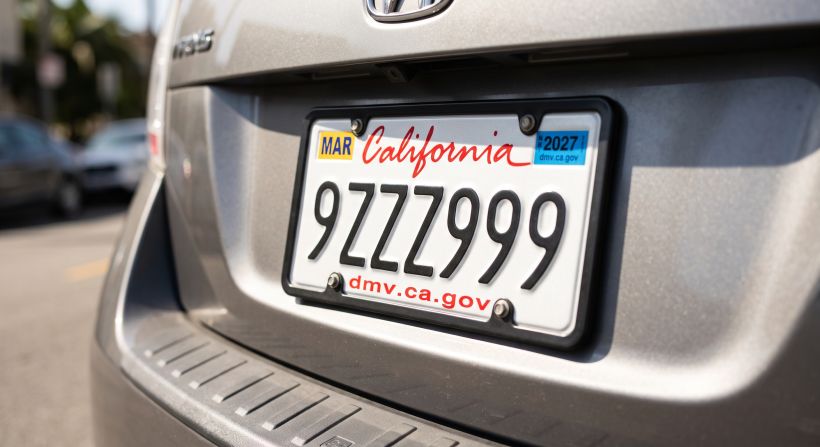
The math was always going to catch up eventually. California's current standard passenger plate format launched in 1980 with the very first combination: 1AAA000. From that starting point, the sequence ran through every possible arrangement of one number, three letters, and three numbers, working its way steadily toward the final combination: 9ZZZ999.
Each configuration provides more than 100 million possible combinations. That sounds like an enormous number, and in most contexts it would be.
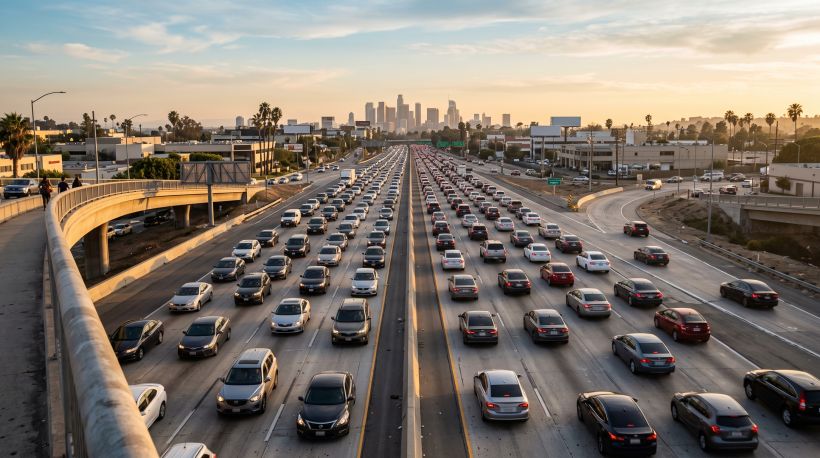
California has roughly 35 million registered vehicles and adds close to 1.8 million new cars to its roads every year. Under normal conditions, the math suggested the current series would last well into the late 2020s.
What accelerated the timeline was a surge in new vehicle purchases that few projected at that scale.
New vehicle registrations jumped 8.3 percent in early 2025, according to the California New Car Dealers Association, driven partly by buyers rushing to purchase before anticipated price increases from international trade tariffs. The state burned through remaining combinations faster than projected.
What Does the New Format Look Like?
The new configuration is straightforward: three numbers, three letters, one number. Where the old format read 1AAA000, the new one reads as 000AAA1. The DMV describes it as a mirror-image reversal of the sequence that served the state for 46 years.
| Format | Structure | Example |
| Old (1980 to 2026) | 1 number, 3 letters, 3 numbers | 7BCD456 |
| New (2026 onward) | 3 numbers, 3 letters, 1 number | 456BCD7 |
The visual difference on the plate itself is subtle. The same seven characters, the same white background, and the same California design. What changes is the order.
The reason California chose a flip rather than a redesign comes down to practicality. Adding an eighth character to the plate would require costly upgrades across every system that reads plates: speed cameras, parking enforcement equipment, toll infrastructure, and law enforcement databases. A seven-character mirror image delivers more than 100 million new combinations without touching any of that infrastructure.
The new sequence is expected to last approximately 40 years, according to Ongtoaboc, consistent with the lifespan of the format it replaces.
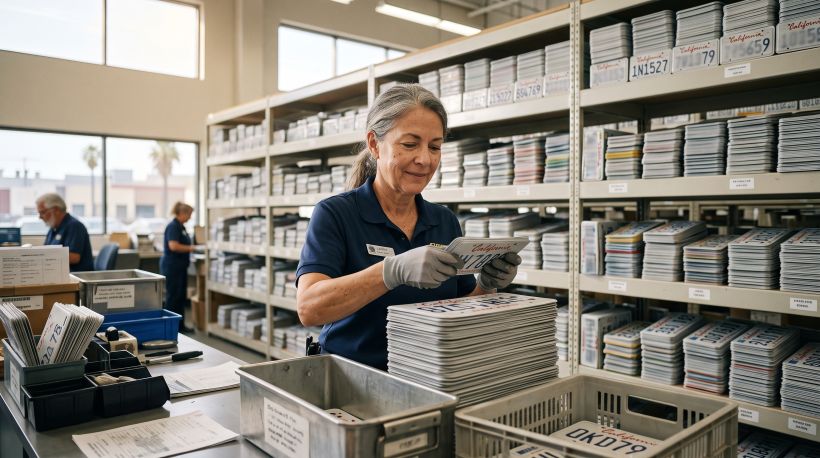
Production of the new format began in early 2026, and the DMV confirmed that some plates in the new sequence have already been issued to registered vehicles. However, more than 110,000 plates in the old format remain in storage at DMV offices and auto-club locations across the state. Those will continue to be distributed until the inventory is exhausted.
If you are registering a vehicle now, the format you receive depends entirely on what your local office currently has in stock.
What This Means for Drivers Right Now
The format change is primarily a back-end administrative event. For the overwhelming majority of California drivers, the practical impact is minimal to nonexistent. Here is what each situation actually looks like.
If you already have California plates, you do not need to replace them, visit the DMV, or take any action related to this change. Your existing plates remain fully valid regardless of their format. The change applies only to newly issued plates going forward.
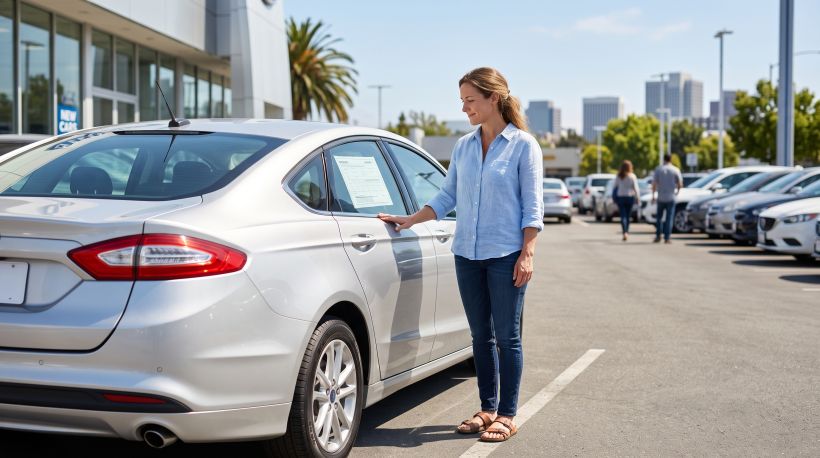
If you are registering a new vehicle in 2026, you may receive either the old format or the new one depending on what your DMV office has available. Both are equally valid. There is no way to request one format over the other for a standard passenger plate.
If you are renewing your registration, the format change has no effect on the process, timeline, or cost. Annual renewal works exactly as it always has. You receive a new sticker, you apply it to your existing plate, and you are current for another year.
For any of these registration transactions, Xtreet handles the process online as a licensed California DMV partner. Whether you are completing a new registration or an annual renewal, the platform retrieves your details from the DMV database, processes the applicable fees, and mails your sticker directly to you, regardless of which plate format is on your vehicle.
A Brief History of California License Plate Formats
The 2026 transition is only the second major format change in California's modern vehicle registration history, which puts it in rare company.
Before 1980, California used a shortened six-character format: three numbers followed by three letters, for example, 123ABC. That format served the state through the postwar growth period and into the late 1970s before combinations ran low.
The 1980 launch of 1AAA000 expanded the available pool dramatically by adding a seventh character and restructuring the sequence. That format outlasted every growth forecast, running for 46 years and through more than 100 million combinations before the final 9ZZZ999 was produced in 2026.
Common Questions Drivers Are Asking
Will my plates change when I renew my registration each year?
No.
Annual registration renewal has no effect on your license plates. When you renew, you receive a new registration sticker that goes on your existing plate. The plates themselves are replaced only when they are lost or damaged or when a vehicle is first registered and plates have never been issued.
A format change does not trigger a plate replacement for existing vehicles under any circumstances.
Will the new plates look visually different?
The design of the plate itself remains the same: a white background, standard California typography, and the state name across the top.
The only difference is the order of characters on the plate. The new sequence starts with three numbers rather than one, which makes the format distinguishable at a glance from the old series, but the overall look of the plate is unchanged.
Why didn't California just recycle old plate numbers?
The DMV considered reusing retired combinations and decided against it. Recycled plate numbers create conflicts in registration databases and law enforcement records, where the same combination may be associated with a prior vehicle.
A completely new sequence is administratively cleaner and avoids any risk of misidentification during a traffic stop or automated plate scan.
Does the format change affect specialty, personalized, or EV plates?
No.
The new standard sequence applies to standard passenger plates only. Personalized plates, specialty plates, motorcycle plates, and any other non-standard plate type follow their own separate processes and are unaffected by this change.
If I am buying a new car right now, which format will I get?
It depends on what your local DMV office or auto club location currently has in stock.
More than 110,000 plates in the old 1AAA000 format remain in inventory as of September 2026 and will continue to be issued until that supply is exhausted. If your office has already received new-format stock, you may receive a 000AAA0 plate. Both formats are equally valid.
How long will the new format last?
The DMV expects the new 000AAA0 sequence to last approximately 40 years, consistent with the lifespan of the format it replaces. Each configuration provides more than 100 million possible combinations, which at current registration rates projects well into the 2060s.
Conclusion
California's license plate format change is one of those administrative milestones that sounds significant and turns out to be almost invisible in daily life. The sequence that carried the state from 1AAA000 to 9ZZZ999 over 46 years served its purpose completely. The new format that replaces it, a straightforward mirror image, gives California another generation of combinations without changing anything about the registration system drivers actually interact with.
If you have existing plates, nothing changes.
If you are registering a new vehicle, you will receive whichever format your DMV office currently has in stock.
Either way, the annual renewal process works exactly as it always has: pay your fees, receive your sticker, and stay current.
Xtreet handles that annual renewal online as a licensed California DMV partner, with your sticker mailed directly to you and no DMV visit required. The format on your plate does not affect the process in any way.