Why Your DMV Renewal Notice Didn’t Arrive (And What It Means)
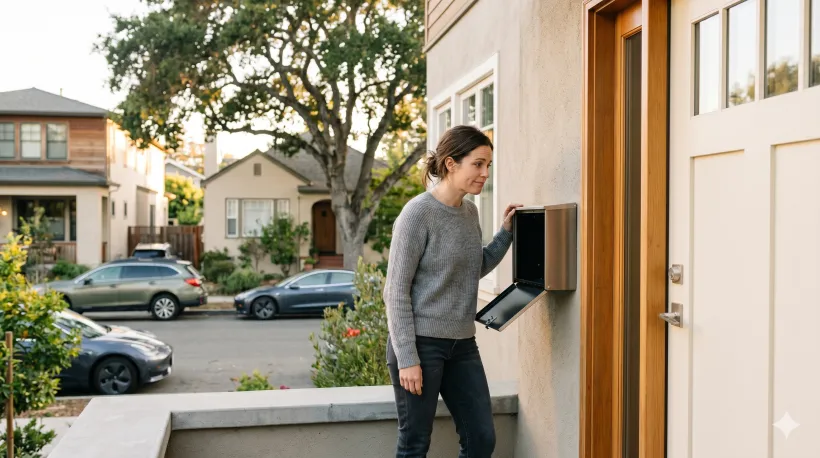
It's that time of year; you're watching for the DMV renewal notice, and it never shows. No envelope in the mailbox, no email in your inbox. Before you assume everything's fine and the notice is just running late, there's something important to understand about how California's renewal notification system actually works, and it's not what most drivers expect.
The renewal notice California sends you—whether by mail or email—is a courtesy, not a legal requirement. Under California Vehicle Code §1661, the law requires the DMV to notify vehicle owners at least 60 days before the registration expiration date, but it also makes clear that failure to receive that notice does not relieve you of the obligation to renew on time or pay any applicable late penalties.
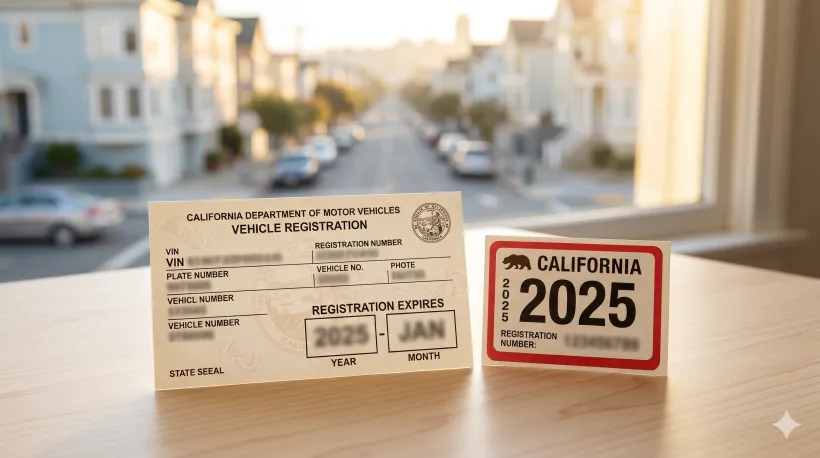
Your registration expiration date is printed on your current registration card and on the sticker on your license plate—and in the eyes of California law, that's enough notice. The missing envelope is your problem to solve, not theirs.
That's the uncomfortable truth.
The more useful truth: renewing without the notice in hand is completely doable through multiple channels; there are several fixable reasons why notices go missing that are worth addressing before next year; and if you received no notice because of a DMV error rather than your own situation, there's a process to request penalty consideration. We cover all of it in this article.
What the Renewal Notice Actually Is—and Isn't
Most drivers treat the renewal notice as the trigger for the renewal process. It shows up, you pay, you're done. But the notice is better understood as a reminder tool than as the official starting gun. The registration expiration date exists in the DMV's system and on your documents whether or not you receive the notice—and once that date passes, the penalties clock starts regardless of what arrived in your mailbox.
Under California law, the DMV is required to notify vehicle owners that registration renewal fees are due at least 60 days before the registration renewal date. When an owner is not notified at least 60 days prior to the expiration date, the renewal or PNO fees become delinquent 67 days after the notification date indicated on the vehicle record—the seven additional days allow for mailing time.
That last part matters: if the DMV fails to send the notice at least 60 days out, the delinquency clock is adjusted to start 67 days after the notification date on record—not 67 days after you personally received it. This creates a limited window where a DMV mailing failure can affect your penalty timeline, but it doesn't eliminate the obligation to renew.
California Vehicle Code §1661 specifically states that failure to receive a notice does not relieve the vehicle owner from the obligation to renew registration on time or from paying applicable penalties. DMV renewal notices are considered a courtesy rather than a legal requirement—the law presumes that the vehicle owner is aware of their registration expiration date, which is also printed on the prior year's registration card and sticker.
In short: know your expiration date, and don't wait for the notice to remind you.
Why the Notice Didn't Arrive: The Most Common Reasons
Understanding what went wrong helps you fix it for the future. There are several distinct reasons a renewal notice might not reach you—each with its own resolution.
Your address on file with the DMV is outdated
This is far and away the most common reason notices go missing. Before renewal notices are printed, address changes received by the United States Postal Service are compared to the DMV's database to ensure the computer-generated renewal notices are mailed to the vehicle owner's latest address. But that comparison only works if the USPS has your forwarding information, and forwarding orders typically expire after 12 months. If you moved more than a year ago and never updated your address with the DMV directly, the notice went to your old address.
California law requires vehicle owners to report a change of address to the DMV within 10 days of moving. You can do this online at dmv.ca.gov at any time—it updates both your driver's license record and your vehicle registration record simultaneously. Until you update the address, every piece of DMV mail will go to wherever the system thinks you live.
You opted into paperless notices but the email didn't arrive
Since January 2022, California drivers can opt in to receive vehicle registration renewal notices by email instead of by traditional mail through a secure online account at the DMV site. If you signed up for paperless notifications and didn't receive anything, the most likely culprits are: the notice landed in your spam or promotions folder; the email address on your MyDMV account is outdated or has a typo, or your inbox provider flagged a government domain as junk.
Check your spam folder first—search for "dmv.ca.gov" or "California DMV." If the email isn't there, log into your MyDMV account, navigate to Communication Preferences, and verify that the email address listed is current and correct. If you find an error, update it—but note that the correction applies to future notices, not the one you already missed.
You opted into paperless but didn't realize it—or can't remember
If you created a MyDMV account at any point and clicked through the setup without paying close attention, it's possible you opted into email notices without specifically intending to. If you're not sure which delivery method is set for your account, log in and check Communication Preferences. The setting is easy to toggle if you'd rather go back to paper.
The notice was sent but lost in transit
Postal delays happen. A notice mailed 60 to 90 days before your expiration date should arrive with plenty of time to act—but first-class mail can occasionally take longer than expected, get misdelivered, or simply disappear. If your address on file is current and you have no reason to believe there's an account issue, a lost notice is possible. It's less common than an address problem, but it does happen.
The DMV's system had a processing issue
In rare cases, notices simply don't get generated or mailed due to a processing error on the DMV's end. This is genuinely uncommon, but it's worth knowing about because it has a specific remedy—covered in the section on penalty consideration below.
How to Renew Without the Notice in Hand
The good news: you don't need the physical renewal notice to renew your registration. California offers several channels that work without it, and most of them are fully online.
Online—the fastest option
Online renewal is available to vehicle owners whether or not they have received a renewal notice showing the current address. You'll need your license plate number, the last five characters of your VIN, proof of insurance on file with the DMV, and smog certification on file if required for your vehicle. Payment is accepted by credit card, debit card, or checking account.
Xtreet's online renewal platform works the same way as a DMV site—we are the licensed California DMV partner—you enter your vehicle information, the system retrieves your renewal details directly from the DMV database, and you complete the full renewal process, including fee payment and sticker delivery by mail, without needing the paper notice at any point.
By phone
The Automated Voice Recognition (AVR) service is available by calling 1-800-777-0133 for owners who have received a renewal notice that includes a Renewal Identification Number (RIN). If you don't have the notice or the RIN, phone renewal isn't available—you'll need to use the online or in-person options instead.
By mail—without the notice
Mail renewal is available to vehicle owners who have or have not received a renewal notice. You'll need to write your license plate number and VIN on a check or money order made payable to the California DMV, include your current address if it has changed, and mail it to the DMV's payment processing address listed at the DMV site.
Note that your license plate number must appear on any check mailed to the DMV, including payments made through a bank's online bill pay system. Mail renewal takes significantly longer than online renewal—budget at least six weeks for processing and sticker delivery combined.
In person at a DMV office
You can renew in person at any DMV field office or at a Self-Service Terminal (SST), which are located in many DMV offices and some retail locations.
No notice is required—bring your current registration card, proof of insurance, and payment. Self-service kiosks operate during regular business hours and process renewals immediately.

What to Do About the Underlying Problem
Renewing without the notice solves this year's problem. The following steps prevent it from happening again.
- Update your address with the DMV
If your address has changed and the DMV doesn't have your current one, update it online—it takes about two minutes and updates both your driver's license and registration records at the same time. California law requires this update within 10 days of a move. The form is DMV 14 (Notice of Change of Address), available online or by mail.
- Verify and update your MyDMV account preferences
Log into your MyDMV account and navigate to Communication Preferences. Confirm which delivery method is set—paper mail or email—and verify that the address or email on file is current. You can update your paperless notice preferences at any time.
It is important to keep your email address and mailing address up to date on your MyDMV account. If you prefer email, make sure the address listed is one you actively monitor.
- Note your expiration date somewhere you'll see it
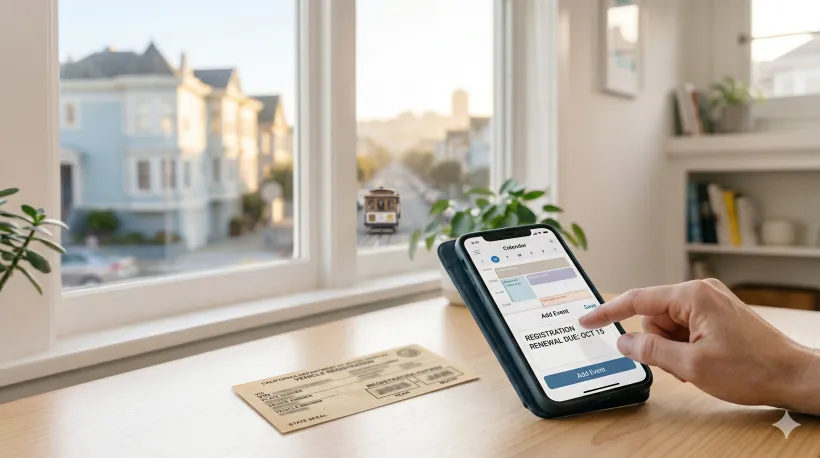
Your registration expiration date is on your registration card and on the sticker on your license plate. Add it to your calendar—annually, 90 days before the date—so that you're not dependent on the notice arriving to prompt action.
Even though your license plates display only the month and year, your registration expires on a specific day. Be sure to check the registration card for the actual expiration date. The month-only display on the sticker can give a false sense of how much time remains.
If You Missed the Deadline Because You Never Got the Notice: Penalty Consideration
If you renewed late and incurred penalties specifically because you never received a renewal notice—and you have a consistent history of on-time renewals—you can request penalty waiver consideration from the DMV. This is not a guaranteed outcome, and the DMV has full discretion over whether to grant it, but the process exists and is worth pursuing if the circumstances support it.
You may submit a request to the California Department of Motor Vehicles for penalty waiver consideration using DMV Form REG 256 (Statement of Facts). You can explain that you did not receive the renewal notice due to a postal delay and have a consistent history of timely payments. While the DMV has discretion to waive penalties in cases involving administrative or mailing errors, such waivers are rarely granted without compelling documentation.
To make the request, complete Form REG 256, clearly describing the circumstances—that you did not receive a renewal notice, your address on file was current, and your renewal history has otherwise been timely. Submit it to your local DMV office by mail or in person. Calling the DMV at 1-800-777-0133 first to explain the situation and ask about the process for your specific office can also be helpful before submitting paperwork.
A Note on the Special Deadline Adjustment
There's one specific legal protection worth knowing about, even though most drivers will never need it. When an owner is not notified at least 60 days prior to the expiration date, the renewal or PNO fees become delinquent 67 days after the notification date indicated on the vehicle record—the seven additional days allow for mailing time.
In practice, this means that if the DMV sent your notice late—say, only 45 days before expiration instead of the required 60—your delinquency clock adjusts accordingly. The 67-day window runs from the date the notice was actually sent (or was supposed to be sent), not from when you received it.
This is a narrow protection: it doesn't eliminate penalties, and it only applies when the DMV demonstrably failed to send the notice within the required timeframe. If you believe this applies to your situation, a call to the DMV at 1-800-777-0133 to ask about the notification date on your vehicle record is the right first step.
FAQ
- Do I have to renew my California registration if I never received a renewal notice?
Yes. Under California Vehicle Code § 1661, failure to receive a renewal notice does not exempt you from the obligation to renew on time or from paying late penalties. The notice is a courtesy, not a legal prerequisite for renewal. Your expiration date is on your current registration card and license plate sticker—those are the authoritative sources regardless of whether a notice arrives.
- How do I renew my California registration without the notice?
No notice really required. You can renew through Xtreet's platform, by mail with your plate number and VIN on the check, or online or in person at a DMV office or self-service kiosk. The only channel that specifically requires the notice is the automated phone renewal line, which needs the Renewal Identification Number printed on the notice.
- Why didn't I get my DMV renewal notice?
The most common reasons: your address on file with the DMV is outdated; you opted into paperless email notices, and the email went to spam or an outdated address; or the notice was lost in postal transit. Less commonly, a DMV processing issue may have caused the notice not to be generated at all. Checking your address and MyDMV account communication preferences covers the majority of cases.
- How do I sign up for email renewal notices from the California DMV?
Log into or create a MyDMV account, then navigate to Communication Preferences and select the email option. Make sure the email address on file is current and one you actively monitor. The DMV does not share your email address with third parties. Notices are sent at least 60 days before your registration expires.
- My DMV renewal notice went to my old address—what do I do?
Update your address with the DMV online using the Change of Address tool—it covers both your driver's license and vehicle registration records. California requires you to report an address change within 10 days of moving. Once updated, renew your registration through any channel that doesn't require the paper notice: online, by mail, or in person.
- Can I get a duplicate renewal notice sent to me?
The DMV does not reissue vehicle registration renewal notices on request the way it does for some other documents. Since you can renew through multiple channels without the notice, a duplicate isn't necessary—but if you need the Renewal Identification Number for phone renewal, contact the DMV at 1-800-777-0133 to ask whether it can be provided over the phone for your account.
- If I never received a renewal notice, can I get my late penalties waived?
You can request penalty waiver consideration using DMV Form REG 256 (Statement of Facts), explaining the circumstances. The DMV has discretion to waive penalties in cases involving administrative or mailing errors, but waivers are not guaranteed and require documentation of your situation and renewal history. This is an appeal to the DMV's discretion, not a legal right—California Vehicle Code §1661 preserves the obligation to renew regardless of notice receipt.
- What if my email renewal notice from the DMV went to spam?
Check your spam and promotions folders first—search for "dmv.ca.gov." If you find the notice there, mark the sender as safe so future notices reach your inbox. Then renew using any available channel—the notice itself isn't required for online, mail, or in-person renewal. Going forward, add the DMV's sending domain to your email whitelist or contacts.
- Does it matter whether I receive a paper notice or an email notice legally?
No. Both are courtesy reminders with the same legal standing—neither creates a legal obligation for the DMV, and neither, if missed, relieves you of the obligation to renew on time. The difference is purely practical: email notices arrive faster and include a direct renewal link, while paper notices include the renewal identification number needed for phone renewal.
- How far in advance does the California DMV send renewal notices?
If you do not receive a billing notice approximately 60 days before your vehicle's registration expires, contact Customer Service or use the Fee Calculator to find out what your fees are. Email notices may arrive slightly earlier—up to 90 days before expiration in some cases. If 60 days before your expiration date has passed and you still haven't received anything by either channel, don't wait—renew directly through DMV or Xtreet.
Conclusion
A missing renewal notice is frustrating, but it's not an excuse the California DMV will accept for a late renewal—and under state law, it was never meant to be. The expiration date on your registration card is the authoritative deadline, full stop. The notice is a helpful nudge, not a binding trigger.
The practical response is simple: don't wait for the notice. Know your expiration date, add it to your calendar, and renew proactively through whichever channel works for you—online is the fastest. If the notice went missing because your address or email is outdated in the DMV system, fix that now so next year's notice actually arrives. And if you incurred late penalties because a notice genuinely never came through no fault of your own, the REG 256 penalty waiver request is worth filing—document your case carefully and be realistic about the outcome.
Renewing without the paper notice in hand is straightforward through Xtreet: enter your plate number and VIN, and the system pulls your renewal details directly from the DMV database. No notice needed; sticker delivered by mail.