How Police Check Registration Status in California
Most drivers assume that a registration problem only becomes a law enforcement issue when an officer decides to pull them over and check the sticker on the plate. That assumption is increasingly outdated. California law enforcement agencies use technology that reads and checks license plates automatically—while the patrol car is moving, while it's parked at an intersection, and even from fixed cameras mounted on poles and bridges throughout the state. Your plate can be checked against the DMV database dozens of times a day without any officer making a deliberate decision to focus on your car.
Understanding how that system works—and what it actually sees when it reads your plate—changes the calculus on how risky it is to drive with expired or lapsed registration. It also explains why renewing your registration isn't just an administrative obligation but a practical protection against enforcement actions you might not see coming.
This guide covers the full picture: how California officers check registration status, what information they access, what they can and can't do with it, and how to make sure your registration status never triggers a problem in the first place.
Method 1: The Visual Check—What Officers Still Look for First
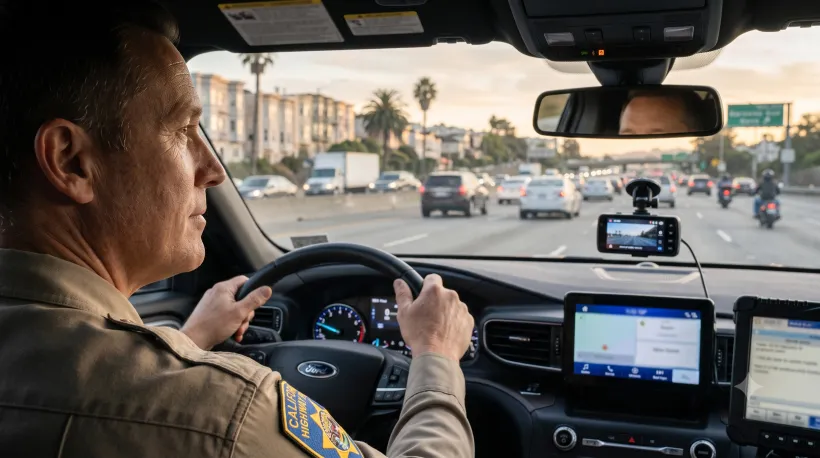
Before any technology is involved, officers are trained to make a visual assessment of vehicle registration. The year tag on the rear license plate sticker is visible from a following vehicle and tells an officer immediately whether the displayed registration is current or outdated.
This is the oldest and most straightforward check, and it still happens constantly. An officer who notices a plate sticker showing an expired year has reasonable grounds to run the plate and, depending on the circumstances, initiate a stop. The sticker is designed to be read at a distance—that's its purpose. A sticker showing a year two or three years back is not subtle.
What the sticker doesn't show, however, is whether the registration has been renewed, but the sticker simply hasn't been applied yet.
That distinction matters: if you've renewed your registration and your sticker is on its way but hasn't arrived, your DMV record shows the registration as current. An officer who runs your plate after noticing an old sticker will see the current status in the database—which is why carrying your renewal confirmation until the new sticker arrives is genuinely useful.
Method 2: Manual Plate Runs Through CLETS
When an officer wants to check a specific vehicle's registration status, they run the plate through the California Law Enforcement Telecommunications System—CLETS. This is a statewide database network that gives law enforcement real-time access to DMV records, including registration status, expiration date, registered owner information, any holds or flags on the registration, whether the vehicle has been reported stolen, and outstanding warrants associated with the registered owner.
A CLETS plate query takes seconds and returns the current status of the vehicle's registration directly from the DMV's own database—the same database that updates when you complete a renewal online, when a smog certificate is transmitted by a testing station, or when an insurance submission is processed by the VRFRP unit. This is why the registration record matters more than the physical sticker: the sticker is a visual indicator, but CLETS is the authoritative source officers rely on.
CLETS is used in two main contexts for registration. First, when an officer initiates a traffic stop for any reason and wants to verify the vehicle's status before approaching. Second, when an officer is running plates on vehicles parked in their patrol area—something that happens routinely during patrols, not only when something looks suspicious.
If practicable, the officer should verify an ALPR response through the California Law Enforcement Telecommunications System before taking enforcement action that is based solely on an ALPR alert. This verification step is the bridge between automated detection and actual enforcement action.
Method 3: Automated License Plate Readers
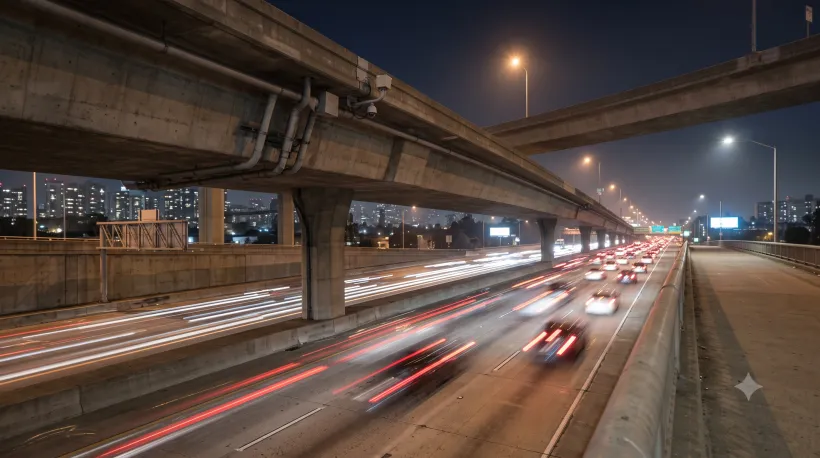
The most significant development in registration enforcement over the past decade is the widespread deployment of automated license plate readers throughout California. ALPR systems are now standard equipment on many California patrol vehicles and are increasingly deployed on fixed infrastructure—poles, bridges, freeway overpasses, and intersections across the state.
ALPR systems are high-speed camera systems that photograph license plates, convert the numbers and letters into machine-readable text, tag them with the time and location, and upload that data into a database for retrieval.
The practical implication for drivers: every time an ALPR-equipped camera sees your plate—whether mounted on a passing patrol car or a fixed roadside camera—your plate number is read, time-stamped, and compared against databases of interest. ALPR systems work by capturing and processing images of license plates and then checking them against a database of known plates. When a match is found against a database of interest—which can include vehicles with expired registration beyond the six-month threshold—the system sends a real-time alert directly to dispatch and officers.
This is not a targeted technology. It doesn't require an officer to single out your car, notice your sticker, or have any reason to be interested in your vehicle. It reads plates continuously, automatically, and without human decision-making at the point of capture. ALPR is a mass surveillance technology in that it collects information on every driver, the overwhelming majority of whom are innocent—but sometimes they don't. And that's part of our daily safety. An officer who isn't specifically looking for expired registrations can still receive an automated alert about yours while they're focused on something else entirely.
How ALPR data is used in California
California has a specific legal framework governing ALPR use by law enforcement, established through Civil Code §§ 1798.90.51–1798.90.55. Law enforcement agencies that deploy ALPR or access ALPR data must post a public privacy and usage policy. Data retention periods vary by agency—images of rear license plates from vehicles remain in some ALPR databases for 30 days and are automatically deleted 30 days from the photo date. Other agencies retain data for up to two years depending on classification.
Any ALPR matches received must be verified before enforcement action is taken. The verification step—typically a CLETS query—is the point where the registration status in the DMV database becomes the operative fact. If the database shows the registration as current, no enforcement action follows, regardless of what the sticker on the plate shows.
Method 4: BAR's ALPR Program for Smog Compliance
California's Bureau of Automotive Repair operates its own ALPR program specifically for monitoring smog check compliance—separate from law enforcement ALPR systems. The ALPR data will be used for the purpose of facilitating the efficient collection of roadside data and evaluating the effectiveness of the Smog Check Program.
The ALPR system component is a mobile or fixed camera that is combined with computer software to capture and record a vehicle's license plate information. These systems typically operate by photographing an image of a license plate, using optical character recognition software to convert the image into the alpha-numeric characters of the license plate, and then comparing the alpha-numeric data held in other databases.
This means that smog compliance—not just registration status—is being checked through automated plate scanning on California roadways. A vehicle whose registration has been flagged for a missing smog certification may be identified through BAR's system, independent of any law enforcement encounter. ALPR data collected by BAR may be shared with law enforcement agencies for authorized purposes.
What Officers Actually See When They Check Your Plate
When a California officer runs a plate through CLETS—whether manually or as a follow-up to an ALPR alert—the information returned from the DMV database includes the vehicle's current registration status and expiration date, the registered owner's name and address, any registration holds or suspension flags, whether the vehicle has been reported stolen or is subject to an alert, and outstanding warrants associated with the registered owner.
What this means practically: if you've paid your registration but a smog certification is still pending, the database will show the renewal as incomplete—not current. If there's an insurance flag on the registration, the officer sees that flag. If parking violations are blocking the renewal, that shows too. The database reflects the actual current state of the registration, not what the sticker shows and not what you believe to be true about your account.
This is why registration holds and incomplete renewals carry real risk beyond just the administrative inconvenience. A registration that appears paid but isn't fully cleared in the DMV database looks the same to a CLETS query as a registration that was never renewed at all.
Why Active Registration Matters More Than Most Drivers Think
The combination of visual checks, CLETS plate runs, and continuous ALPR scanning means that the window in which expired registration goes undetected is narrower than it used to be. The assumption that "I'll deal with it next month" carries more risk in an environment where your plate is being read automatically throughout the day than it did when enforcement depended entirely on an officer deciding to pull you over.
Active, current registration in the DMV database is the only state that produces no enforcement risk from any of these three detection methods. A current registration seen by ALPR generates no alert. A current registration queried through CLETS returns no actionable flags. A current sticker seen visually by an officer generates no grounds for further action.
The consequences of expired registration detected through any of these channels are consistent with what California law provides. Under California Vehicle Code § 4000(a), operating a vehicle with expired registration is an infraction carrying a base fine of $280, with court assessments bringing realistic totals to $300–$500. Under CVC § 22651(o), registration expired more than six months, authorizing towing without prior notice. Those consequences don't change based on how the registration was detected—whether an officer happened to notice your sticker or an ALPR flagged your plate while you were parked on a public street.
How to Check Your Own Registration Status
The same DMV database that officers access through CLETS is queryable by vehicle owners through the DMV's public Vehicle Registration Status tool. The check requires your license plate number and one secondary identifier—the last five digits of your VIN, the registered owner's last name, or a company name. No account is required.
The tool returns your vehicle's current registration status, expiration date, fees owed if any, and any holds on the record. It is extremely helpful in determining whether your registration payment was received by the DMV and processed and whether a new registration card and sticker have been mailed out.
Running this check before your expiration date—and after any renewal transaction—tells you exactly what an officer would see if they ran your plate. If the status shows current, you're in the same position from an enforcement standpoint as a driver who renewed yesterday. If it shows a hold, an incomplete renewal, or an expired status, you know precisely what needs to be addressed.
How Xtreet Helps You Stay Current—In Minutes
The most effective response to the enforcement environment described in this guide is straightforward: keep your registration current in the DMV database at all times. Not just the sticker on the plate—the actual record in the system that ALPR alerts and CLETS queries pull from.
Xtreet makes that as frictionless as possible. As a licensed California DMV partner, Xtreet connects directly to the DMV's own database. When you enter your plate number and VIN on the platform, it retrieves your current registration details in real time—your fee total, any outstanding violations or holds on the account, and the current status of your registration. The entire picture, before you pay anything.
Once payment is submitted, the DMV record updates—the same record that appears in CLETS when your plate is queried and the same record that determines whether an ALPR alert results in enforcement action. Your new registration card and sticker are mailed to you after processing.
The transaction takes a few minutes. The result is a registration status in the DMV database that returns clean on any check—automated or manual—while you're driving or while the car is parked.
For situations where a title transfer is needed before registration can be completed—for example, a vehicle that changed ownership without a formal transfer—that service is available through Xtreet's platform as well.

FAQ
- Can California police check my registration without pulling me over?
Yes. Through automated license plate reader technology deployed on patrol vehicles and fixed roadside infrastructure, your plate can be read and checked against law enforcement databases continuously and automatically—without any officer making a deliberate decision to target your vehicle. If the system generates an alert for your plate, the officer receives notification in real time and can then verify through CLETS before taking action.
- What database do California police use to check vehicle registration?
The California Law Enforcement Telecommunications System—CLETS—provides real-time access to DMV records for law enforcement. This includes registration status, expiration date, registered owner information, holds and flags, stolen vehicle status, and outstanding warrants. CLETS is connected to the same DMV database that updates when you complete a registration renewal, submit smog certification, or resolve an insurance flag.
- Do I need to be stopped for police to check my registration?
No. ALPR systems mounted on patrol vehicles read plates continuously while the car is in motion. Fixed ALPR cameras at intersections, overpasses, and other locations do the same without any officer presence. A manual CLETS query requires an officer to run the plate, but that can happen while your car is parked on a public street during a routine patrol—not only during traffic stops.
- What does an officer see when they run my plate in California?
Through a CLETS query, an officer sees your vehicle's current registration status and expiration date, the registered owner's name and address, any registration holds or suspension flags, whether the vehicle has been reported stolen, and outstanding warrants associated with the registered owner. The status shown is the current state of the DMV database—which reflects whether a renewal is complete, incomplete, or expired, regardless of what the sticker on the plate shows.
- If I paid my registration but haven't received the sticker, will I show as current in the DMV database?
Yes—if the renewal has been fully processed and all requirements are met. Once the DMV processes your payment and confirms that all conditions (smog, insurance, no outstanding holds) are satisfied, the database updates to show the registration as current. An officer running your plate through CLETS will see the current status, not the old sticker. Carrying your renewal confirmation until the new sticker arrives provides additional documentation if needed.
- What if my registration shows as expired in the database even though I paid?
Payment alone doesn't complete the registration if other requirements are outstanding—smog certification, insurance verification, or parking violations. If those haven't been resolved, the DMV database still shows the registration as incomplete or expired regardless of payment status. Check your registration status at dmv.ca.gov, identify what's holding up the completion, and resolve it.
- Can California BAR's ALPR cameras detect smog compliance separately from law enforcement?
Yes. The California Bureau of Automotive Repair operates its own ALPR program on California roadways specifically to monitor smog check compliance. These systems read plates and compare them to smog compliance records. BAR may share ALPR data with law enforcement agencies for authorized purposes.
- How quickly does the DMV database update after I renew?
For online renewals—through the DMV portal or through a licensed partner like Xtreet—the database typically updates within one to two business days of the transaction being processed. Mail-in renewals take significantly longer, as the check must physically arrive and be processed by the DMV before the record updates. For the fastest database update—and the fastest change in what officers see when they run your plate—online renewal is the most reliable option.
- Will renewing through Xtreet update the same DMV database that police access?
Yes. Xtreet is a licensed California DMV partner that submits renewals directly to the DMV's own system. The registration record that updates after a renewal through Xtreet is the same record accessed by CLETS and the same record that determines whether an ALPR alert results in enforcement action. There's no difference in legal standing between a renewal processed through Xtreet and one processed through the DMV's own portal.
- Can ALPR data be used against me for reasons unrelated to my registration?
Under California law, ALPR data may be used only for official law enforcement purposes. Law enforcement agencies are required to post public usage policies under Civil Code §§ 1798.90.51–1798.90.55. Data from ALPR systems is used primarily to identify stolen vehicles, wanted persons, and other law enforcement priorities—registration status is one of many potential match categories. Data retention periods vary by agency, with some systems deleting plate images after 30 days and others retaining data for up to two years.
Conclusion
The question of how police check registration status in California has a more layered answer than most drivers expect. Visual checks still happen. Manual CLETS plate runs happen throughout every patrol shift. And ALPR systems—on patrol cars and fixed infrastructure—are reading and checking plates continuously, without anyone making a specific decision to look at your vehicle. The result is an enforcement environment where the gap between an expired registration and a law enforcement interaction is narrower than it's ever been.
The practical response is simple: keep your registration current in the DMV database, not just in your own mental accounting of when you last paid. The database is what officers see. The database is what ALPR alerts are based on. The database is what determines whether your plate returns clean or flagged when it's read.
Xtreet makes it easy to know what that database currently shows for your vehicle—and to update it when it needs updating. Enter your plate number and VIN, see your current registration status and any outstanding issues, and complete the renewal in the same session if anything is due.
The DMV database updates within a day or two of the transaction. That's the whole process.