How to Get a Bonded Title in California
Quick Answer: A California bonded title (authorized by Vehicle Code Section 4157 and 13 CCR Section 152.00) is for vehicles where you cannot provide the normal proof of ownership, most commonly when the vehicle is worth $5,000 or more. You buy a Motor Vehicle Ownership Surety Bond equal to the vehicle's fair market value, submit the application package, and the DMV issues a title carrying a "bonded" brand. The bond runs for three years. If no valid ownership claim is made in that window, the bond expires and you can ask the DMV to remove the bonded brand and issue a clean title.
Every result you found before this one was trying to sell you a bond. This guide is not. It explains when you actually need a bonded title, what it costs with a real example, and importantly, when you do not need one and a simpler process applies instead.
When You Do NOT Need a Bonded Title
Use REG 227 instead if: Your title was issued in your name and is now lost, stolen, or damaged. In that case, apply for a duplicate title using REG 227 ($28, 15-30 business days), no bond needed. A bonded title is only required when you cannot prove you were ever the legal owner.
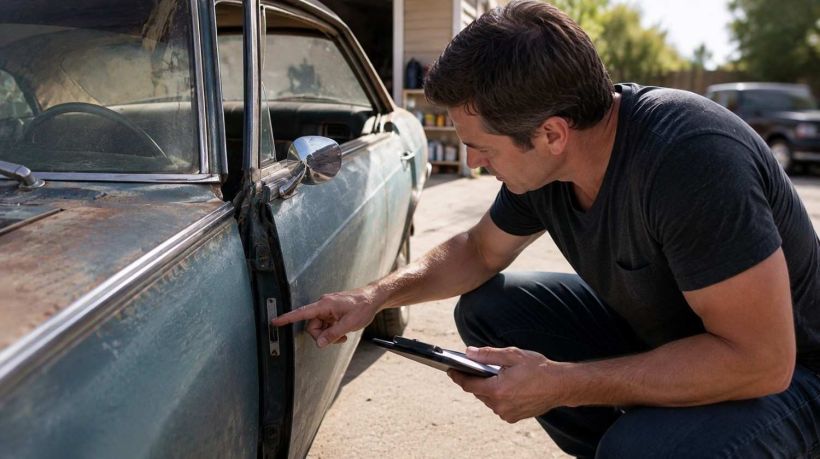
When You DO Need a Bonded Title (CVC Section 4157)
A bonded title applies when the required proof of ownership is not available and at least one of the DMV's triggering conditions is met:
- You do not have a title in your name and cannot obtain one through normal channels
- You cannot get the previous owner to complete a proper title transfer
- The vehicle is valued at $5,000 or more (the most common trigger), or the title is nontransferable (goldenrod), or a release from the legal owner / lienholder cannot be obtained. Per CVC Sections 4157 and 38050 and 13 CCR Section 152, any one of these is enough.
Common situations: car purchased with a bill of sale only and no title; vehicle with a broken chain of ownership; title is defective or nontransferable.
If you purchased a vehicle with only a bill of sale and no title, also see Can You Sell a Car Without a Title in California for a full breakdown of all available paths.
Real Cost Example
Vehicle Value | Bond Amount | Typical Bond Premium | DMV Fees | Est. Total |
|---|---|---|---|---|
| $8,000 | $8,000 | $50-$160 (0.5-2%) | $28 + $15 | ~$93-$203 |
| $20,000 | $20,000 | $100-$400 (0.5-2%) | $28 + $15 | ~$143-$443 |
| $45,000 | $45,000 | $225-$900 (0.5-2%) | $28 + $15 | ~$268-$943 |
Bond premiums vary by provider and applicant. The ranges above are illustrative. Get quotes from at least two surety companies before committing.
Step-by-Step Process
- Figure out if you're eligible: Confirm you can't use the REG 227 duplicate title process. Basically, this means the title was never in your name, and the prior owner cannot be reached or contacted.
- Get the vehicle appraised: Use a recognized pricing guide such as Kelley Blue Book or a written appraisal from a licensed dealer or motor vehicle insurance representative. With a pricing guide, the DMV method is to average the high and low listed values; document that calculation on the REG 256. The bond amount must equal this fair market value.
- Fill out REG 343 and REG 256: REG 343 is the Application for Title or Registration (the form for establishing a California title), and on the REG 256 you explain how you acquired the vehicle and why a title is not available. Be precise and complete; the DMV reviews this statement closely and rejects vague or incomplete accounts.
- Do VIN verification (REG 31): A DMV employee, a licensed VIN verifier, or a CHP officer physically checks the VIN on the vehicle to make sure it lines up with your paperwork.
- Buy the surety bond (REG 5057): Buy it from a surety company admitted in California by the Department of Insurance. The bond amount equals the vehicle's fair market value, and the term is three years. The surety's signature on the REG 5057 must be original and notarized; the DMV rejects bonds with preprinted surety signatures or notary acknowledgements.
- Put everything together as a full packet: signed REG 343, signed REG 256, REG 31 VIN verification, the notarized surety bond (REG 5057), your value documentation, and all applicable fees.
- Take it in person to your local DMV office: bonded title applications are not accepted by mail, so don't try to mail anything.
- If it gets approved, the DMV issues the bonded title. It becomes valid right away for registration, insurance, and sale.
Xtreet handles the DMV side, not the bond sale. A bonded-title packet is one of the easiest DMV filings to get rejected: a REG 256 statement that is too thin, a bond amount that does not match the documented value, or a REG 5057 with a preprinted signature all send it back. You buy the surety bond from an admitted surety company; Xtreet handles everything around it, confirming you actually need a bond rather than a simpler REG 227 duplicate, assembling the REG 343, REG 256, and REG 31, checking the bond against the value, and submitting the package in person, then tracking it in your account. We are not selling you a bond; we are getting the title issued.
What Happens If Someone Files a Claim
The surety bond protects anyone with a legitimate prior ownership interest in the vehicle. If a previous owner or lienholder comes forward during the 3-year bond period and proves a valid claim:
- They file a claim against the surety bond
- The surety company investigates and, if the claim is valid, compensates the claimant up to the bond amount
- The surety company then has the right to seek reimbursement from you (the bond principal) for the amount paid
In practice, legitimate claims against bonded titles are uncommon, but the bond exists precisely to protect against that risk. The bond does not protect you if you knowingly submit false information.
After 3 Years: Converting to a Clean Title
If no ownership claim is filed during the three-year bond period, the bond expires and no longer needs to be renewed. The bonded title remains valid the whole time, but the brand does not always drop off on its own. To get a clean, unbonded California Certificate of Title, you return to the DMV after the three years and request that the bonded notation be removed. Keep your bond paperwork until that is done, and confirm the conversion before selling if you plan to sell soon after the term ends.
You may want to confirm with the DMV at the 3-year mark that the conversion has been processed, particularly if you plan to sell the vehicle shortly after.
Frequently Asked Questions
What is a bonded title in California?
A California DMV-issued vehicle title backed by a surety bond. It is used when you cannot provide normal proof of ownership, most commonly when the vehicle is worth $5,000 or more. The bond protects prior owners and lienholders for three years under Vehicle Code Section 4157 and 13 CCR Section 152.00.
Do I need a bonded title if my title is just lost?
No. If the title was issued in your name and is lost or stolen, apply for a duplicate title using REG 227 ($28). A bonded title is only required when you cannot prove you were ever the legal owner.
How long does the bonded title process take?
The DMV processing portion takes 15-30 business days after a complete application is submitted. The full process from appraisal to submission typically takes 2-4 weeks, depending on how quickly each step is completed. See California Title Transfer Timeline for a broader look at DMV processing times.
Can I sell a car with a bonded title?
Yes. A bonded title functions like a regular title for registration, insurance, and sale. The buyer should be informed that the title is bonded, and the 3-year bond period runs with the title regardless of ownership changes. See How to Transfer a Car Title After a Private Party Sale in CA for the standard sale process once you have your title.
What happens after the 3-year bond period ends?
If no claim was filed, the bond expires and does not need to be renewed. The bonded title stays valid, but to get a clean, unbonded title you return to the DMV and request that the bonded notation be removed. Keep your bond paperwork, and confirm the conversion before selling if you plan to sell shortly after the three-year mark.
Last reviewed by the Xtreet Research Team – June 2026. Process sourced from the California DMV VIRP Manual Chapter 23 (Bonds and Certifications, Section 23.020 Motor Vehicle Ownership Surety Bond), Vehicle Code Section 4157 and Section 38050 with 13 CCR Section 152.00 (bond authority, $5,000 threshold, and fair-market-value method), and the REG 5057, REG 343, and REG 256 form instructions. Fee figures verified against the DMV 2026 fee schedule.