How to Transfer a Car Title After a Divorce in California
Quick Answer: In California, a divorce decree can determine who gets the car, but it doesn't automatically update the DMV title. Updating the title is a separate process. You will need the right DMV forms and, in most situations, both people's signatures. There is an exception, though, if the title already lists names with OR or AND/OR between them, then the spouse who was awarded the vehicle can usually finish the transfer by signing by themselves. The transfer fee is $15, and interspousal transfers qualify for use tax exemption via REG 256.
The divorce is final. The court says the car is yours. But the DMV still shows two names on the title.
That gap between the court order and the DMV record is where most people get stuck. Here is how to close it, and what to do if the other person will not cooperate.
The Divorce Decree Does Not Transfer the Title
Common misconception: A divorce decree, judgment of dissolution, or settlement agreement does not automatically update your DMV title record. The DMV does not monitor court proceedings, so you have to file the title transfer paperwork yourself as a separate step. The decree supports the transfer as evidence, but it is not the transfer itself.
Step 1: Check the Title – AND vs. OR Is the Key
| Title reads | What you can do |
|---|---|
| OR or AND/OR | The spouse awarded the car can transfer it with their signature alone; no ex-spouse cooperation needed. Fastest path. |
| AND (shown as /) | Both spouses must sign. The departing spouse signs as the seller/transferor; the receiving spouse signs as the buyer. |
| Only awarded spouse's name | Simple transfer. That person signs as the seller to confirm the transfer to themselves as the sole owner, or signs over to a buyer. |
For more on how AND and OR work on California titles, see How to Add or Remove a Co-Owner from a Car Title in CA.
Step 2: Documents Required
- Signed California Certificate of Title – departing spouse signs on Line 1 (seller line); receiving spouse signs as buyer
- REG 256 (Statement of Facts): Section A claims an interspousal use tax exemption. Section B may claim smog exemption for qualifying interspousal transfers.
- REG 343 (Application for Title or Registration) if the vehicle is being registered in the receiving spouse's name
- Smog certificate if required and not exempt via REG 256
- Transfer fee: $15
- Copy of the certified divorce decree (supporting documentation, not always required by DMV, but useful to have)
Use Tax Exemption for Interspousal Transfers
California does not charge use tax on a vehicle transferred pursuant to a court order, which includes a divorce decree or the dissolution of a registered domestic partnership. You claim the exemption on REG 256, Section A, by stating the relationship and that the transfer is made under the court order. The $15 transfer fee still applies.
Title Transfer Does Not Remove Loan: Both Must Happen
Critical distinction: Transferring the title changes the ownership records, but it does not remove anyone from the auto loan. If both spouses are co-borrowers, the departing spouse remains legally obligated to the lender until the loan is refinanced into the receiving spouse's name alone. A divorce decree cannot remove a person from a loan on its own; only refinancing does that.
If there is still a lien on the vehicle, see How to Release a Lien on a Car Title in California for the lien release process that must happen alongside or before the title transfer.
If Your Ex Will Not Cooperate
If the title uses AND and your ex refuses to sign:
- Submit the divorce decree to the DMV: The DMV has a defined path for this. For a divorce or quiet-title judgment, the signature of the prior registered owner is not required to release ownership: you submit a court-clerk-certified copy of the Judgment of Dissolution that fully describes the vehicle and shows it was awarded to you. If the judgment does not fully describe the vehicle, add a Statement of Facts (REG 256) certifying that the vehicle named in the judgment is the only one awarded to you. Certification of the judgment must be made by the court clerk.
- Court enforcement: If things start to stall, file a contempt motion in family court. The judge can order your ex-spouse to sign, or it might allow you to sign for them, but only with the right authorization. You may need to come back to court, though it's typically the most dependable path when cooperation just isn't moving forward.
- Attorney consultation: For titles with significant value or legal complexity, a family law attorney can advise on the fastest enforcement path.
Get the title out of limbo. A divorce title transfer can stall on a single wrong signature line, a missing use-tax exemption, or an ex who will not cooperate. Xtreet reads how your title is held, prepares the REG 256 and REG 343 with the court-order exemption claimed correctly, and handles the certified-judgment route when your ex will not sign, then submits everything to the DMV and tracks it in your account, so the car finally lands in your name alone.
Name Change After Divorce Adds a Step
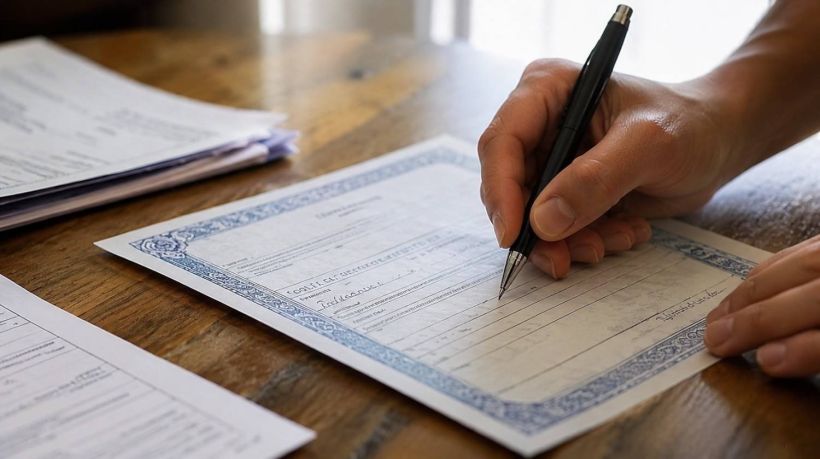
If you have changed your name after the divorce, the DMV will want the signature to match the name on the title. Sign in your married name (as it appears on the title) and bring documentation of the name change, an updated driver's license and/or a certified court order for the name change. You can sign as the seller in your married name and as the buyer in your new name on the same transaction.
California Community Property Context
California is a community property state. Vehicles acquired during the marriage are generally considered community property regardless of whose name is on the title -- meaning both spouses have an ownership interest. A title that shows only one spouse's name does not necessarily mean that spouse owns it outright. The divorce proceedings address this division; the title transfer reflects the agreed outcome.
Frequently Asked Questions
Does a divorce decree automatically transfer the car title in California?
No. A divorce decree decides who ends up with the car, but it is a separate matter from the DMV title transfer. The transfer requires the proper paperwork, signatures, and fees; the decree does not update DMV records on its own.
What if the title says OR between names?
If the title uses OR or AND/OR, the spouse awarded the car can transfer it with their signature alone, no ex-spouse cooperation is needed. This is often the fastest path when cooperation is limited.
Is there a use tax when transferring a car title in a divorce?
No. California exempts a vehicle transferred under a divorce decree or court order from use tax when it is properly documented on REG 256, Section A. The $15 base transfer fee still applies.
What if my ex refuses to sign the title?
Submit your certified divorce decree to the DMV as supporting documentation first. If that is insufficient, file a contempt motion in family court to compel the transfer or obtain authorization to sign on the ex-spouse's behalf.
Does the title transfer also remove my ex from the car loan?
No. The title transfer changes DMV ownership records. It does not affect the loan. Both parties remain obligated to the lender until the vehicle is refinanced into one name. See How to Release a Lien on a Car Title in California for the lien side of this process.
Last reviewed by the Xtreet Research Team – June 2026. Process sourced from the California DMV Title Transfers page and VIRP Manual Section 1.035 (co-owner conjunction rules, VC Section 4150.5 with the vessel parallel Section 9852.5) and Section 4.035 (Transactions Not Subject to Use Tax, which exempts court-order transfers including divorce decrees), the DMV divorce / quiet-title judgment transfer procedure (certified Judgment of Dissolution in lieu of the prior owner's signature, with REG 256 if the vehicle is not fully described), and the REG 256 and REG 343 instructions. Fee figures verified against the DMV 2026 fee schedule.