Can Your Car Be Towed for Expired Registration?
The short answer is yes—but the law is more specific than most drivers realize.
California doesn't give officers blanket authority to tow any vehicle with expired tags on the spot. There's a threshold, a process, and a set of circumstances that determine whether your car can be towed. Knowing where that line is—and what happens if you cross it—is the difference between a $50 correctable citation and a $600 impound situation that you need current registration to get out of.
This guide covers exactly when California law authorizes a tow for expired registration, what the process looks like, what it costs, how to recover your vehicle, and most importantly, how to avoid the situation entirely—including how to renew your registration online through Xtreet in a matter of minutes before it ever gets to that point.
The Legal Threshold: Six Months, Not Six Days
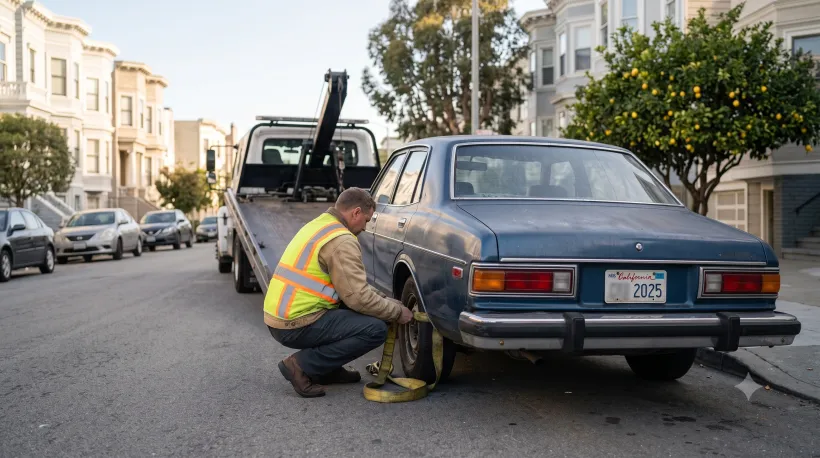
California does not authorize towing for registration that expired yesterday, last week, or even last month. Under California Vehicle Code § 22651(o), a peace officer or an authorized public employee can have a vehicle towed from a highway or public property once its registration has been expired for more than six months. That provision was most recently amended by AB 1978, effective January 1, 2025.
Before six months, your legal risk is a citation under California Vehicle Code § 4000(a) for operating an unregistered vehicle—not a tow. That citation carries a base fine of $280, with court penalty assessments bringing the realistic total to $300–$500. Most first citations for expired registration are issued as correctable violations: present proof of current registration to the court within the deadline on the citation, and the fine is typically dismissed for a nominal processing fee around $25.
Once the registration has been expired for more than six months, the calculus changes. At that point, an officer who spots the old sticker or runs your plate has legal grounds to call a tow truck on the spot.
There is also an important nuance from AB 245, operative July 1, 2024, through January 1, 2030: expired registration alone cannot be the sole basis for a traffic stop until the second month after the month of expiration. This limits proactive enforcement stops—but it does not affect the six-month tow threshold under § 22651(o), and it does not prevent an officer from citing or towing a vehicle stopped for any other reason.
When and Where a Tow Can Happen
Understanding the specific conditions helps clarify the actual risk level at each stage of a registration lapse.
- Parked on a public street or highway
California Vehicle Code 22651(o) authorizes the Vehicle Abatement Officer to tow and store a vehicle with expired registration over six months without notice. This applies to vehicles parked on public streets—including vehicles that have been sitting in the same spot for an extended period. Vehicles moved a short distance to satisfy the 72-hour limit will not be recognized as complying with the law. The vehicle will be considered as being stored on public property.
In practice, enforcement varies significantly by city and neighborhood. High-density urban areas—particularly in Los Angeles, San Francisco, and San Diego—have more active vehicle abatement programs than rural areas. But the authority exists uniformly across California once the six-month threshold is crossed.
- Driving on a public road
If you're stopped while driving—for any reason, including an unrelated violation—and your registration is more than six months expired, the officer has discretion to initiate a tow under § 22651(o). Before police can tow a vehicle for expired registration longer than six months, they must verify the lack of current registration with the DMV. That verification step happens when they run your plate.
- Private property
Tows from private property—apartment complexes, shopping centers, private lots—are governed by CVC § 22658 rather than § 22651. Private property owners can have a vehicle towed without police pre-approval if specific signage requirements are met. Registration status can be a factor in whether a property owner initiates a tow, but the legal authority and process are different from law enforcement tows on public property.
What Happens After the Tow
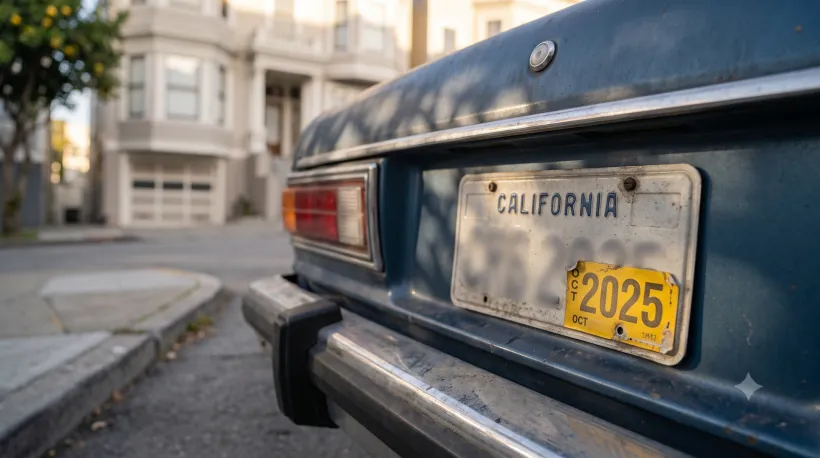
When a vehicle is removed under CVC § 22651, the law enforcement agency or the towing company must notify the registered and legal owner of the vehicle. This notification must include the fact of the impoundment, the legal grounds for the tow, and the location of the impounded vehicle.
An expired-registration tow under § 22651(o) does not carry a mandatory holding period—unlike, for example, a 30-day mandatory impound under CVC § 14602.6 for driving on a suspended license. That means you can recover your vehicle as soon as you meet the requirements and pay the fees.
Pursuant to California Vehicle Code § 22651(o), the vehicle will only be released after presentation of current registration. This creates a specific problem: to get your car back, you need to renew your registration first—but your car is in an impound lot while you're trying to do that. Acting quickly matters.
What it costs
Impound costs in California vary by location and company, but the numbers are consistently significant.
Towing fees typically run $200–$400 for the initial tow. Storage fees at most impound lots run $50–$100 per day. After three days, the total easily exceeds $600. After a week, it can approach $1,000.
A delay of just a few days can result in hundreds of dollars in storage fees, emphasizing the need for prompt action. In extreme cases where a vehicle is abandoned and unclaimed, impound lots may sell unclaimed cars at a loss and then sue the car owner for the difference.
On top of impound costs, you still owe the original registration fees and accumulated penalties for every delinquent year—that total applies regardless of whether the vehicle was towed. The citation for operating an unregistered vehicle may also still be pending if you were driving when the tow occurred.
How to dispute a tow
If you believe your vehicle was towed in error—for example, if your registration was actually current and the officer didn't verify correctly, or if there are procedural issues with how the tow was conducted—you have the right to request a hearing. If the hearing officer finds the tow was invalid, the law enforcement agency is usually responsible for the towing and storage fees.
If the tow is upheld, you remain responsible for all costs. The hearing request must typically be made within a short window after the tow—contact the law enforcement agency that authorized the tow for the specific deadline.

How to Recover a Towed Vehicle Step by Step
If your car has already been towed for expired registration, here is the sequence that gets it back as efficiently as possible.
Step 1: Find out where the vehicle is
The towing company or law enforcement agency is required to notify you of the vehicle's location.
If you weren't present at the tow, call the law enforcement agency that covers the area where the vehicle was parked—they maintain tow logs. In Los Angeles, the LAPD maintains a vehicle location tool online. Most other California cities have equivalent resources.
Step 2: Renew your registration immediately
This is the prerequisite for release. You need current registration documentation before the impound lot will release the vehicle.
The fastest way to get this is online—through the DMV portal or through Xtreet, where the renewal can be completed in a few minutes with your plate number and VIN. Xtreet retrieves your fee total directly from the DMV database, processes payment, and provides immediate documentation of the completed renewal.
Step 3: Pay impound fees and retrieve the vehicle
Present your renewed registration documentation at the impound lot and pay all outstanding towing and storage fees. Impound lots typically accept cash, credit cards, and cashier's checks for towing and storage fees.
Step 4: Address any outstanding citations
If you received a citation for operating an unregistered vehicle, present your renewed registration to the court within the deadline on the citation for dismissal as a correctable violation.
How Xtreet Helps You Avoid Getting to This Point
The tow, the impound fees, the scramble to renew under pressure—all of it is avoidable, and often by a margin of just a few minutes of online effort.
Xtreet is a licensed California DMV partner that processes registration renewals directly through the DMV's own database. The process takes about as long as ordering something online.
Here's what happens when you use Xtreet to renew: you enter your license plate number and VIN, and the platform immediately pulls your renewal details from the DMV—your current fee total and the status of your registration. Once payment is processed, your renewal is submitted to the DMV, and your new registration card and sticker are mailed to you.
The documentation of the completed renewal is available immediately—which matters specifically in an impound situation, where you need proof of current registration before the lot will release the vehicle.
Renewing through Xtreet before your registration reaches the six-month mark eliminates the tow risk entirely.
Renewing through Xtreet immediately after a tow gives you the documentation you need to get the vehicle released as quickly as possible.
For drivers dealing with a title issue on top of the registration lapse—for example, if the vehicle changed hands and the title was never formally transferred—Xtreet's title transfer service handles that process online as well.
What Xtreet cannot do is eliminate impound fees or registration penalties that have already accrued—those are owed to the impound lot and the DMV, respectively, and no online service legally reduces them. What it can do is make the renewal itself—the prerequisite for everything else—take minutes instead of a DMV office visit.

The Financial Case for Renewing Before Six Months
The numbers make a clear argument for not letting registration lapse past six months, even if you've already missed the renewal deadline.
A registration renewed one to three months late costs base registration fees plus a 60% VLF penalty plus a $30 registration late fee plus a $30 CHP late fee. On a vehicle with a $300 VLF, that's $300 + $180 + $60 = $540 in fees and penalties, plus the base registration fee. Manageable.
The same vehicle towed at seven months costs $540+ in fees and penalties (now at the 80% tier) plus a $200–$400 towing fee plus $50–$100 per day in storage plus the court processing fee for the citation. After two days in impound, you're looking at $1,000 or more—for the same underlying registration problem that could have been resolved online for a fraction of that cost.
The six-month mark isn't a line to approach cautiously. It's a line to stay well clear of.
FAQ
- Can my car be towed just for expired registration in California?
Yes, but only once the registration has been expired for more than six months. Under California Vehicle Code § 22651(o), amended effective January 1, 2025, a peace officer or authorized public employee can have a vehicle towed from a highway or public property once registration has been expired for more than six months. Before that threshold, the consequence is a citation, not a tow.
- How long before my car can be towed for expired registration in California?
More than six months after the registration expiration date. This is the threshold established under CVC § 22651(o). Before six months, expired registration can result in a citation under CVC § 4000(a) but not a tow under this specific provision. Other tow authorizations under § 22651—for blocking traffic, DUI, unpaid parking tickets, and so on—apply regardless of registration status.
- Can I be towed even if I'm not driving—just parked on the street?
Yes. A vehicle parked on a public street with an expired registration more than six months ago can be towed by a Vehicle Abatement Officer without notice. Moving the vehicle a short distance to reset a 72-hour parking clock does not resolve the registration issue and does not protect the vehicle from abatement tow.
- What do I need to get my car out of impound after a registration tow?
Current registration documentation and payment of all impound fees—towing and storage costs. The impound lot will not release the vehicle without proof of current registration, which means renewing the registration is the first practical step after a tow.
Xtreet handles online renewal in minutes, with immediate documentation of the completed transaction.
- How much does it cost to get a car out of impound in California?
Towing fees typically run $200–$400. Storage fees at most California impound lots run $50–$100 per day. After two to three days, the total regularly exceeds $600–$700. These costs are in addition to whatever registration fees and penalties are owed to the DMV for the lapsed registration.
- Can I dispute a tow for expired registration?
Yes, if you believe the tow was procedurally improper—for example, if your registration was actually current, or if the officer failed to verify registration status with the DMV before authorizing the tow as required under CVC § 22651(o). Request a hearing through the law enforcement agency that authorized the tow. If the tow is found invalid, the agency is responsible for costs. If it's upheld, you remain responsible.
- Does the AB 245 two-month provision protect me from a tow?
No. AB 245, operative July 1, 2024, through January 1, 2030, limits proactive traffic stops where expired registration is the sole reason for the stop—and only until the second month after expiration. It has no effect on the six-month tow threshold under § 22651(o), and it doesn't prevent a tow or citation if the vehicle is stopped for any other reason.
- Will renewing my registration get my car released from impound immediately?
Yes—once you have documentation of current registration and pay all impound fees, the lot is required to release the vehicle. Renewing online through Xtreet provides immediate documentation of the completed renewal, which you can present to the impound lot the same day.
- Can I renew my registration online while my car is in impound?
Yes. The renewal process doesn't require the vehicle to be present—it's an administrative transaction between you and the DMV. Enter your plate number and VIN through the DMV portal or Xtreet, pay the outstanding fees and penalties, and use the confirmation documentation to secure the vehicle's release.
- How quickly can Xtreet process my registration renewal?
The renewal transaction itself takes a few minutes. Confirmation is immediate. The physical registration card and sticker arrive by mail afterward, but the documentation of the completed renewal is available as soon as the transaction processes—which is what impound lots require for vehicle release.
Conclusion
California's tow law for expired registration has a clear trigger—six months—and a clear consequence—impound costs that can run well into four figures before you account for the registration fees still owed. Neither the citation risk before six months nor the tow risk after it is a reason to ignore a lapsed registration and hope for the best. The compounding structure of California's late penalties means every additional month adds cost, and the six-month line adds a qualitatively different risk on top.
The practical response to any registration lapse is the same: renew as soon as possible, through whatever channel gets it done fastest.
If you're already past the expiration date and want to avoid the six-month threshold, Xtreet processes registration renewals online in minutes as a licensed California DMV partner—surfacing your exact fee total, clearing any outstanding holds in the same session, and providing immediate confirmation of the completed renewal.
If the car has already been towed, that same renewal process is the first step to getting it back.