What Happens If You Miss Multiple Registration Renewals in a Row?
One missed renewal is easy to rationalize. Life gets busy; the notice got buried under junk mail, and somehow a month turned into six. But two years? Three?
At some point, the problem stops being a minor annoyance and starts having real financial consequences—plus a growing risk of getting pulled over with tags that are embarrassingly out of date.
The straightforward truth: California does not offer a grace period.
The day after your registration expires, penalties begin. And unlike a lot of things that get cheaper if you ignore them long enough, penalties on the vehicle license fee in California compound on a set schedule—10% after the first ten days, climbing to 160% for registrations expired more than two years. On top of base fees that can already run several hundred dollars, that math adds up fast.
Xtreet breaks down exactly what you owe at each stage, what the real-world consequences look like if you keep driving, and—most importantly—how to get back to legal status efficiently, including one option most people don't know about that can actually reduce what you owe.
How Do California's Late Registration Penalties Actually Work?
Most people assume the penalty for late registration is a flat fine. It isn't.
California calculates late penalties as a percentage of your Vehicle License Fee (VLF)—which is itself based on the value of your vehicle—plus flat dollar amounts for a registration late fee and a California Highway Patrol (CHP) late fee. That means the more your car is worth, the faster your penalties grow.
Here's the current official penalty schedule from the California DMV:
| How late the payment is | % of Vehicle License Fee + weight fee | Registration late fee | CHP late fee |
| 1–10 days | 10% | $10 | $10 |
| 11–30 days | 20% | $15 | $15 |
| 31 days – 1 year | 60% | $30 | $30 |
| More than 1 year – 2 years | 80% | $50 | $50 |
| More than 2 years | 160% | $100 | $100 |
The penalties in the table above apply per registration year that is overdue. So if you've missed two full renewal cycles, you're not paying the "more than two years" rate on everything—you're paying the applicable rate for each year's delinquency separately, stacked on top of each other.
The DMV's fee calculator will give you the exact total for your specific vehicle, which is always the most accurate way to find out what you owe.
What do the numbers look like in practice?
To put this in concrete terms: say your base registration fee is $200 and your vehicle license fee is $300. At the "more than two years" penalty tier, you'd be looking at $300 × 160% = $480 in VLF penalties alone, plus $100 + $100 in flat fees—that's $680 in penalties on top of the fees themselves.
For two missed years, that calculation runs twice.
This is why catching a lapsed registration early matters so much; waiting an extra few months doesn't just delay the problem, it moves you into a more expensive penalty tier.
What Actually Happens If You Keep Driving?
Penalties on paper are one thing. What law enforcement can actually do when they spot expired tags is another conversation—and since July 1, 2024, the rules have changed in a way that gives some drivers a small buffer, but not the one they might assume.
The enforcement timeline under current California law
Under California Vehicle Code § 4000(a)(4), as amended by AB 245 and operative from July 1, 2024, through January 1, 2030: a violation of expired registration cannot be used as the sole basis for an enforcement action until the second month after the month of expiration. In plain terms—if your registration expired in January, an officer cannot pull you over exclusively for expired tags until March.
"Sole basis" is the key legal term here. Under the full statutory language in VC § 4000(a)(4)(A)(ii), if a vehicle is stopped for any other violation, an officer can act on the expired registration immediately—even within the first month after expiration. The provision doesn't create a two-month immunity period; it limits proactive enforcement actions where expired tags are the only reason for the stop.
This is not a grace period in any meaningful sense. The DMV penalties still accrue from day one. And once the second month passes, the car is fair game to be stopped for tags alone.
What does a citation actually cost?
A citation under VC § 4000(a) for driving with expired registration is classified as an infraction, commonly ranging from roughly $250 to $500 after court assessments, depending on county and case specifics. Court penalty assessments—which California adds on top of base fines—typically bring the real total to somewhere between $300 and $500 or more, depending on the county.
The saving grace: most expired registration citations are issued as correctable violations, sometimes called "fix-it tickets."
If you renew your registration within the time specified on the citation and provide proof to the court, the citation is typically dismissed for a nominal court processing fee of around $25. Typically it only applies once—repeat citations for the same unresolved issue won't keep getting dismissed. But it depends on courts.
When does impoundment become a real risk?
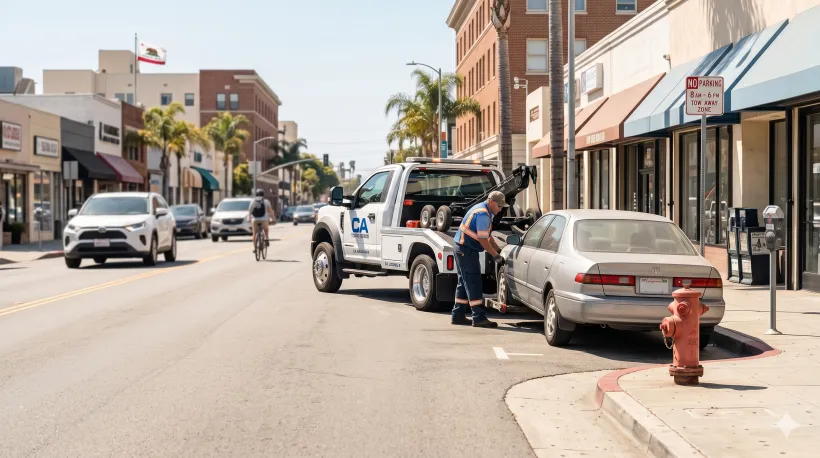
An officer has discretion to impound a vehicle that has been operating illegally for an extended period. This is more common when registration is severely expired — multiple years, not just months — or when the driver has already received and ignored prior citations for the same issue.
In California, towing fees typically run $200 to $400, with daily storage charges of $50 to $100 per day. Recovering an impounded vehicle also generally requires proof of current registration before the car is released, which means you're solving the registration problem under time pressure while also paying storage fees.
The Option Most People Don't Know About: Planned Non-Operation (PNO)
Here's where it gets interesting. If you have a car that you haven't been driving—maybe it's been sitting in a garage while you figure out a repair, or you moved somewhere you don't need it—you may not actually owe all those back penalties.
California has a status called Planned Non-Operation, or PNO, that legally pauses your registration requirement for any year the vehicle is genuinely off public roads.
How does PNO work?
PNO means the vehicle will not be driven, towed, stored, or parked on public roads or highways for the entire registration year.
Filing a PNO costs around $23 (confirm current amount at the DMV) instead of paying full registration fees, and it stops the penalty clock for that year.
The timing rules matter here. According to the California DMV:
- PNO can be filed up to 60 days before registration expires, with no penalty
- PNO can be filed up to 90 days after registration expires, but late penalties apply for that period
- After 90 days past expiration, PNO is no longer an option—full registration fees and all accumulated penalties become due
Why does this matter for multi-year situations?
If you've had a car sitting in storage for two or three years and haven't driven it, filing PNO retroactively for those years—to the extent you're still within the window—can substantially reduce what you owe compared to paying full registration fees plus penalties for each missed year.
The catch is that you can only file PNO if the vehicle genuinely wasn't operated or parked on public roads. If it was being driven and you're just behind on fees, PNO doesn't apply and isn't the right path.
Note to drivers: vehicles can fall out of the DMV's active database after long-term inactivity (typically five to seven years), at which point re-registration rather than renewal may be required. If your situation falls into that range, confirm the current status of your vehicle's record directly with the DMV.
Step-by-Step: How to Get Back to Legal Status
Whether you're one year behind or three, the process of getting back to legal status follows a consistent sequence. Here's how to work through it without making extra trips or paying more than you owe.
Step 1: Find out exactly what you owe
Before paying anything, use the DMV's official fee calculator to get the precise total for your vehicle—base fees, VLF, and all applicable penalties. This prevents overpaying, and it also tells you whether there are additional holds on the account (outstanding parking violations, insurance flags, and so on) that need to be resolved before the renewal can go through.
Step 2: Address any additional holds
Unpaid parking tickets or toll violations will block your renewal just as much as missing fees do. If you have any of these on record, they need to be cleared before the DMV will process the registration.
Xtreet, as a licensed California DMV partner, can help identify and process many common registration blockers during renewal—particularly useful if you're not sure exactly what's on your record.
Step 3: Handle smog check if required
If your vehicle is subject to California's biennial smog check requirement and hasn't been tested recently, you'll need a passing smog certificate before the renewal can be completed.
A vehicle that's been sitting for a long time may have issues that need attention — it's worth a pre-check at a test-and-repair station before committing to a test-only station, especially if the car has been inactive.
Step 4: Pay fees and penalties and complete the renewal
Once the holds are clear and Smog is satisfied, you can pay all outstanding fees and penalties and complete the renewal. For most drivers, this can be done entirely online—through the DMV's portal or through Xtreet—without visiting an office.

Step 5: Handle any outstanding citations
If you've already received a fix-it ticket for expired registration, present proof of renewed registration to the court by the deadline on the citation. The citation will typically be dismissed for a nominal processing fee.
Don't skip this step—an unresolved citation can generate a court hold on your registration, which creates a whole new layer of problems.
FAQ
- How much do I owe if my California registration has been expired for 2 years?
The exact amount depends on your vehicle's value and base fees, but the penalty structure is clear: for each year expired more than two years, you owe 160% of the vehicle license.
Fee for that year, plus $100 registration late fee, plus $100 CHP late fee—on top of the base renewal fees. For multi-year situations, the DMV calculates each year's delinquency separately. Use the fee calculator for your specific vehicle's total.
- Does California have a grace period for expired registration?
No. The California DMV explicitly states there is no grace period. Penalties begin accruing immediately after the expiration date. The 2024 change to VC § 4000(a) limits when officers can stop a vehicle *solely* for expired tags until the second month after expiration, but DMV penalties run from day one regardless.
- Can I be pulled over for expired registration in California?
Yes, with a nuance. Under VC § 4000(a)(4), operative July 1, 2024 through January 1, 2030, expired registration alone cannot be the sole basis for a traffic stop until the second month after the month of expiration. However, if you're stopped for any other reason, the officer can cite you for expired registration from the first day it lapses. After the two-month window, expired tags are a standalone stop reason.
- What happens if I just keep driving with expired registration?
Penalties continue to compound. If you receive a citation, it will likely be a correctable violation (fix-it ticket) the first time, with a base fine of $280 plus court assessments. Repeat citations for the same unresolved issue are less likely to be dismissed. Extended non-compliance increases the risk of impoundment, which adds towing ($200–$400) and storage costs ($50–$100/day) to an already expensive situation.
- What is Planned Non-Operation (PNO) and can it help me?
PNO is a California DMV status for vehicles that won't be operated, towed, or parked on public roads for an entire registration year. Instead of paying full registration fees and penalties, you pay a reduced PNO fee. It can significantly reduce what you owe if your vehicle genuinely hasn't been on public roads. PNO can be filed up to 90 days after registration expires (with applicable late penalties for that period), but not after that window closes. After 90 days, full fees and penalties for that year are due regardless.
- Do I have to pay all back registration fees at once?
Generally yes—the DMV requires all outstanding fees and penalties to be paid before registration is renewed or the vehicle can legally return to the road. There is no standard installment plan for registration fees themselves. If the total is prohibitive, contact the DMV directly to discuss your options, as individual circumstances can sometimes be addressed on a case-by-case basis.
- Will missing multiple registrations affect my driver's license?
Not directly — unpaid registration fees don't automatically trigger a driver's license suspension. However, if you receive a court-ordered hold related to a citation for expired registration and don't resolve it, that can lead to a Failure to Appear hold on your vehicle registration, which indirectly prevents you from keeping your vehicle legal. Insurance lapses that occur during an extended period of non-renewal can also affect your insurability down the line.
- Can I renew online if my registration has been expired for multiple years?
In many cases, yes—but it depends on whether there are additional holds (smog, parking violations, or insurance flags) that need to be cleared first. The DMV's online renewal system will flag these and tell you what's needed. Xtreet can handle multi-year renewals with outstanding violations in a single online session in many cases.
- What if my car has been sitting unused? Do I still owe all the penalties?
If the vehicle genuinely was not driven, towed, or parked on any public road, you may qualify for Planned Non-Operation status retroactively — but only within 90 days of the registration's expiration date for each year in question. For vehicles that have been in storage for years, the window for any given year's PNO filing has likely passed, meaning full fees apply. If you're unsure, check your specific situation with the DMV directly.
- Will my insurance be affected by multiple missed renewals?
Registration status and insurance are technically separate, but they're linked in practice. California requires proof of insurance to renew registration, and a vehicle with a long lapse in registration may also have a lapse in coverage during that period. Gaps in insurance history can affect your rates with some carriers. If coverage lapsed while registration did, getting both back in order at the same time is the cleanest approach.
Conclusion
Multiple missed registration renewals feel like a bigger problem than they usually are—but they're not a permanent situation. California's penalty system is straightforward once you know how it works: fees compound on a set schedule, the longer you wait the more you pay, and the path back to legal status is the same whether you're three months behind or three years behind. The main difference is the dollar amount.
The practical order of operations hasn't changed: find out exactly what you owe using the DMV's fee calculator, clear any additional holds on your account, sort out smog if your vehicle requires it, and pay everything together to complete the renewal. If your car has genuinely been off the road, look into whether PNO could reduce what you owe for any of those missed years before you pay the full penalty amount — that's the step most people skip.
Once you're back in compliance, Xtreet makes it straightforward to stay there: as a licensed California DMV partner, the platform handles renewals, outstanding violation payments, and registration processing entirely online, with your sticker mailed to you. No office, no queue.