How to Replace a Damaged (Not Lost) License Plate in California
Quick answer: Replace a damaged or illegible California license plate immediately. Eligible standard plates and certain nonpersonalized sequential special-interest plates can be replaced online. Other plates require the application assigned to that plate type by mail or at a DMV office. Keep the damaged plate and surrender every other plate from the assigned set. A police report is required for stolen plates, not ordinary damage.
A bent, cracked, peeling, corroded, mutilated, or unreadable plate shouldn't be patched with paint, vinyl, or new holes. To replace a license plate in California, confirm the plate type, make sure the registration is current, and use the correct DMV process.
If the metal plate is still usable but its registration sticker or card is damaged or illegible, you can request an eligible replacement through Xtreet.
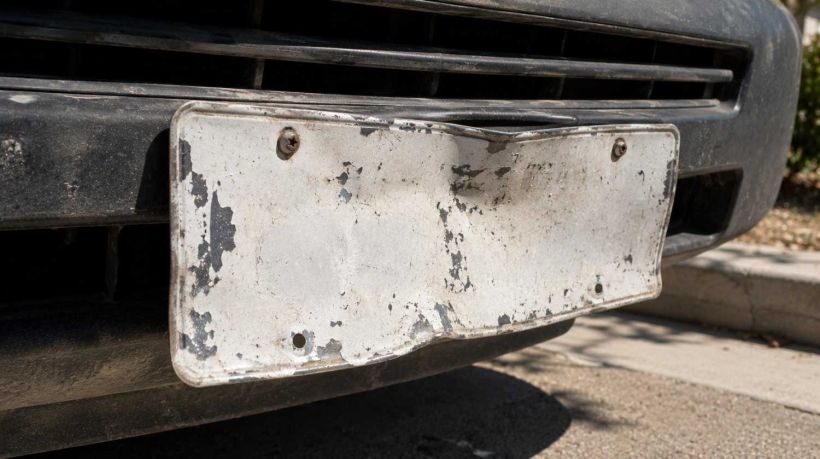
When to replace a damaged license plate in California
On its Replacement License Plates and Stickers page, DMV states that license plates must be replaced immediately when they're damaged or made illegible.
Replace the plate when bending, cracking, peeling, fading, corrosion, or other damage affects its mounting or readability. Don't try to restore it with paint, vinyl, trimming, or additional holes. A homemade repair can turn one problem into two.
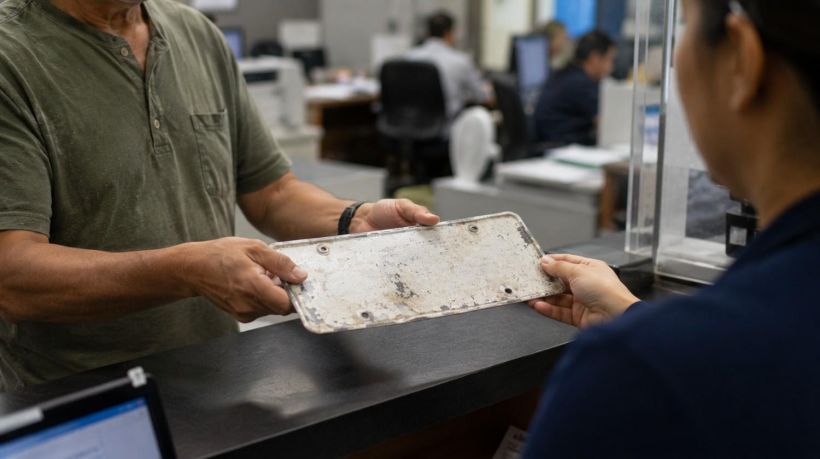
Keep the damaged plate. DMV requires you to surrender every plate from the assigned set that remains in your possession.
This article covers a damaged plate you still have. Lost and stolen plates follow different replacement rules.
California damaged license plate replacement requirements
Before applying, gather:
- Current California registration
- The plate number and vehicle identification number
- The application required for the plate type
- Valid identification for an in-person request
- Every plate from the assigned set still in your possession
- The applicable replacement fee
DMV can't issue replacement plates for a vehicle that isn't currently registered. If the registration has expired, renew it and request replacement plates through the method DMV allows.
For an in-person request, bring proof of vehicle ownership if your current address differs from DMV records. If the address differs and replacement plates were issued within the previous 90 days, DMV also requires a Verification of Vehicle, Form REG 31, completed by the California Highway Patrol.
How to replace a damaged license plate in California
The correct route depends on the plate type, vehicle record, and submission method.
1. Check the plate type and registration status
Identify if the plate is:
- Standard sequential
- Nonpersonalized sequential special interest
- Personalized or special interest
- Special recognition
- Another specialized plate type
Standard plates and certain nonpersonalized sequential special-interest plates may qualify for online replacement.
DMV's online service excludes personalized and disabled person plates, several sequential special-plate categories, vessels, off-highway vehicles, special-equipment vehicles, farm equipment, and all trailers, including Permanent Trailer Identification trailers. Registration due within 30 days, expired or suspended registration, Planned Nonoperation status, and certain record holds also prevent online replacement.
2. Choose the online, in-person, or mail option
Online: DMV's Replacement of Standard License Plates service covers eligible standard and nonpersonalized special plates. You must be the registered owner and provide the plate number, last three VIN digits, and payment information. You can't change your address through the online application.
In person: Apply at a DMV office when the vehicle is ineligible online or the plate or vehicle record requires manual review. Bring the completed application, accepted identification, remaining plates, and any requested ownership documents.
At an Xtreet Office: Instead of visiting the DMV or relying on regular mail, you can schedule an appointment to submit your original physical forms (such as REG 156) or pick up finished registration materials in person at our San Francisco or San Jose offices.
By mail: You must be the registered owner, and your name and address must match DMV records. Send the required application or documentation, fee, and remaining plates to the address provided by DMV.
3. Complete the application for your plate type
DMV identifies these forms for common replacement requests:
- Application for Replacement Plates, Stickers, Documents, Form REG 156 -- for in-person standard requests and specified plate categories
- Special Interest License Plate Application, Form REG 17 -- for personalized and special-interest plates
- Special Recognition License Plate Application, Form REG 17A -- for special-recognition plates
- Application for Special Equipment Identification Plate, Form REG 88 -- for special-equipment plates
- Motorized Bicycle Instructions and Application, Form REG 230 -- for moped plates
Eligible online requests use DMV's digital application. DMV's registration manual requires REG 156 for an in-person standard replacement request. For a mailed standard request with no changes to the vehicle record, the manual also permits a letter signed by the registered owner.
4. Surrender the damaged and remaining plates
Don't discard the damaged plate. Submit it with every other plate from the assigned set that remains in your possession.
For a passenger vehicle issued two plates, that typically means surrendering the damaged plate and the undamaged plate.
A police report isn't required for damage alone. Report stolen plates to law enforcement and follow DMV's stolen-plate process.
Lost or stolen standard plates generally receive substitute plates with a new configuration. Personalized plates follow separate replacement rules.
5. Review and pay the replacement fee
Review the amount DMV displays before paying because the fee depends on the plate and vehicle type.
The online service accepts bank account and credit or debit card payments. Card payments include a 2.3% service fee.
6. Submit the request and follow DMV instructions
Submit the application, plates, and payment through the approved method. Specialized applications may require additional processing.
A Temporary Operating Permit may be issued in certain circumstances when registration fees have been paid, but plates or stickers haven't been issued. A receipt alone doesn't automatically authorize driving without the required plates. Follow the instructions DMV provides for your transaction.
Personalized and special plate replacement rules
For a damaged personalized or special-interest plate, complete REG 17 and surrender every remaining plate from the set.
On DMV's How to Obtain Personalized and Special Interest License Plates page, the agency states that personalized configurations are duplicated. Sequential special-interest plates receive the next available configuration.
If both personalized plates are lost or stolen, DMV won't reissue the same configuration. The owner must choose another personalized configuration. That restriction doesn't apply in the same way when a damaged personalized plate is surrendered for duplication.
Special-recognition plates use REG 17A and may require proof of continued eligibility. Other specialized plates use the application assigned by DMV.
Damaged license plate replacement cost and timing
DMV's current pages show two regular-series replacement amounts. Its online replacement page displays $27 for regular-series auto, commercial, and motorcycle plates, while its general Registration Fees page lists $28 for replacement license plates.
Confirm the amount shown during your transaction. Personalized, special-interest, special-recognition, trailer, moped, and other specialized plate fees can differ. Online card payments also include the 2.3% service fee.
If you choose to process your transfer through Xtreet, a standard service fee of $49.95 applies. We also offer a 20% discount on Xtreet service fees for customers facing financial hardships.
Processing time depends on the plate and submission method. DMV instructs applicants to contact the agency if the plates, stickers, or registration card haven't arrived within eight weeks of applying.

Damaged California license plate FAQs
How can I get a replacement license plate in California?
Apply online if your standard or eligible nonpersonalized sequential plate qualifies. Otherwise, submit the application required for your plate type by mail or at a DMV office. Surrender every remaining plate from the assigned set and pay the applicable fee.
How much does it cost to replace a license plate in CA?
Confirm the amount when you apply. DMV's online page currently shows $27 for regular-series plates, while its general fee page lists $28. Personalized and specialized plate fees vary.
How long does it take to get a replacement license plate in CA?
Timing depends on the plate type and submission method. DMV provides no single guaranteed delivery window. Contact DMV if the plates and related documents haven't arrived within eight weeks. See How Long Does It Take To Receive Replacement Plates in California for the full timing breakdown.
Can I drive my car while waiting for tags in California?
Don't assume a replacement receipt allows you to drive without the required plates. DMV may issue a Temporary Operating Permit in qualifying circumstances. Follow the display or permit instructions provided for your transaction.
How do I replace a lost license plate in California?
Use DMV's replacement process and surrender every plate from the set that remains in your possession. Lost or stolen standard plates generally receive a new configuration. Personalized plates follow separate rules, especially when both plates are missing. Stolen plates require a police report; ordinary damage doesn't.
Replace the damaged plate and registration documents correctly
A damaged metal plate must be replaced through the DMV process assigned to that plate type. Keep the plate, surrender every other plate from the set, submit the correct application, and follow DMV's instructions while the replacement is processed.
Xtreet's service applies to eligible registration-sticker or registration-card replacements, not damaged metal license plates. For a currently registered vehicle, Xtreet can help collect the required vehicle and owner information, guide you through the signed REG 156 requirement, accept payment and shipping details, and provide status updates.
Replace your California registration sticker or card online through Xtreet.