Buying a Car Without a Title in California: Risks and Solutions
Quick Answer: In California, you can physically purchase a car without a title, but you cannot register it in your name, legally drive it on public roads, or sell it to someone else until you establish clear title.
The most common solutions are having the seller obtain a duplicate title before the sale closes, using the California DMV's diligent effort process with Form REG 256, or applying for a Motor Vehicle Ownership Surety Bond (REG 5057) if the vehicle is worth $5,000 or more. Each path takes time and paperwork. The cleaner the situation before you hand over money, the easier the resolution.
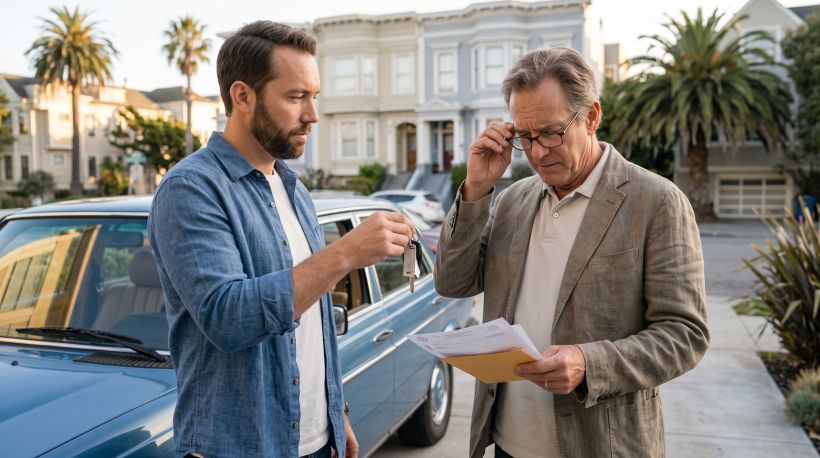
Someone is selling a car for a price that looks fair. When you ask about the title, they say it's lost, or the paperwork is still in someone else's name, or the registration is expired, but that's easy to fix.
These explanations aren't always red flags, but they do describe a situation where the legal transfer of ownership cannot be completed in the standard way, and where the burden of sorting that out will fall on you the moment the sale closes.
California law requires a properly endorsed Certificate of Title to accompany every vehicle sale.
Without it, the transaction may be complete in a practical sense, but it isn't complete in the DMV's records. That gap has real consequences: you can't register the vehicle, you can't get plates, you can't legally drive it, and when you eventually want to sell, the same title problem lands in your buyer's lap.
Here we cover every reason a title might be missing, what California law actually requires, and every path to getting a title in your name, including what Xtreet can handle for you online.
Why a Car Might Not Have a Title
Not every missing title signals a problem with the vehicle itself. Some are straightforward administrative situations. Others are more serious, and which category applies to your situation determines which resolution path is available.
- Genuinely lost or destroyed title
This is the most benign version. The previous owner had one; it was misplaced during a move, and they never applied for a replacement.
In this case, the seller can apply for a duplicate title through Form REG 227 before the sale closes, sign it over to you, and the transfer proceeds normally. If a seller is willing to do this, it's always the cleanest option.
- Lien that hasn't been released
This is the second common scenario. If the vehicle was financed and the loan isn't fully paid off, the lender holds the title, not the seller.
A seller who says the title "is at the bank" or "will come along after" is describing a vehicle with an active lien. Buying it without a formal lien release means the lender retains a legal interest in the car even after you've paid the seller.
The only safe path here is to confirm the payoff amount with the lender directly and ensure the lien is released as part of the transaction, not after it.
- Informal transfers that were never recorded with the DMV
The person selling you the car may genuinely believe they own it, but if the title was never formally transferred into their name, the DMV's records still show the vehicle under a previous owner.
You would be acquiring the same unresolved ownership problem the current seller has. Tracking down prior owners for signatures or documentation is possible but takes time.
Finally, some vehicles have title histories involving salvage, total loss declarations, or out-of-state registration in states that don't issue titles on older vehicles. These are distinct situations with different resolution processes, and they require direct contact with the DMV before any purchase decision is made. Proceed carefully, and consider consulting a DMV-authorized professional.

What California Law Actually Requires
The legal framework here is specific and worth knowing before you decide whether to proceed with a no-title purchase.
Under California Vehicle Code Section 5600, it is unlawful for any person to sell or transfer any vehicle registered under this code unless the transferor delivers to the transferee, or their agent, a properly endorsed certificate of title. That is the seller's statutory obligation.
If they hand you a vehicle without a signed title, they have violated this provision, regardless of what the bill of sale says.
From the buyer's side, the obligation is equally clear. Any change in ownership must be reported to the DMV within 10 days of the sale, with the title transferred accordingly.
If there is no title to transfer, that 10-day clock still runs. A late transfer penalty begins accruing on day 11, starting at $15 and increasing based on how many additional days pass. On a title dispute that takes months to resolve, those penalties accumulate regardless of the reason for the delay.
A bill of sale documents that a transaction occurred and establishes the terms.
It is useful supporting documentation in a diligent effort process or a bonded title application. What it cannot do is function as the endorsed certificate of title that California Vehicle Code Section 5600 requires. If you buy a car with only a bill of sale, you have evidence you paid, but you don't have a document the DMV will accept to register the vehicle in your name.
Every Legitimate Path to Getting a Title in Your Name
California provides four resolution paths depending on how the title went missing and what documentation is available. The right one for your situation depends on the specific cause.
Path 1: Have the Seller Obtain a Duplicate Title First
If the seller is still the registered owner in the DMV's system and the title is simply lost, this is always the right answer before the sale closes. The seller applies for a duplicate through Form REG 227, pays the applicable fee, receives the duplicate, signs it over to you, and the transfer proceeds normally.
The current duplicate title fee should be verified before submitting, as fees are subject to change. The process takes a few weeks. If a seller won't do this or claims it's unnecessary, that reluctance deserves a direct question: if the title is genuinely lost and everything else is in order, there's no reason to refuse.
Path 2: Diligent Effort Process with REG 256
When standard ownership documents aren't available, the California DMV allows an applicant to establish ownership through a Statement of Facts (REG 256) documenting how they acquired the vehicle. What efforts were made to contact the previous registered owner, and why can't the required documents be obtained?
One important limitation: a REG 256 for diligent effort cannot be completed by a dealer, dismantler, or registration service on behalf of their customer. The applicant must complete it personally. Supporting evidence, such as a certified letter showing an attempt to contact the prior owner, strengthens the application.
Path 3: Motor Vehicle Ownership Surety Bond (REG 5057)
When standard ownership documents are unavailable and the vehicle is worth $5,000 or more, California requires a Motor Vehicle Ownership Surety Bond submitted on Form REG 5057. The bond is purchased from a surety company admitted by the California Department of Insurance, in an amount equal to the vehicle's fair market value, for a three-year term.
The surety's signature on the REG 5057 must be original and notarized. The DMV rejects bonds with preprinted surety signatures or notary acknowledgments. The full application packet, including a signed REG 343, REG 256, REG 31 VIN verification, the notarized bond, value documentation, and all applicable fees, must be submitted in person at a DMV field office. Bonded title applications are not accepted by mail.
During the three-year bond period, anyone with a legitimate ownership claim can come forward and make a claim against the bond. If no claims are made, the bond expires and the owner can apply for a clean, unbonded title. For most purposes, a bonded title functions like a regular title: you can register the vehicle, insure it, and sell it.
The bond premium is typically a small percentage of the bond amount, often in the range of 1% to 3% depending on the applicant's credit and the surety company. Verify current rates with California-admitted surety companies directly; they can change after years.
Path 4: Title Only Application
If you want to establish ownership in your name without immediately registering the vehicle for road use, California allows a title-only application. This requires a Statement of Facts (REG 256) requesting title only and a Certificate of Non-Operation or Planned Non-Operation Certification (REG 102). This is useful if the vehicle will be in storage or is a project car that won't be driven right away.
How to Protect Yourself Before the Sale
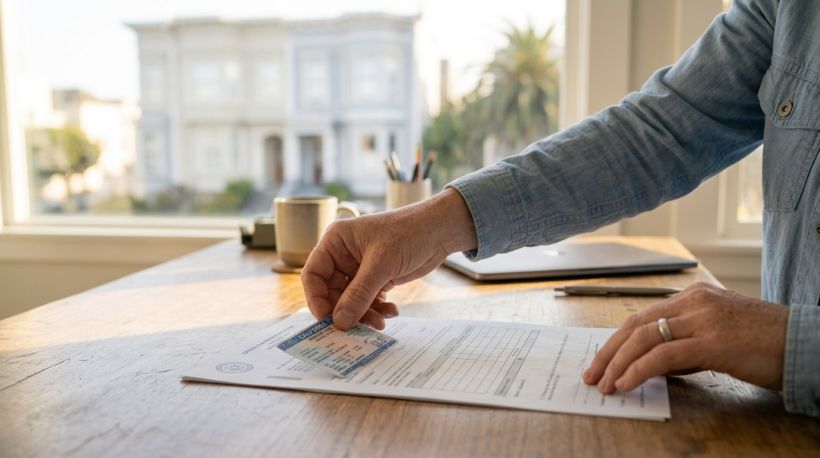
The easiest protection against a title problem is confirming the vehicle's ownership status before money changes hands.
California's DMV offers a free vehicle record check at their website using the license plate number and the last five digits of the VIN. This confirms the registered owner, registration status, and any flags or holds on the record.
If the registered owner in the DMV's system doesn't match the person selling you the car, that discrepancy needs to be resolved before the sale closes. A vehicle history report from a service like Carfax or AutoCheck adds another layer: salvage branding, accident history, odometer rollbacks, and whether the vehicle was ever reported stolen. These don't replace the DMV check, but they surface information the DMV's system won't show.
Two questions worth asking before any no-title purchase:
- Is the seller willing to obtain a duplicate title before the sale?
- And can they explain, specifically and verifiably, why the title is missing?
A seller who can't answer both questions clearly is describing a situation where the resolution risk lands entirely on you.
Step-by-Step: Resolving a Title Problem After the Fact
If you've already purchased a vehicle without a title and need to establish ownership, here is the sequence that applies to most situations.
Step 1: Check the DMV's records
Go to the DMV website and run a vehicle record search using the plate number and last five VIN digits. Confirm who the DMV shows as the registered owner and whether there are any flags, holds, or lien records on the vehicle.
Step 2: Determine which resolution path applies
If the seller is still the registered owner and reachable, a duplicate title through REG 227 signed over to you is the fastest route. If the ownership chain is more complex, the REG 256 diligent effort process or bonded title path will apply.
Step 3: Gather the correct forms
At minimum: REG 343 (Application for Title or Registration), REG 256 (Statement of Facts), and REG 31 (Verification of Vehicle, which must be completed by an authorized DMV employee or peace officer).
If the title is lost, REG 227 as well.
If the vehicle is worth $5,000 or more and documents can't be obtained: REG 5057 (Surety Bond Application).
Step 4: Handle VIN verification
The REG 31 physical inspection cannot be self-certified. DMV field offices have a dedicated VIN verification lane that operates without an appointment. Licensed mobile VIN verification services can come to your location if a DMV visit is difficult.
Step 5: Submit the packet
For standard title transfers and duplicate title applications, Xtreet handles the DMV filing online without requiring an office visit.
For bonded title applications, Xtreet prepares and submits the DMV filing side of the packet. The surety bond itself must be purchased separately from a California-admitted surety company.
Step 6: Address the registration
Once a title is issued in your name, the vehicle can be registered. If registration fees and penalties have accumulated during the period the title was unresolved, those are calculated and paid as part of the renewal.
Xtreet handles registration renewals, including delinquent years, in an online session.
Common Mistakes When Buying a Car Without a Title
- Accepting a bill of sale as a substitute for a signed title
A bill of sale is documentation of a transaction. It is not a title. The DMV will not accept it to register the vehicle in your name.
- Assuming the lender's lien is resolved because the seller says it is
Always verify lien status directly with the lender and obtain a written lien release before the sale closes. A lender whose lien hasn't been formally released retains a legal interest in the vehicle regardless of who paid the seller.
- Buying a vehicle where the registered owner on DMV records is someone other than the seller, without understanding why
This is not always fraud, but it means the resolution process is more complicated and requires tracking down or communicating with the owner of record.
- Starting a bonded title application without having the surety bond properly notarized
The DMV rejects bonds with preprinted notary acknowledgments. The surety's original signature and a wet-ink notarization are both required on the REG 5057.
- Waiting to resolve the title situation before addressing the 10-day transfer deadline
The late transfer penalty clock starts running the day after the sale. On a complex title situation that takes months to resolve, those penalties compound regardless of why the delay occurred. Starting the process immediately limits the accumulation.
How Xtreet Helps
Xtreet is a licensed California DMV partner, which means the filings it submits carry the same legal validity as those submitted directly through the DMV. For the title-related situations described in this guide, Xtreet helps in the following specific ways:
- For title transfers where documentation is available but the transfer was never completed, Xtreet's title transfer service processes the application and DMV submission online without requiring an office visit.
- For bonded title applications, Xtreet is helping to handle the DMV filing side of the packet, including REG 343, REG 256, and supporting documentation. The surety bond itself must be purchased separately from a California-admitted surety company.
- For registration renewal once the title is established in your name, including any accumulated penalties, Xtreet processes the renewal in a single online session with your sticker mailed to you.
Where a situation involves salvage branding, undocumented ownership chains, or vehicles that have never been titled in California, you may require direct DMV engagement.
Frequently Asked Questions
Can you buy a car without a title in California?
You can physically purchase the car, but you cannot legally complete the ownership transfer. Under California Vehicle Code Section 5600, a seller must deliver a properly endorsed certificate of title as part of any vehicle sale. Without it, you cannot register the vehicle in your name, legally drive it on public roads, or sell it to the next buyer.
What can I do if I bought a car and there is no title?
The right path depends on why the title is missing. If the seller is still the registered owner, they can apply for a duplicate title through REG 227 and sign it over to you. If standard ownership documents aren't available, the DMV's diligent effort process using REG 256 may apply. If the vehicle is worth $5,000 or more and documents can't be obtained, a Motor Vehicle Ownership Surety Bond (REG 5057) allows the DMV to issue a bonded title.
Is a bill of sale enough to register a car in California?
No. A bill of sale documents the transaction but is not an endorsed certificate of title. California requires a properly endorsed title to register a vehicle in a new owner's name. A bill of sale can be used as supporting documentation in a diligent effort process or bonded title application, but it does not substitute for the title itself.
What is a bonded title in California?
A bonded title is a California Certificate of Title issued when standard ownership documents are unavailable and the vehicle is valued at $5,000 or more. It is backed by a Motor Vehicle Ownership Surety Bond (REG 5057) purchased from a California-admitted surety company for three years. During that period, anyone with a legitimate ownership claim can file against the bond. After three years with no claims, the owner can apply for a clean, unbonded title.
What is the penalty for late title transfer in California?
California requires title transfers to be filed with the DMV within 10 days of the sale. Penalties start at $15 on day 11 and increase based on additional days past the deadline. On a title dispute that takes months to resolve, penalties accumulate regardless of the reason for the delay.
Can Xtreet help me get a title for a car I bought without one?
Yes, for the most common situations. Xtreet handles title transfers and bonded title filings as a licensed California DMV partner. For bonded title applications, Xtreet prepares and submits the DMV filing side of the packet. The surety bond must be purchased separately from a California-admitted surety company. Xtreet's support team can help identify which process applies to your specific situation.
What if the car has a lien and the seller says it's paid off?
Verify this directly with the lender before purchasing, not through the seller's word. A lender who hasn't formally released the lien retains a legal interest in the vehicle regardless of whether the loan has been repaid. Ask for written documentation of the lien release, or contact the lender directly to confirm payoff. Do not complete the purchase until a written lien release is in hand.
What happens if I try to sell a car that I don't have a title for?
Under California Vehicle Code Section 5600, selling or transferring a vehicle without delivering a properly endorsed title to the buyer is unlawful. Until you establish a title in your name through one of the resolution paths above, you cannot legally complete the sale. The buyer would face the same title problem you're currently resolving.
Conclusion
A car without a title is an asset you can't fully use, register, or transfer. The California DMV's ownership requirements aren't a bureaucratic obstacle: they protect you from buying a vehicle someone else still legally owns, and they protect future buyers when you eventually sell.
The cleanest version of this situation is one that gets resolved before the sale closes, with the seller obtaining a duplicate title and signing it over at the point of transfer.
If you're already past that point, the resolution paths exist, and most of them don't require a DMV office visit. Xtreet handles title transfers and bonded title filings online as a licensed California DMV partner, with support for identifying which process applies to your specific situation. The sooner the process starts, the fewer penalties accumulate and the sooner you have a vehicle you can legally put on the road.